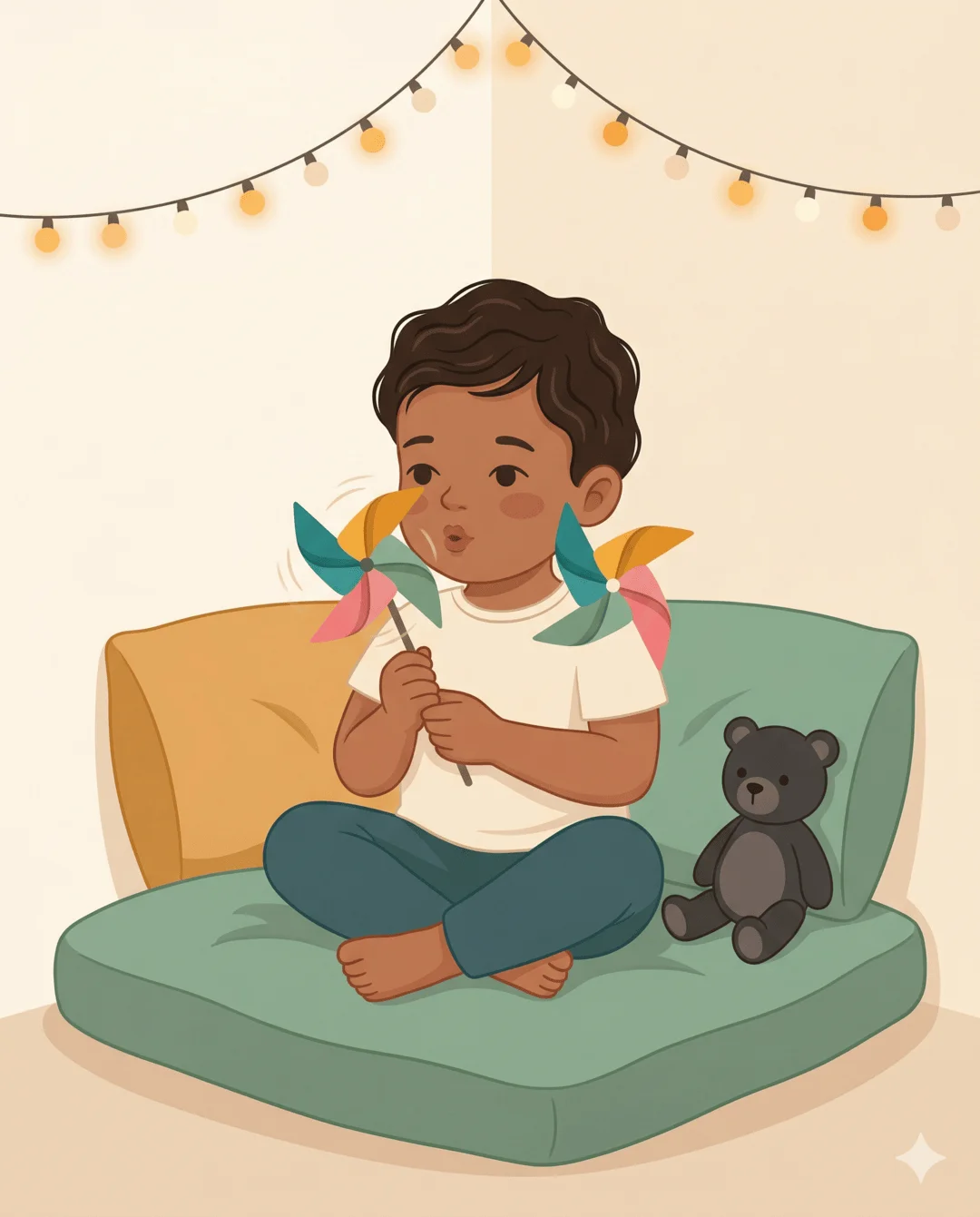
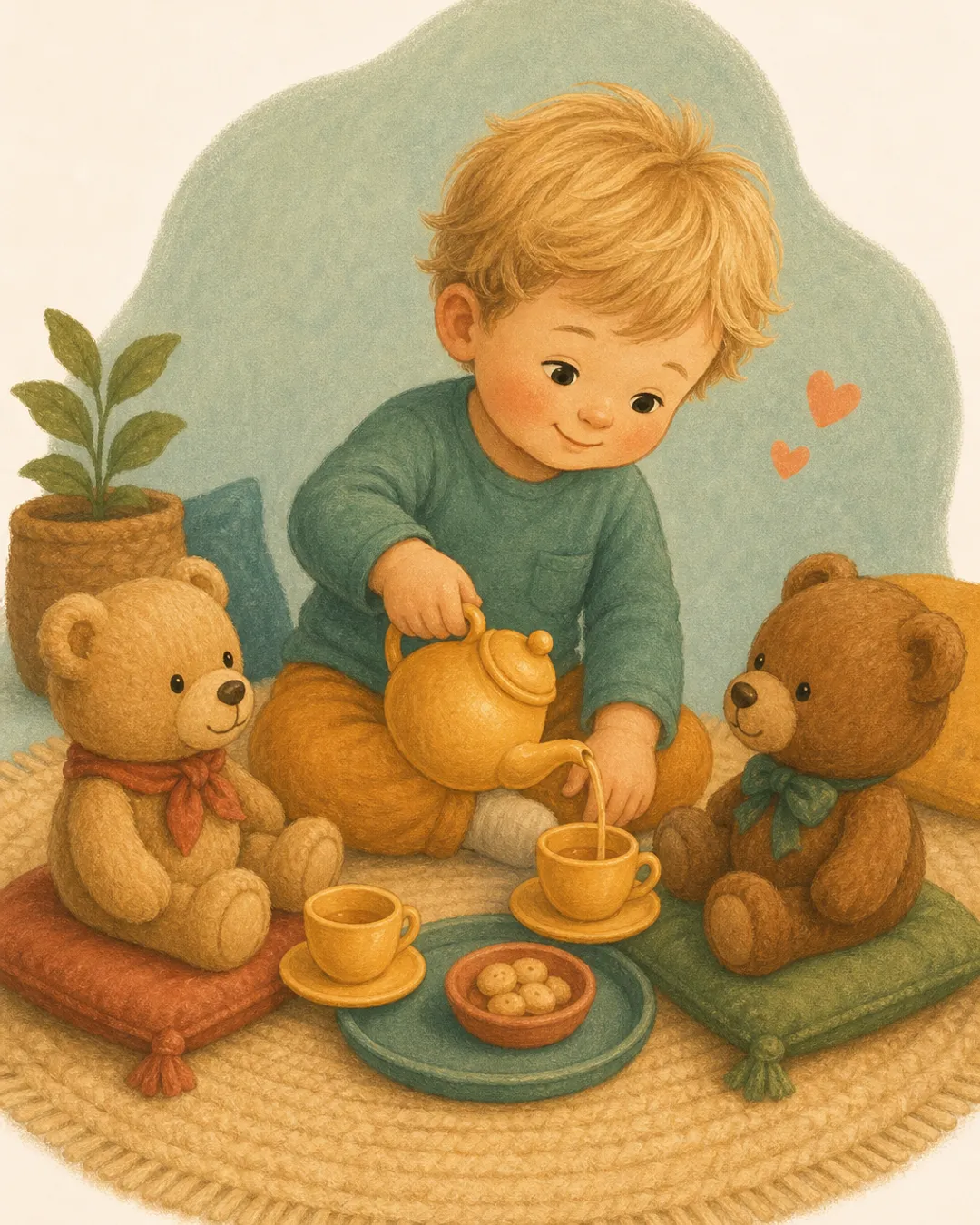
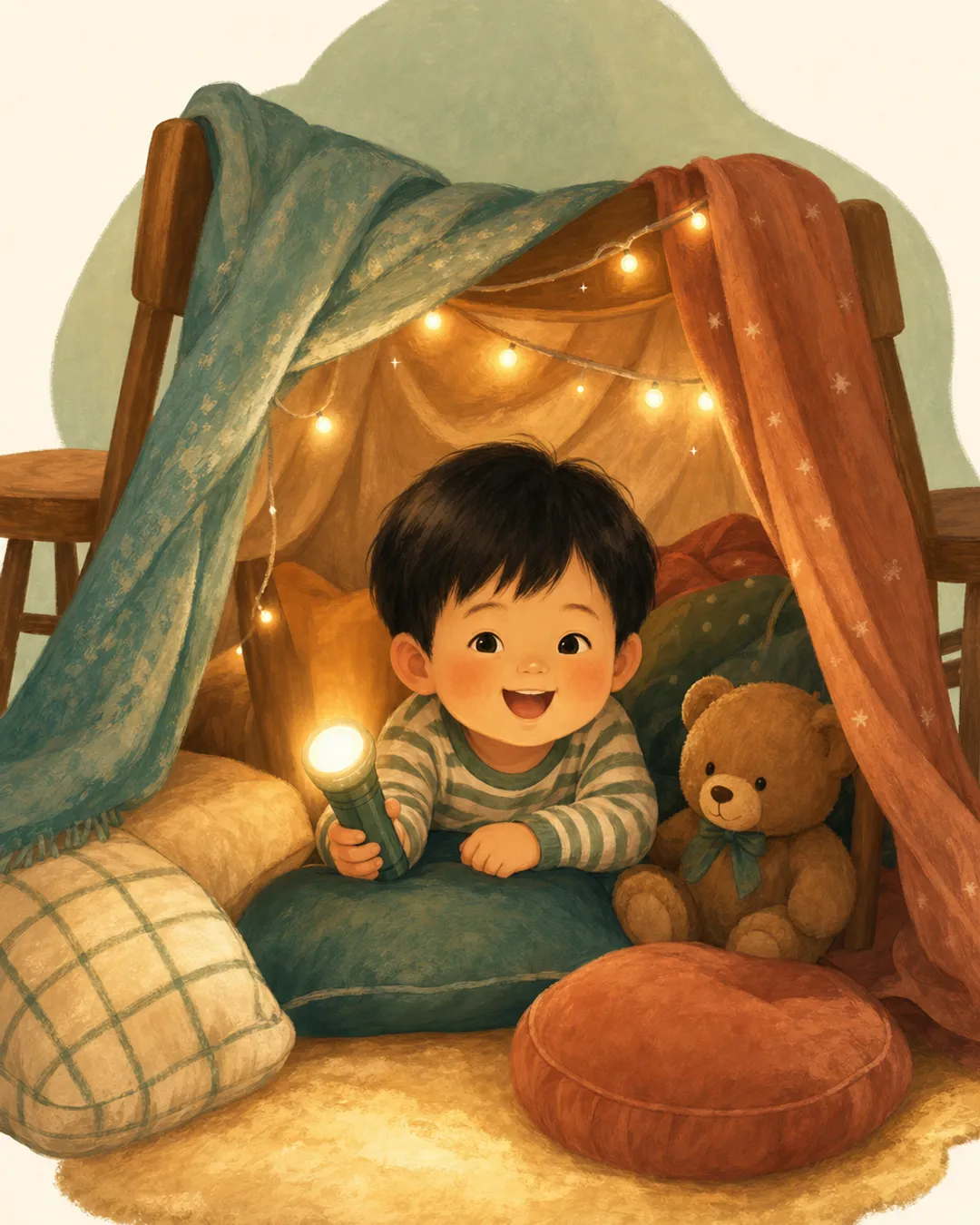
Play a favourite game while slowly dimming the lights — building comfort with darkness one step at a time, surrounded by fun.
Activity details
19m–3y15 minslowindoorNo prep
Instructions
Tiny Steps
Get ready
Choose your child's favourite calm activity — building blocks, playdough, toy cars, a puzzle.
Start in a fully lit room. Begin playing together normally.
1/4
Choose your child's favourite calm activity — building blocks, playdough, toy cars, a puzzle.
Start in a fully lit room. Begin playing together normally.
After 2-3 minutes, casually turn off one light or close one curtain. Do not draw attention to it.
Continue playing. If your child notices: 'It is getting a bit cosy in here, isn't it? Shall we keep playing?'
After another 2-3 minutes, dim further — turn off another lamp, draw another curtain.
Keep playing. The game absorbs their attention while their brain adjusts to the lower light.
If at any point they seem uncomfortable, pause: 'Shall I turn a light back on? That is absolutely fine.'
When the game ends naturally, notice together: 'We played the whole time and it got darker and darker — and it was still fun! You are brave!'
Parent tip
Start before you overthink it. No-prep activities work best when you begin while the moment is still recoverable.
What success looks like
A few quiet minutes together without pressure. If your child relaxes even slightly, that’s self-regulation building.
Start with all the lights on and play something your child loves — building blocks, dolls, cars. Every few minutes, dim one light or close one curtain, making the room slightly darker. Because the child is absorbed in play, the gradual change barely registers. By the end, they have been playing happily in near-darkness without even realising. This gentle exposure rewires the association between dark rooms and fear.
Why it helps
Graduated exposure therapy is the gold-standard approach for specific phobias in children, recommended by the British Psychological Society. By pairing a feared stimulus (darkness) with a positive experience (favourite play) and increasing exposure gradually, the brain learns to associate darkness with safety rather than threat. The key principle is that the child never exceeds their comfort threshold — each step is small enough to tolerate while engaged in something enjoyable. The NHS advises that helping toddlers name and understand their feelings is one of the most important things parents can do for emotional development.
Variations
Use dimmable smart lights to control the transition more smoothly — you can reduce brightness from your phone without moving.
Play this game at different times of day so your child experiences natural light fading through windows.
Add a small reward at the end: 'You played in the dark! Here is a glow star for your ceiling.'
Safety tips
Never lock the door or prevent your child from leaving the room — they must always feel they can choose to leave if scared.
Keep a night light or torch within reach as a safety backup — knowing it is there reduces anxiety even if they do not use it.
Do not do this game at bedtime if your child is already tired and emotionally fragile — choose a calm, well-rested time of day.
Try one of these next
A few connected ideas chosen by theme, energy, set-up, and age fit.