Parent tip
Set out picture books before inviting your toddler in so the first minute feels smooth.
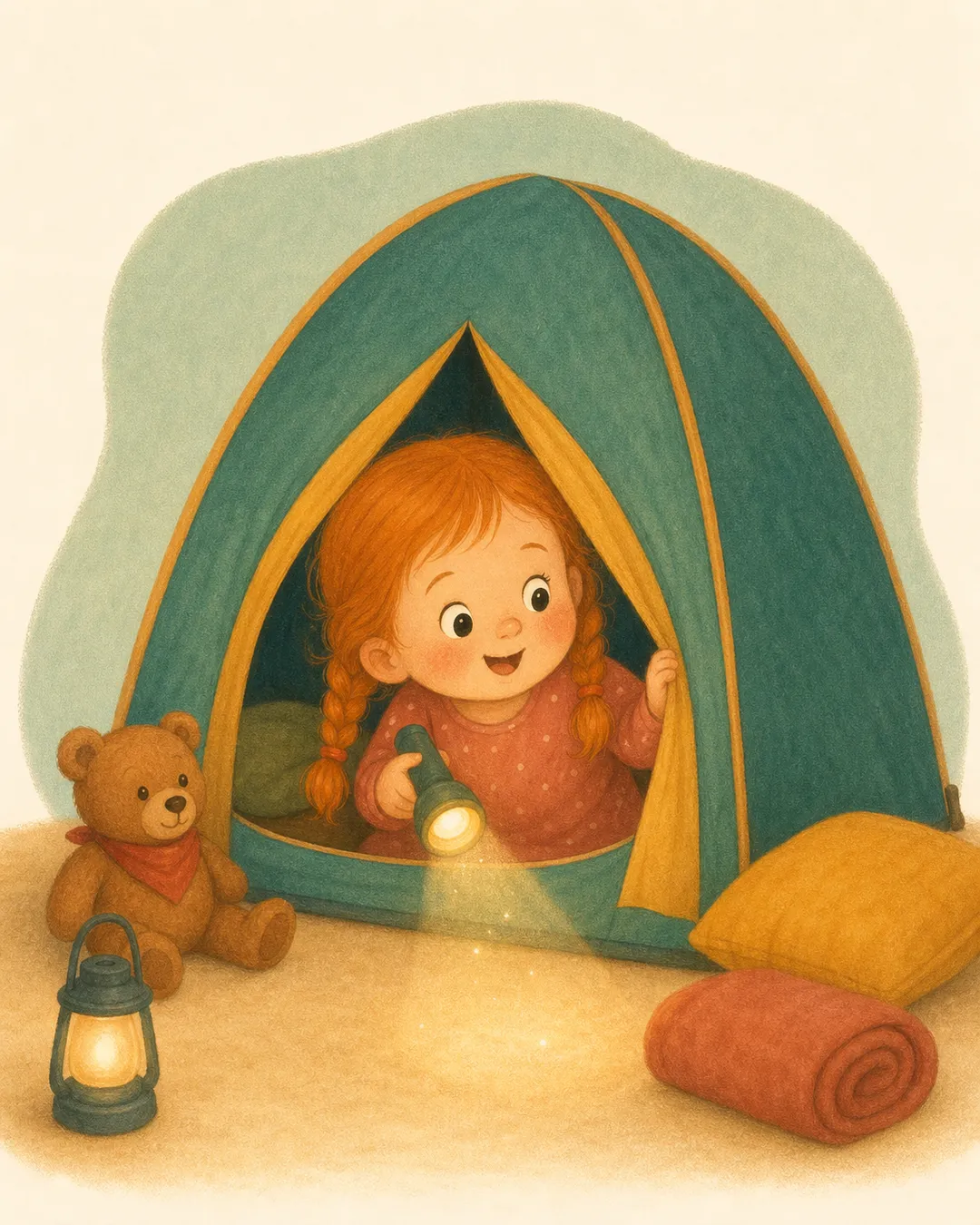
A reading game where you commit to making only statements — never questions — for the whole book. Removes the pressure that questions place on a child with disfluency.
Tiny Steps
Set out picture books before inviting your toddler in so the first minute feels smooth.

Back-and-forth between you — words, gestures, shared pretend. Connection is the real outcome here.
Pick a picture book and read it together with one rule: you only make statements, you never ask questions. Instead of 'What can you see on this page?', say 'I can see a duck on the pond.' Instead of 'What colour is the cat?', say 'The cat is grey and white.' Questions feel innocent, but for a child with disfluency they pile pressure on the moment of speech. Removing them lets your child speak when they want to, not because they're being asked.
The NHS guidance on stammering centres on building an environment where the child feels relaxed and confident about talking — and the single most question-pressured environment most toddlers experience is being read to by an adult. The Stuttering Foundation's parent advice puts the principle directly: children speak more freely when they are expressing their own ideas rather than answering an adult's questions. Switching to comment-only language removes the cognitive load that worsens early disfluency and turns reading into an invitation to talk rather than a quiz.
One email a week with practical toddler activities, behaviour tips, and developmental insights. No spam, unsubscribe any time.