Parent tip
Start before you overthink it. No-prep activities work best when you begin while the moment is still recoverable.

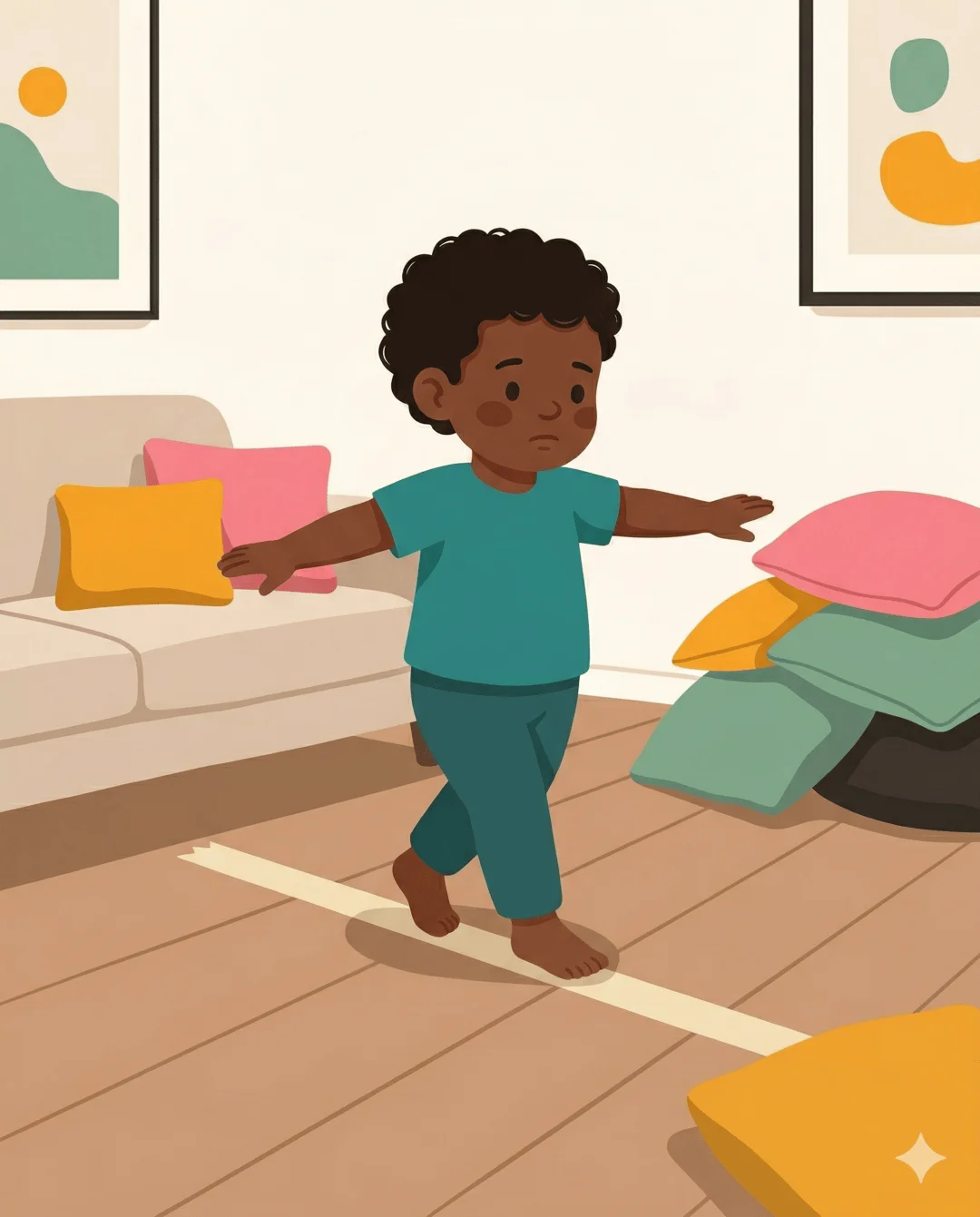
Play a freeze game where children practise stopping and noticing body signals — 'Does your tummy feel anything? Do you need a wee?' — building potty awareness.
Tiny Steps
Start before you overthink it. No-prep activities work best when you begin while the moment is still recoverable.

Flushed cheeks, big smiles, and a calmer child afterwards. If they want to do it again, you’ve found a winner.
Children resist the potty partly because they do not recognise their body's signals until it is too late. This game builds interoception — the ability to notice internal body sensations — by playing freeze-and-check: run around, then freeze, then scan the body. 'What can you feel? Is your heart beating fast? Is your tummy full? Do you need a wee?' Regular practice helps children learn to pause and check in with their bodies before the signal becomes urgent.
Interoception — the sense of internal body signals — is a skill that develops throughout early childhood and is crucial for potty training success. Research from occupational therapy shows that children who struggle with potty training often have underdeveloped interoceptive awareness — they genuinely do not notice the 'need to go' signal until it is overwhelming. Regular freeze-and-check games build this awareness gradually by pairing movement with body scanning, which strengthens the neural pathways between the bladder signal and conscious recognition. The EYFS Physical Development goals include body awareness and spatial understanding, both of which grow through exactly this kind of movement play.
One email a week with practical toddler activities, behaviour tips, and developmental insights. No spam, unsubscribe any time.