Turn dressing into a high-energy obstacle course where each clothing station is a pit-stop, making the morning routine exciting.
Activity details
2y–4y10 minshighindoorCushions
Instructions
Tiny Steps
Get ready
Before your child wakes or while they eat breakfast, place one clothing item at each of four or five 'stations' around the bedroom or hallway — socks by the door, trousers on the bed, shirt on a cushion.
Say 'It's the getting-dressed race! Can you get to every station and put your clothes on before the music stops?'
1/4
Before your child wakes or while they eat breakfast, place one clothing item at each of four or five 'stations' around the bedroom or hallway — socks by the door, trousers on the bed, shirt on a cushion.
Say 'It's the getting-dressed race! Can you get to every station and put your clothes on before the music stops?'
Put on an upbeat song and shout 'Go!' — guide your child to the first station.
At each station, help only as much as needed: 'You pull the socks on, I'll hold the top steady.'
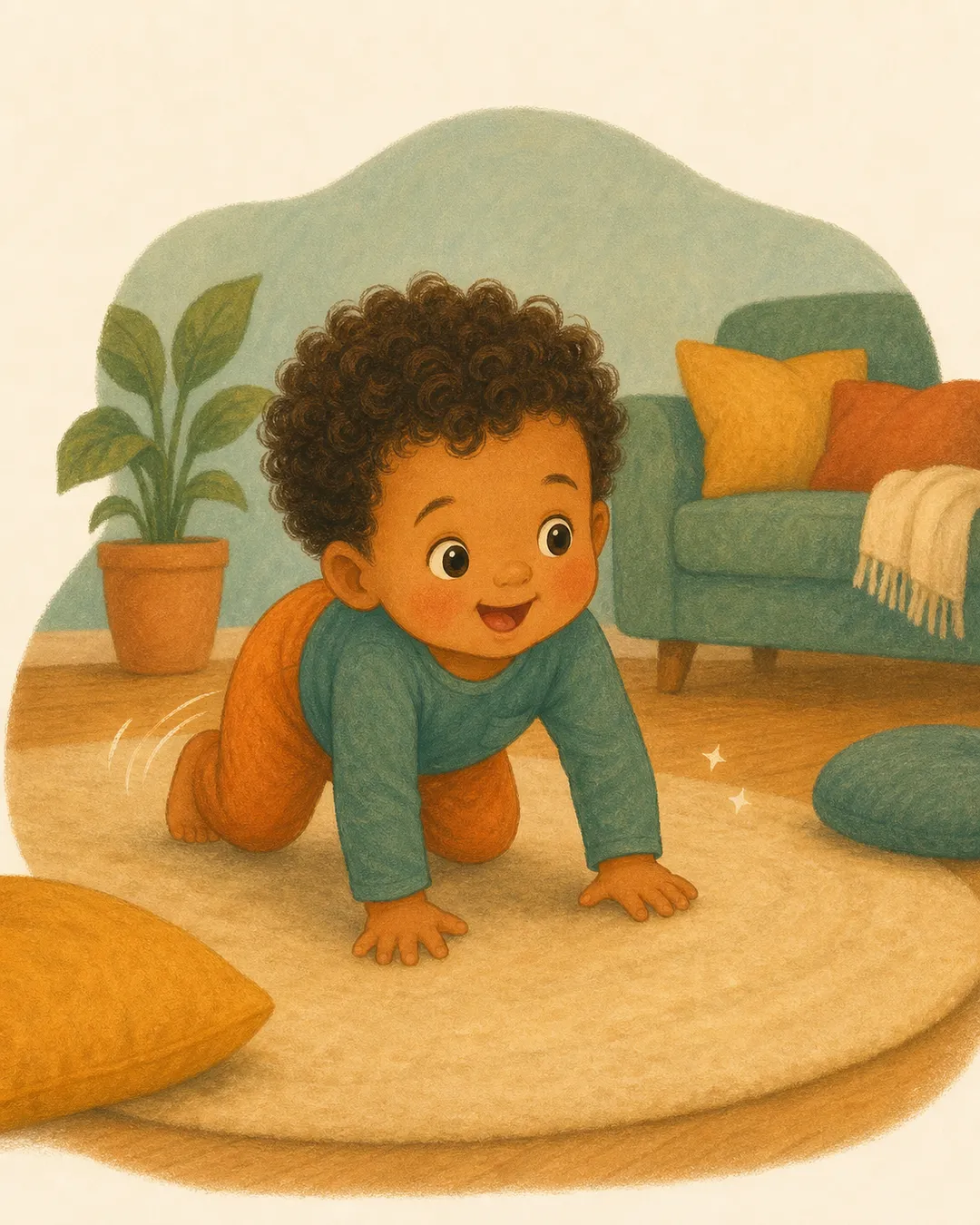
Add fun movement between stations: 'Bear-crawl to the trousers! Hop like a bunny to the shirt!'
Cheer after each item: 'Socks ON! Two more stations to go!'
When the last item is on, celebrate with a star jump together: 'You're fully dressed — champion!'
Keep the course layout the same each morning so it becomes a predictable, exciting routine.
Parent tip
Set out cushions before inviting your toddler in so the first minute feels smooth.
What success looks like
Flushed cheeks, big smiles, and a calmer child afterwards. If they want to do it again, you’ve found a winner.
Some toddlers resist getting dressed because their bodies are bursting with energy first thing in the morning and sitting still to put on clothes feels impossible. This activity works with that energy instead of against it, scattering clothing items at different 'pit-stops' around a simple obstacle course. Your child runs, crawls, or jumps to each station, puts on one item, then moves to the next. The gross motor movement provides the proprioceptive input their body craves, while the game format turns dressing from a chore into a challenge.
Why it helps
The EYFS framework's early learning goals state that children at the expected level will manage their own basic hygiene and personal needs, including dressing — making practice with fastenings and clothing a direct school-readiness skill. Morning dressing resistance is often driven by a mismatch between a toddler's high arousal state and the fine motor, low-energy demand of getting dressed. Gross motor movement between clothing stations provides heavy-work proprioceptive input that helps regulate the nervous system, making the child more able to focus on the fine motor task of pulling on clothes. Structuring the routine as a predictable game also supports executive function development — sequencing, planning, and task completion.
Variations
Use a timer and let your child try to beat yesterday's time — the competitive element motivates older toddlers.
Add a 'silly walk' rule: they must walk backwards between stations, or hop on one foot — this increases the fun and the gross motor challenge.
For younger toddlers, reduce to three stations and use only easy-on items like pull-on trousers, a t-shirt, and slip-on shoes.
Safety tips
Clear the obstacle route of any sharp furniture edges or trip hazards before starting.
Ensure stations are on non-slip surfaces, especially if your child is in socks or barefoot.
Keep the atmosphere fun and pressure-free — if your child gets frustrated with a tricky item, help immediately rather than insisting they do it alone.
Try one of these next
A few connected ideas chosen by theme, energy, set-up, and age fit.