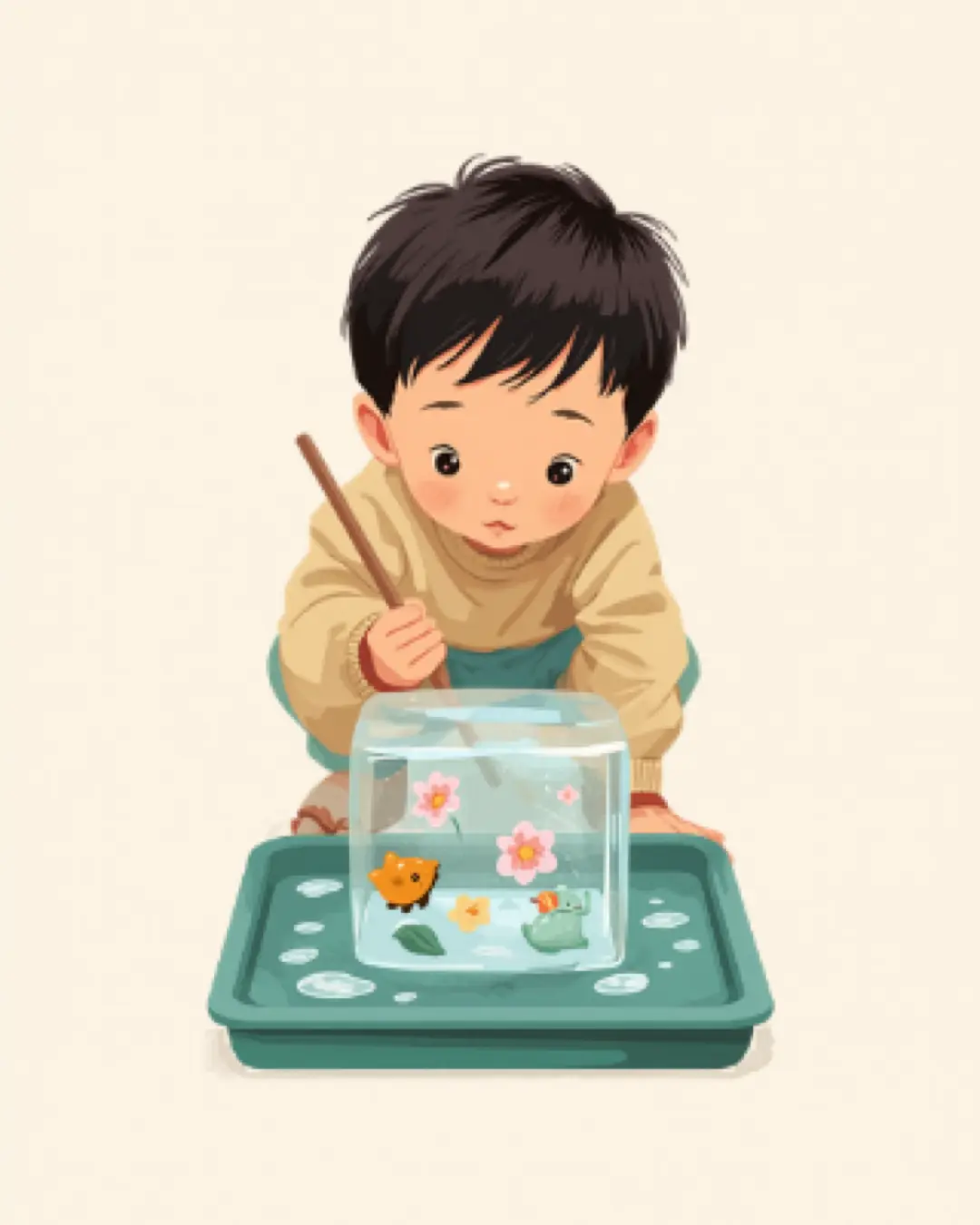
Float foam letters in the bath and fish them out with a sieve or cup, naming each letter as it is caught.
Activity details
2y–4y10 minslowindoorFoam Bath Letters
Instructions
Tiny Steps
Get ready
Drop a handful of foam bath letters into the water (start with 8-10, not the full alphabet).
Give your child a small sieve or cup.
1/4
Drop a handful of foam bath letters into the water (start with 8-10, not the full alphabet).
Give your child a small sieve or cup.
'Can you fish out a letter? Scoop it up!'
When they catch one, name it together: 'You caught the letter B! Buh, buh, B.'
Stick it on the wet bath wall.
Ask: 'Can you find the letter that starts your name?'
Once a few letters are on the wall, try to put them in order or spell a short word.
At the end of the bath, count how many letters are on the wall: 'You fished seven letters tonight!'
Parent tip
Set out foam bath letters before inviting your toddler in so the first minute feels smooth.
What success looks like
Watch for focused exploration — fingers digging in, pouring back and forth, or sorting by feel. Even a few minutes of this builds concentration.
Foam bath letters float on the surface. Your child uses a sieve, cup, or their hands to 'fish' them out one at a time. As each letter is caught, you name it together and stick it on the wet bath wall. Bath time becomes a gentle, no-pressure letter recognition session — and because it happens nightly, the repetition builds familiarity naturally.
Why it helps
Repeated, low-pressure exposure to letter shapes builds familiarity that transfers to print recognition. The multi-sensory aspect — seeing, touching, and naming — creates stronger neural connections than visual-only learning. The EYFS Literacy area identifies that children learn letters best through playful, embedded encounters rather than formal instruction sessions.
Variations
Call out a letter and challenge them to find it in the water — adds a search element.
Use the letters to spell their name on the wall — photograph it and show them.
Float numbers alongside letters and sort them: 'Letters on this side, numbers on that side.'
Safety tips
Check foam letters regularly for damage — torn pieces can be a choking hazard.
Never leave a child unattended in the bath.
Dry foam letters after use to prevent mould — squeeze out water and store in a mesh bag.
Try one of these next
A few connected ideas chosen by theme, energy, set-up, and age fit.