Parent tip
Start before you overthink it. No-prep activities work best when you begin while the moment is still recoverable.
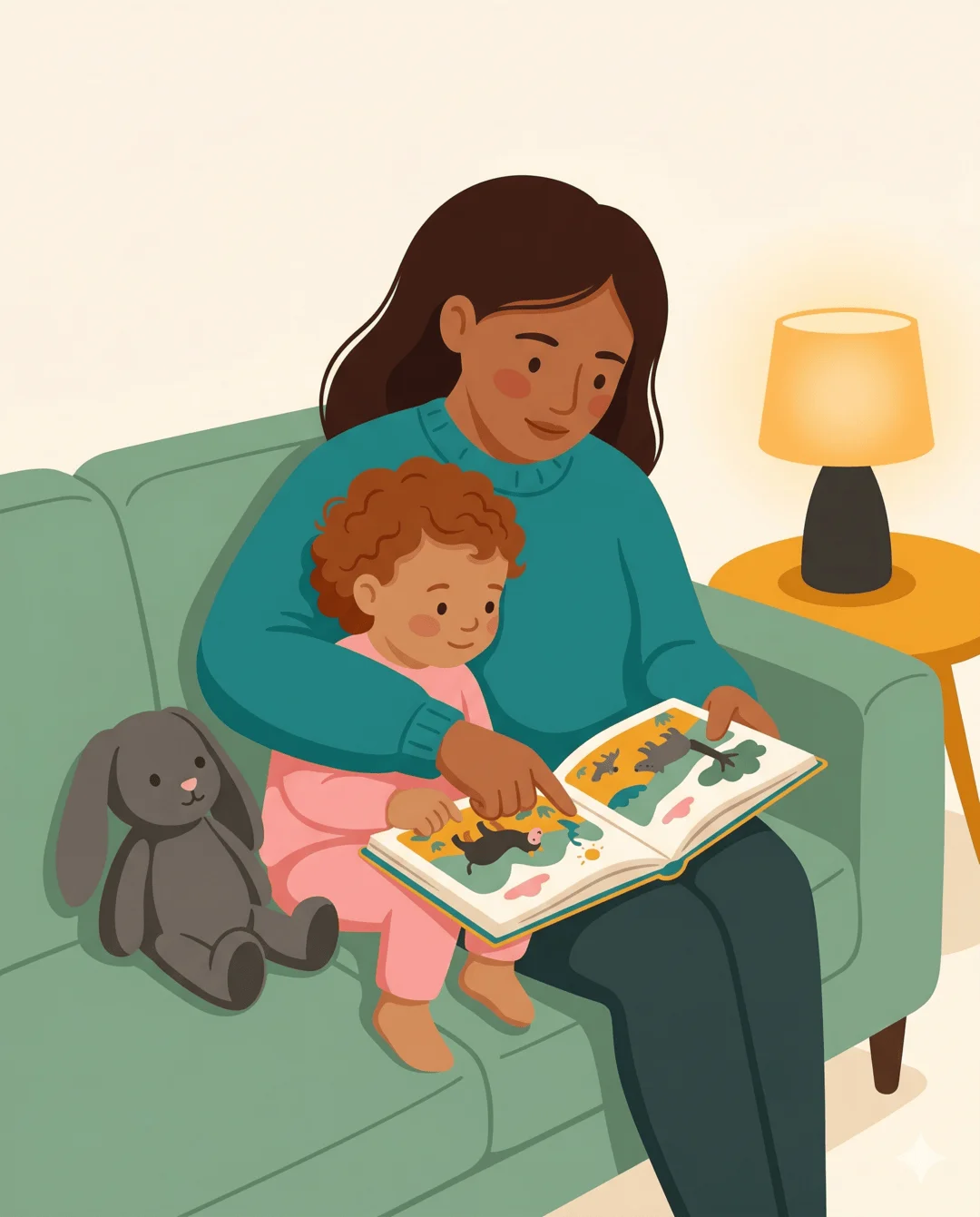
A slow drumming wind-down where you and your toddler tap a steady beat that gradually slows to a calm, sleepy rhythm, using soothing repetition to settle a child who seeks rocking or banging.
Tiny Steps
Start before you overthink it. No-prep activities work best when you begin while the moment is still recoverable.

A few quiet minutes together without pressure. If your child relaxes even slightly, that’s self-regulation building.
Sit together with a cushion as a drum and tap a steady, heartbeat-like beat with flat hands. Start at a comfortable pace, then slow the rhythm down, breath by breath, until the taps are soft and far apart. The predictable, repetitive beat gives a toddler who craves rhythmic input, the kind that sometimes shows up as rocking or head-banging, a calming channel for that need, and slowing the tempo gently guides their body from busy to settled.
The AAP notes that repetitive, rhythmic behaviours such as rocking serve 'a soothing or calming process for the brain', with the steady motion helping to 'soothe or calm the central nervous system'. A slow, shared drumbeat offers that same organising rhythm in a safe, sociable form, and deliberately winding the tempo down gives your toddler's busy nervous system something predictable to follow from active to calm, a gentler route to regulation than the head-banging or vigorous rocking some children reach for on their own.
One email a week with practical toddler activities, behaviour tips, and developmental insights. No spam, unsubscribe any time.