Parent tip
Set out picture books before inviting your toddler in so the first minute feels smooth.
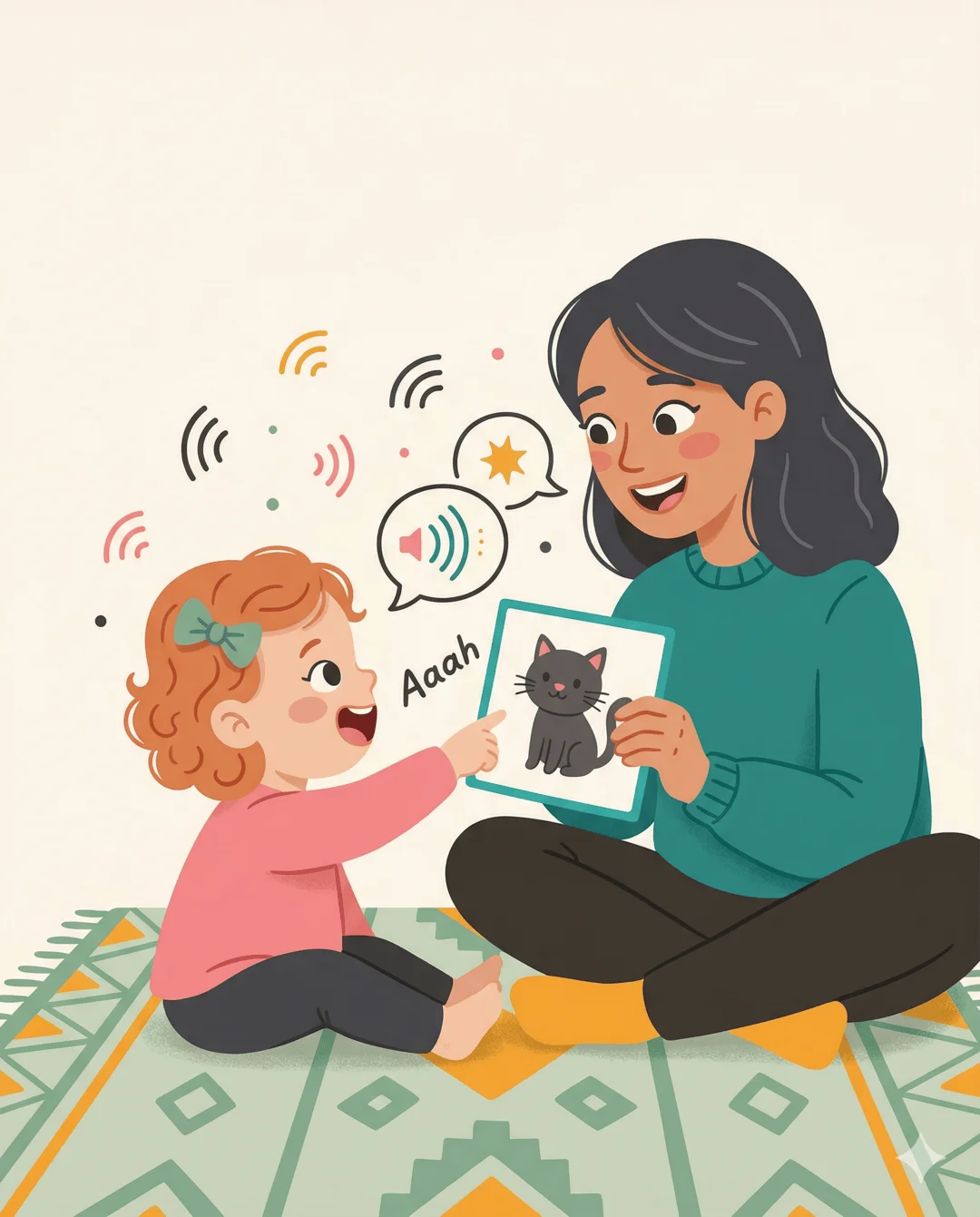
Point at each animal in a board book, make the sound, and wait for baby to try.
Tiny Steps
Set out picture books before inviting your toddler in so the first minute feels smooth.

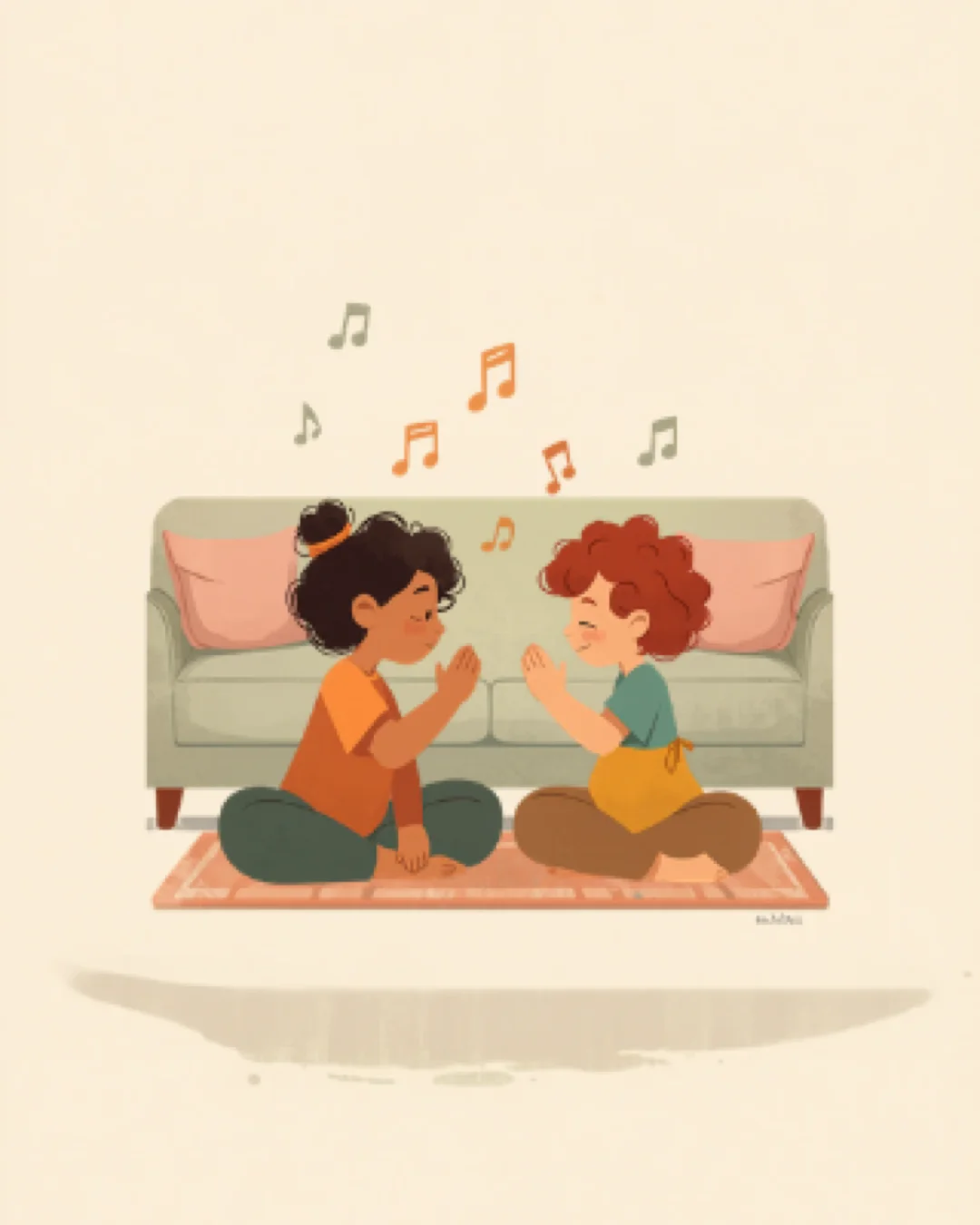
Back-and-forth between you — words, gestures, shared pretend. Connection is the real outcome here.
Open a simple animal board book. Point at the cow: 'Cow! Mooooo!' Point at the dog: 'Dog! Woof woof!' Then wait. Animal sounds are often among a baby's very first 'words' because they're simple, repetitive, and fun to say. When baby says anything that sounds like 'moo' — celebrate like they've just given a speech.
Animal sounds are phonetically simple (one syllable, clear consonant-vowel patterns) and emotionally engaging, making them ideal first words. Board books create shared attention — you and baby looking at the same thing. Speech and Language UK recommend book-sharing as one of the best ways to build vocabulary, starting with just talking about the pictures.
One email a week with practical toddler activities, behaviour tips, and developmental insights. No spam, unsubscribe any time.