Gather 4-5 different containers — a mug, a bowl, a plastic cup, a bucket, an egg cup.
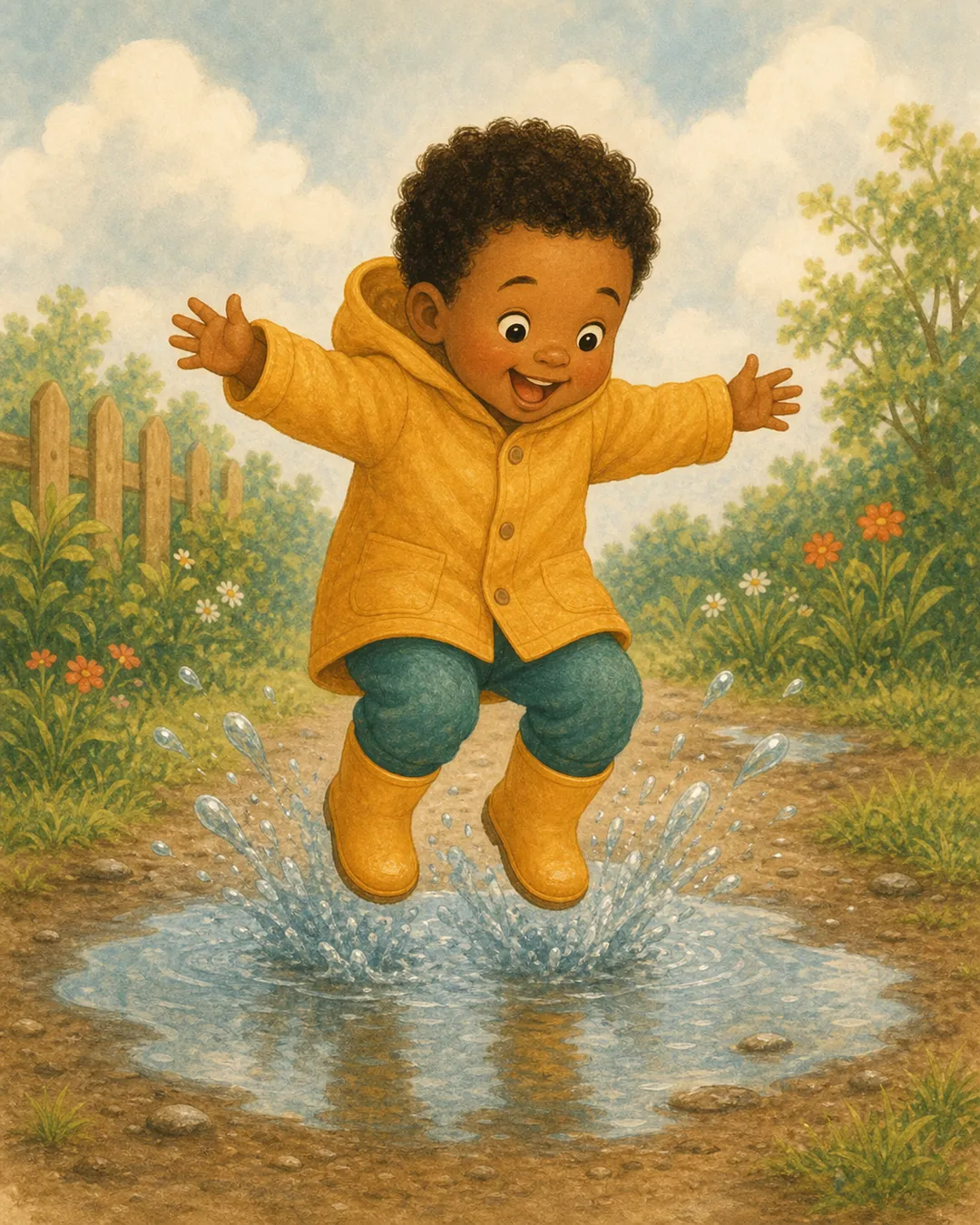
Put on wellies and a waterproof jacket together.
1/4
Gather 4-5 different containers — a mug, a bowl, a plastic cup, a bucket, an egg cup.
Put on wellies and a waterproof jacket together.
Place the containers in different spots around the garden — some under trees, some in the open.
Ask: 'Which one do you think will catch the most rain?'
Go inside and wait (or stay out in light rain and watch).
After 15-30 minutes, check each container together.
Compare: 'This one has lots! This one is nearly empty — why do you think that is?'
Pour all the collected rain into one big container and see how much you caught altogether.
Parent tip
Set out bucket and measuring cups before inviting your toddler in so the first minute feels smooth.
What success looks like
Curiosity in action — pointing, collecting, asking ‘what’s that?’ A child engaged with nature is learning without knowing it.
On a rainy day, your child puts out a selection of cups, bowls, and containers in the garden. After the rain stops (or during a light shower while wearing wellies), they check each container to see how much rain it caught. Big containers catch more — or do they? This simple experiment introduces measurement, prediction, and observation.
Why it helps
Predicting and comparing quantities develops early mathematical thinking — estimation, volume, and comparison. The EYFS Mathematics area highlights that real-world measurement experiences are more meaningful than abstract number work at this age. This activity also normalises rainy weather as something to explore, not avoid.
Variations
Add food colouring to one container before putting it out — watch the rain dilute the colour.
Measure the water with a ruler or by pouring into a measuring jug — introduces early maths.
Try it on different days and compare results: 'It rained more today than yesterday!'
Safety tips
Dress appropriately — wellies, waterproof jacket, and warm layers. Cold wet toddlers are unhappy toddlers.
Supervise around collected water — even small amounts fascinate toddlers and they may try to drink it.
Bring containers inside promptly to prevent mosquito breeding in standing water.
Try one of these next
A few connected ideas chosen by theme, energy, set-up, and age fit.