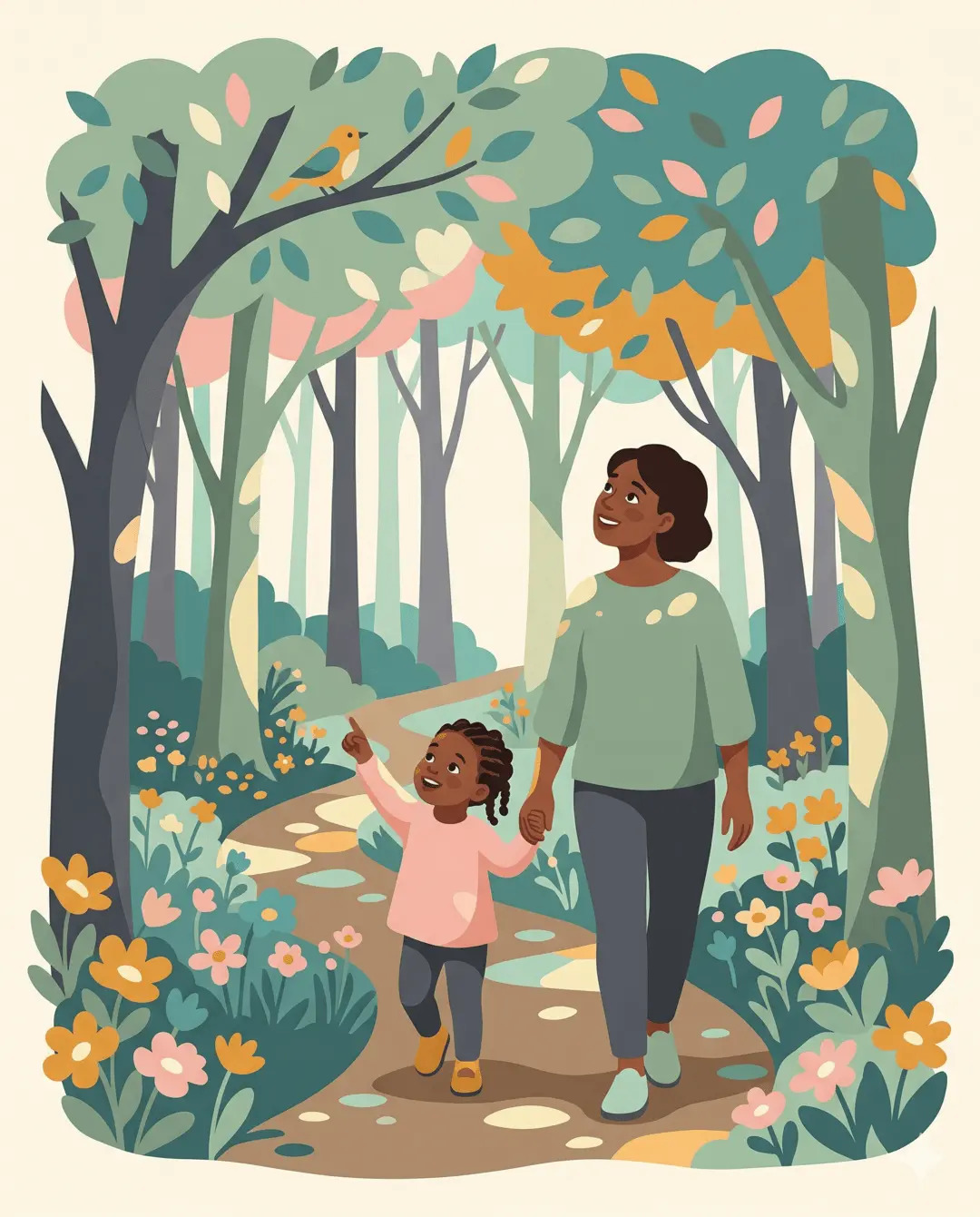
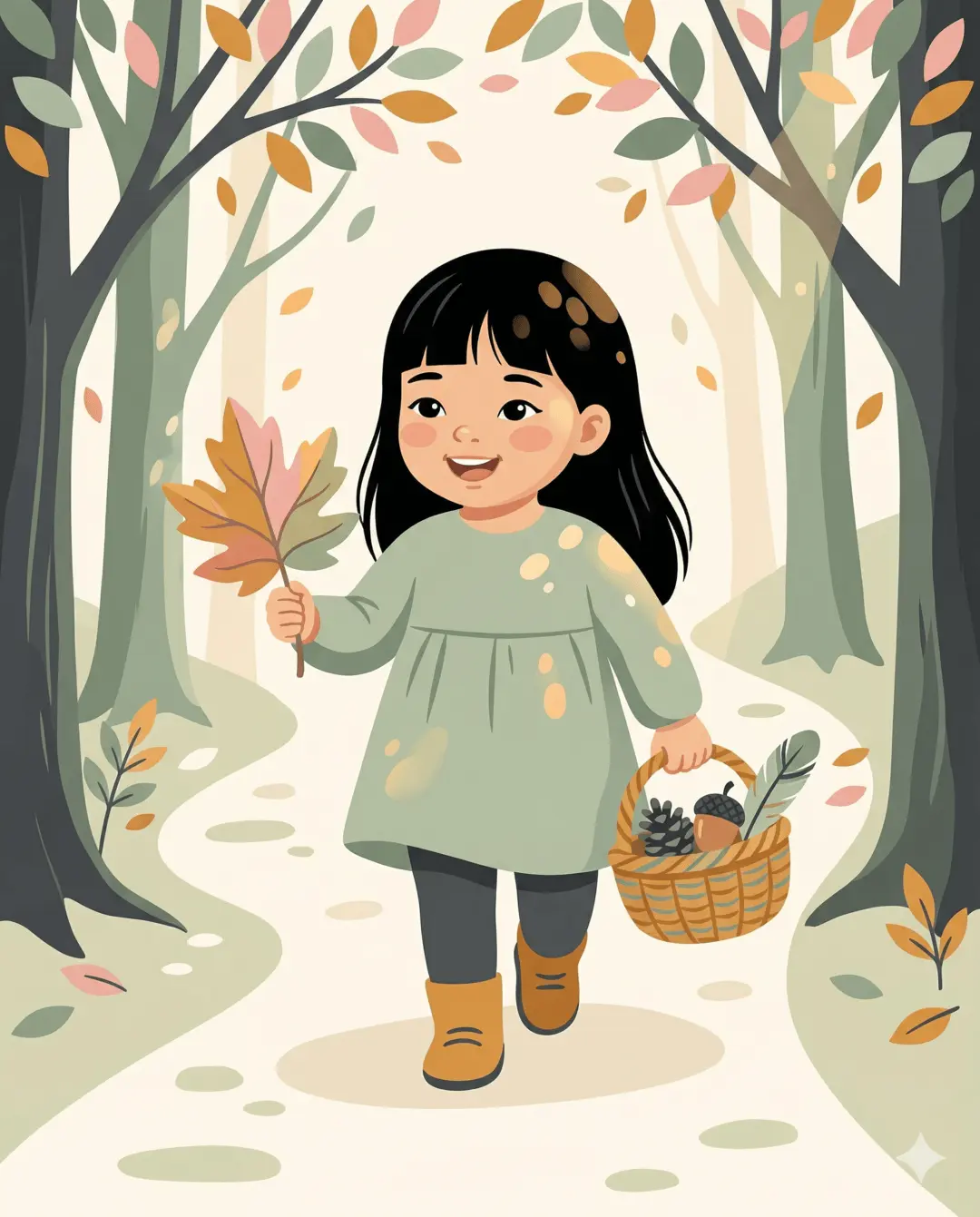
Bring a small bag or container on your walk for collecting.
Look for fallen petals, daisies, buttercups, or clover — avoid picking from planted beds.
1/4
Bring a small bag or container on your walk for collecting.
Look for fallen petals, daisies, buttercups, or clover — avoid picking from planted beds.
Let your child choose which flowers to keep: 'Which ones do you like best?'
At home, lay out two sheets of paper on a table.
Help your child arrange the flowers on one sheet, spacing them apart.
Place the second sheet on top, gently.
Slide the paper into a heavy book and stack more books on top.
Mark the calendar together: 'We will check in five days — what do you think will happen?'
Parent tip
Set out construction paper and paper bags before inviting your toddler in so the first minute feels smooth.
What success looks like
Curiosity in action — pointing, collecting, asking ‘what’s that?’ A child engaged with nature is learning without knowing it.
On a walk, your child picks fallen petals and small wildflowers (not from gardens or parks where picking is discouraged). At home, they place each one between sheets of paper inside a heavy book. Days later, they discover flat, preserved flowers — a magical transformation that teaches patience and observation.
Why it helps
Flower pressing develops delayed gratification — a core executive function skill. Children learn to wait for a result they cannot see happening, which builds patience and prediction skills. The Woodland Trust's nature play research shows that hands-on nature activities also develop careful handling and respect for living things. The EYFS framework puts hands-on exploration at the heart of physical development — these small, focused movements are the building blocks of hand control.
Variations
Once pressed, glue the flowers onto card to make greeting cards for family members — adds a purpose and a recipient.
Create a nature journal page: stick the pressed flowers down and help your child write or draw what they remember about finding each one.
Press leaves alongside flowers in autumn to compare shapes and colours across seasons.
Safety tips
Teach your child to avoid picking from other people's gardens or protected wildflower areas.
Wash hands after handling plants, especially before eating.
Avoid flowers near busy roads where pollution settles on petals.
Try one of these next
A few connected ideas chosen by theme, energy, set-up, and age fit.