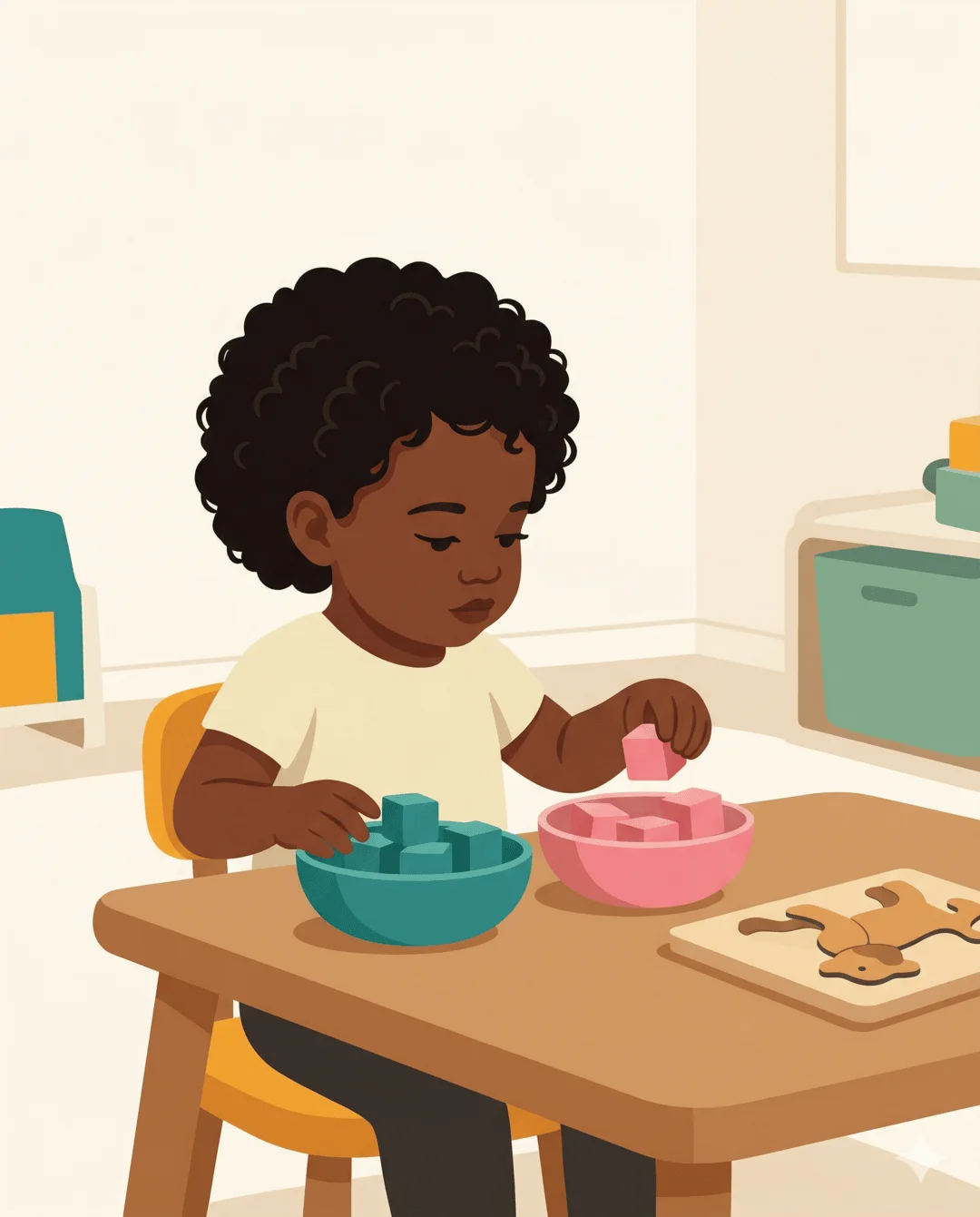
Set out two bowls side by side. Fill one with 15-20 pompoms.
Provide a transfer tool: a large spoon for younger children, tongs or tweezers for older ones.
1/4
Set out two bowls side by side. Fill one with 15-20 pompoms.
Provide a transfer tool: a large spoon for younger children, tongs or tweezers for older ones.
Show them: scoop one pompom, carry it to the empty bowl, drop it in. 'Your turn!'
Step back. Let them work at their own pace.
Dropped pompoms are part of the learning — let them figure out how to pick them up with the tool.
When all pompoms are transferred: 'You moved every single one! Shall we go the other way?'
Transfer back. Then forward. Then back. The repetition IS the activity.
If they get bored of the tool, let them use hands — the tactile squishiness of pompoms is its own reward.
Parent tip
Set out mixing bowls and pom poms before inviting your toddler in so the first minute feels smooth.
What success looks like
Intense focus, even briefly. Watch for the small ‘aha’ moment when they figure out how something works.
Set out two bowls and a pile of pompoms. Give your child a large spoon, tongs, or even a pair of chopsticks taped together. Their mission: transfer every pompom from one bowl to the other without using hands. The satisfying plop of each pompom landing, the concentration of balancing one on a spoon, and the visible progress of the emptying bowl combine to create an activity that is almost hypnotically absorbing.
Why it helps
Transfer activities are a cornerstone of Montessori practical life education because they develop the three-jaw pincer grip, bilateral coordination, and sustained concentration in a self-directed format. The lightweight, forgiving nature of pompoms means dropped items are not frustrating — the child can simply try again. Research from occupational therapy shows that varied tool use (spoon, tongs, fingers) develops different muscle groups in the hand, providing comprehensive fine motor strengthening.
Variations
Use different tools for different challenges: slotted spoon (harder — pompoms fall through), ice cream scoop, ladle, tea strainer.
Colour-sort while transferring: 'Red pompoms in this bowl, blue in that one.'
Replace pompoms with cotton balls (lighter, harder to grip) or small stones (heavier, different feedback) for varied sensory input.
Safety tips
Pompoms are a choking hazard for children who still mouth objects — use large pompoms (4cm+) for under-threes.
Supervise to ensure pompoms do not go up noses — the soft, round shape makes them dangerously tempting.
If using tongs or tweezers, choose blunt-ended ones designed for children — metal tweezers can pinch painfully.
Try one of these next
A few connected ideas chosen by theme, energy, set-up, and age fit.