TinyStepper

Musical Instrument Parade

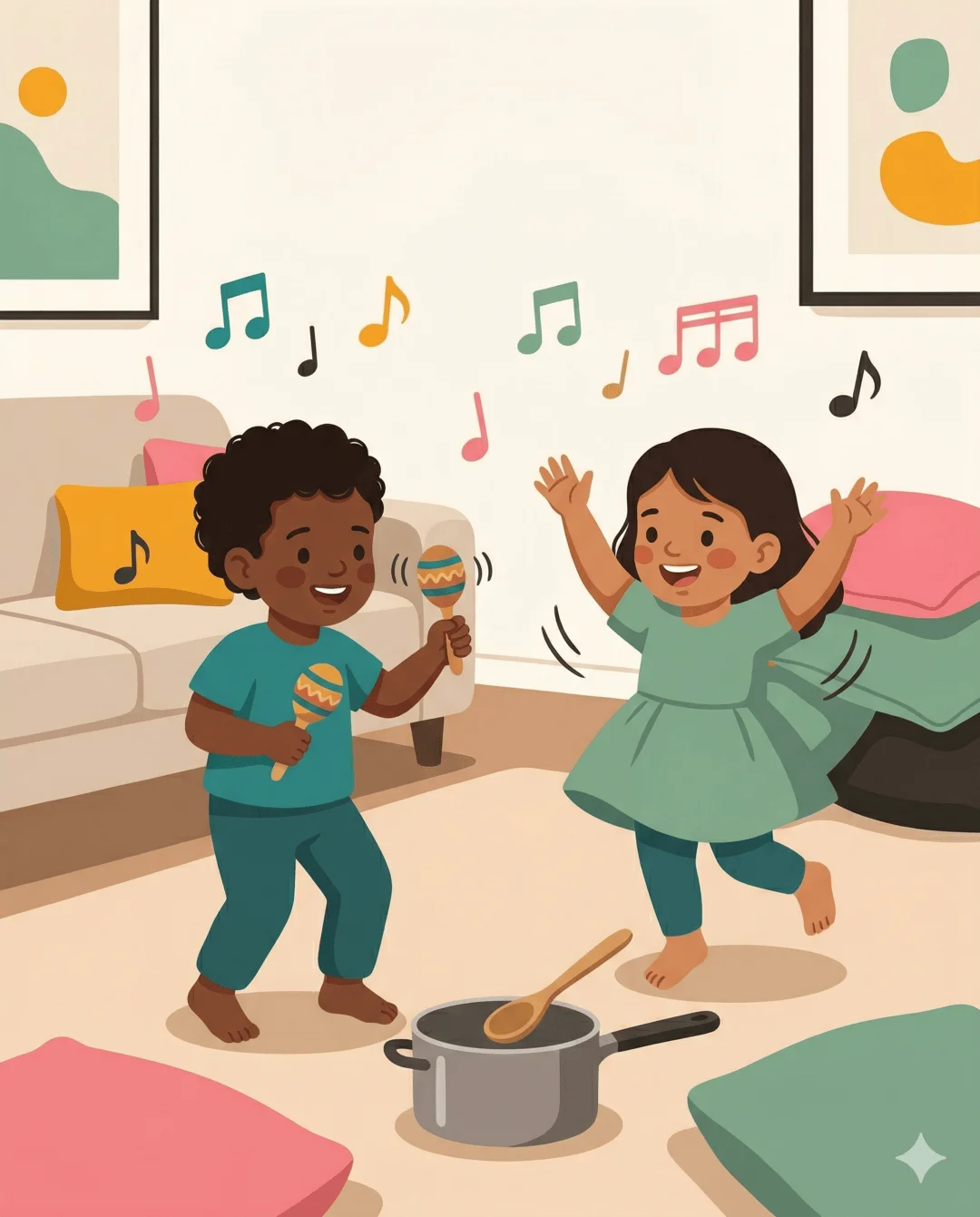
At a glance: March around making music with homemade or real instruments. A 8-minute, high-energy indoor activity for ages 18m4y.

Built by a parent of toddlersBest for 18m-4y

Field-tested ideas shaped by direct parenting experience and advice from reputable sources, including NHS Best Start in Life and NSPCC child development research.

18m4y8 minshigh energyindoornone mess

Joyful music play that channels restless energy into rhythmic movement and builds early rhythm awareness. Marching while playing an instrument requires coordinating two actions at once, which strengthens the brain connections between movement and timing. This is also an excellent emotional outlet, letting toddlers express big feelings through loud, satisfying sounds rather than through tantrums or tears.

Best for this moment

when your toddler needs to move and burn energy, especially when you need an indoor option.

Parent tip

Set out musical instruments and plastic containers before inviting your toddler in so the first minute feels smooth.
What success looks like

A good outcome is a few minutes of engaged play, some back-and-forth with you, and a small sign of progress in creativity.

More help for this situation

Instructions

Get ready
  • Gather instruments: shakers, drums, tambourines, or make your own
  • DIY: rice in sealed containers, pots and wooden spoons, cardboard box drum
  1. Gather instruments: shakers, drums, tambourines, or make your own
  2. DIY: rice in sealed containers, pots and wooden spoons, cardboard box drum
  3. Play music or sing a song
  4. March around the house playing along
  5. Try different speeds: fast marching, slow marching
  6. Freeze dance: stop playing and freeze when music stops
  7. Let toddler lead the parade
  8. End with a 'quiet song' to wind down

Why it helps

Marching while playing an instrument requires coordinating two actions at once, strengthening brain connections between movement and timing. Loud, satisfying sounds provide an emotional outlet, and experimenting with rhythm builds early musical awareness and auditory processing.

Variations

  • March through different rooms and notice how the sound changes in each space.
  • Record the parade on your phone and play it back for your toddler to watch.
  • Assign each person a different instrument and take turns being the conductor.

Safety tips

  • Check homemade instruments for sharp edges or loose parts.
  • Ensure container lids are sealed tightly so contents cannot spill or be eaten.
  • Keep the volume in check if using metal pots — ear protection for sensitive children.

When to pause and seek extra support

Stop if your child becomes distressed, unsafe, or consistently frustrated by the activity. If play, behaviour, or development worries keep showing up across settings, check in with a qualified professional.

Get weekly activity ideas for your toddler

One email a week with practical toddler activities, behaviour tips, and developmental insights. No spam, unsubscribe any time.