TinyStepper

Kitchen Helper Narration

At a glance: Let your toddler 'help' in the kitchen while you narrate every action — stir, pour, splash! A 10-minute, low-energy indoor activity for ages 18m3y. No prep needed.

Built by a parent of toddlersBest for 18m-3y

Field-tested ideas shaped by direct parenting experience and advice from reputable sources, including NHS Best Start in Life and NSPCC child development research.

18m3y10 minslow energyindoorsome messNo prep

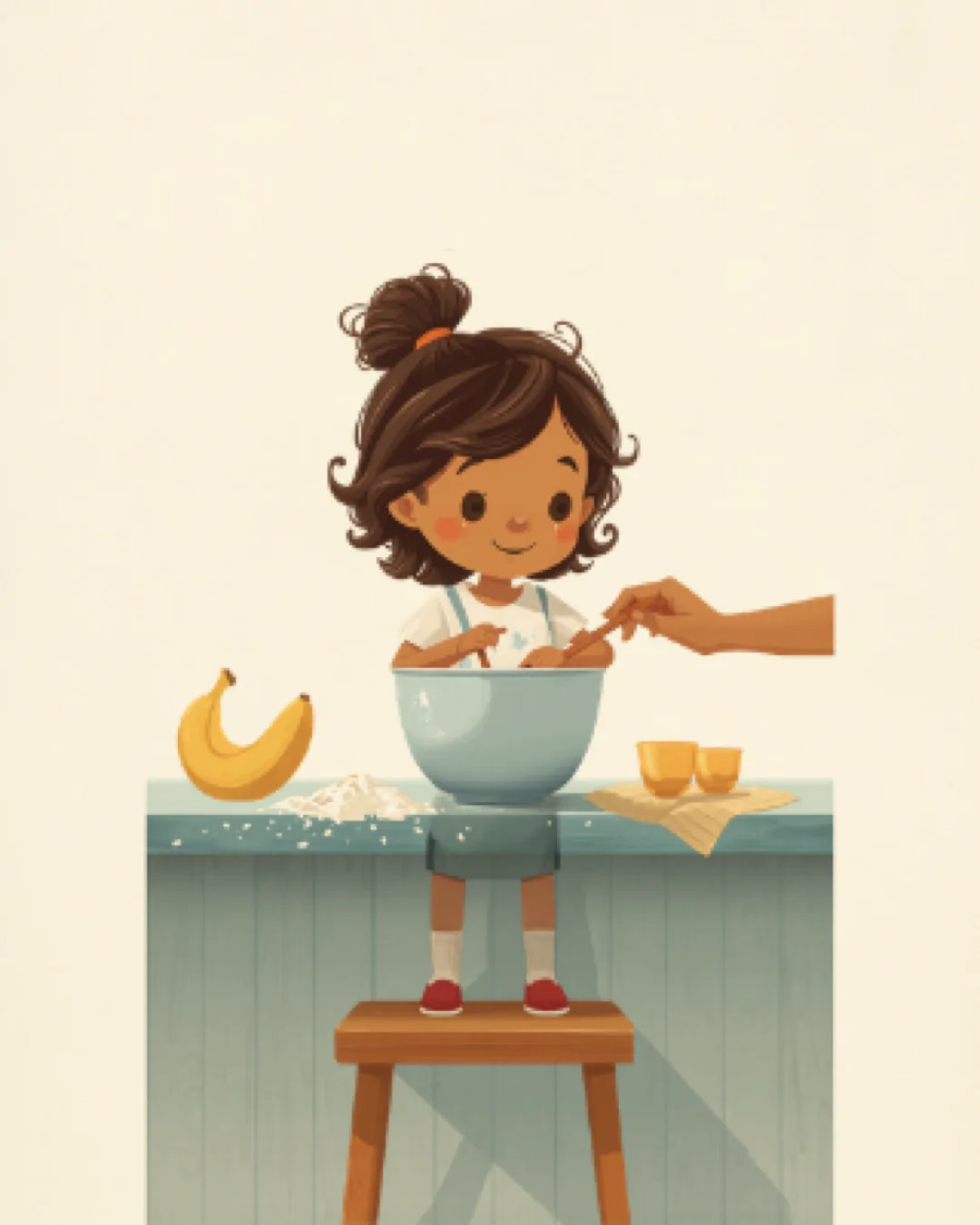
Give your toddler a role in the kitchen — they can stir water in a bowl, pour dried pasta between cups, or tear lettuce leaves. While they work, narrate what they're doing: 'You're stirring! Round and round! Pour the pasta — splash! In the bowl!' The combination of real-world action with language creates powerful word-action associations.

Best for this moment

for calmer, lower-pressure moments, especially when you need an indoor option.

Parent tip

Start before you overthink it. No-prep activities work best when you begin while the moment is still recoverable.
What success looks like

A good outcome is a few minutes of engaged play, some back-and-forth with you, and a small sign of progress in fine motor.

More help for this situation

Instructions

Get ready
  • Set up a safe 'station' at the kitchen counter
  • Give toddler a simple task: stirring water in a bowl
  1. Set up a safe 'station' at the kitchen counter
  2. Give toddler a simple task: stirring water in a bowl
  3. Narrate their actions: 'Stir stir stir! Round and round!'
  4. Name what they're touching: 'That's a wooden spoon. Brown spoon.'
  5. Describe what you're doing too: 'I'm chopping. Chop chop. Carrot!'
  6. Ask simple questions: 'Is it wet? Or dry?'
  7. Celebrate their help: 'You're such a good helper!'

Why it helps

Kitchen activities naturally involve sequencing (first, then, next), naming (foods, utensils, actions), and sensory language (hot, cold, slimy, crunchy). Narrating during real activities — not structured 'lessons' — is what Speech and Language UK recommend: 'Your child is learning to communicate all the time, and it is most helpful to use these tips during your daily routines.'

Variations

  • Name foods as you cook: 'Carrot. Orange carrot. Chop chop!'
  • Count items together: 'One tomato, two tomatoes, three!'
  • Describe textures: 'Slimy pasta! Crunchy bread!'

Safety tips

  • Keep toddler away from hot surfaces, sharp knives, and boiling water.
  • Use a learning tower or high chair at counter height.
  • Assign safe tasks: stirring cold water, tearing soft foods, pouring dry ingredients.

When to pause and seek extra support

Stop if your child becomes distressed, unsafe, or consistently frustrated by the activity. If play, behaviour, or development worries keep showing up across settings, check in with a qualified professional.

Get weekly activity ideas for your toddler

One email a week with practical toddler activities, behaviour tips, and developmental insights. No spam, unsubscribe any time.