TinyStepper

Nesting Cup Tower

At a glance: Stack measuring cups into a tower, then nest them back inside each other. A 7-minute, low-energy indoor activity for ages 12m2y. No prep needed.

Built by a parent of toddlersBest for 12m-2y

Field-tested ideas shaped by direct parenting experience and advice from reputable sources, including NHS Best Start in Life and NSPCC child development research.

12m2y7 minslow energyindoornone messNo prep

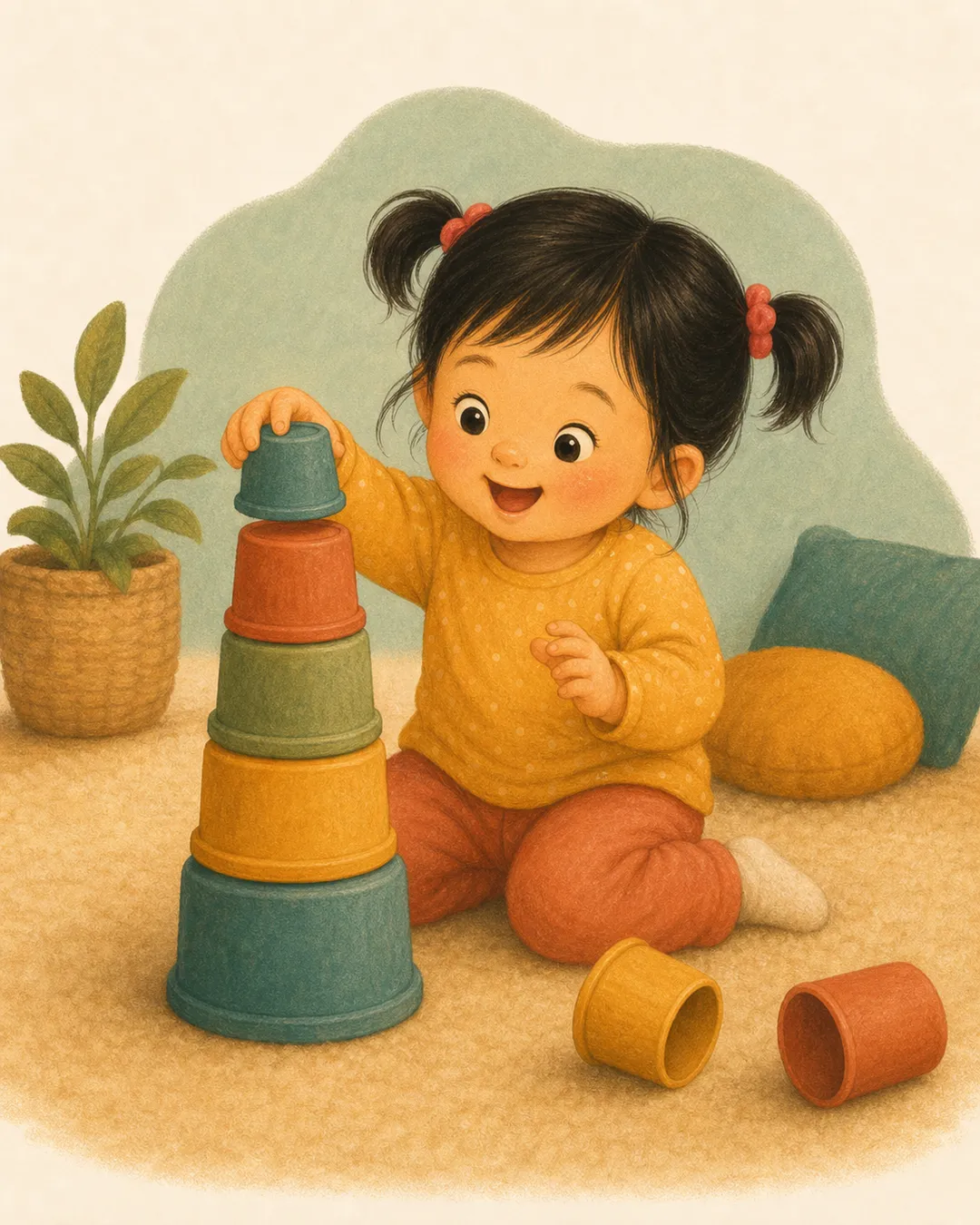
Give your toddler a set of measuring cups or plastic cups of different sizes and let them stack, nest, and knock them down. The dual challenge — stacking from big to small and nesting from small to big — introduces size comparison and sequencing in a hands-on way that no screen can match. When the tower crashes, they learn that trying again is part of the fun, building persistence alongside cognitive skills.

Best for this moment

for calmer, lower-pressure moments, especially when you need an indoor option.

Parent tip

Start before you overthink it. No-prep activities work best when you begin while the moment is still recoverable.
What success looks like

A good outcome is a few minutes of engaged play, some back-and-forth with you, and a small sign of progress in cognitive skills.

More help for this situation

Instructions

Get ready
  • Gather 4–5 measuring cups or plastic cups of different sizes
  • Show your child how to stack them from biggest to smallest
  1. Gather 4–5 measuring cups or plastic cups of different sizes
  2. Show your child how to stack them from biggest to smallest
  3. Let them try — it doesn’t matter if it topples
  4. Demonstrate nesting: ‘This small one fits inside the big one!’
  5. Let them explore both stacking and nesting freely
  6. Count the cups as you build: ‘One, two, three!’
  7. Cheer when the tower falls: ‘Crash! Let’s build again!’
  8. Try hiding a small toy under a cup — ‘Where did it go?’

Why it helps

Stacking by size teaches seriation — ordering objects from smallest to largest — which is a foundational maths concept. The precision needed to balance one cup on another refines fine motor control and hand-eye coordination, while the crash-and-rebuild cycle teaches persistence and emotional resilience.

Variations

  • Hide small objects under each cup for a ‘find the toy’ memory game.
  • Fill cups with rice or water for sensory pouring practice.
  • Take cups to the sandpit for outdoor digging and moulding.

Safety tips

  • Use plastic or silicone cups rather than ceramic or glass.
  • For younger toddlers, start with just 3–4 cups to avoid frustration.
  • Ensure cups have no cracks or sharp edges.

When to pause and seek extra support

Stop if your child becomes distressed, unsafe, or consistently frustrated by the activity. If play, behaviour, or development worries keep showing up across settings, check in with a qualified professional.

Get weekly activity ideas for your toddler

One email a week with practical toddler activities, behaviour tips, and developmental insights. No spam, unsubscribe any time.