Set up plastic bottle pins at the end of a hallway and let your child bowl them over with a rolled or thrown ball.
Activity details
19m–4y15 minsmediumindoorBallsMasking TapePlastic BottlesRice or Pasta
Instructions
Tiny Steps
Get ready
Fill five or six empty plastic bottles with a little rice or pasta to give them some weight (so they don't fall over from a breeze).
Set them up in a triangle formation at the end of a hallway or across a room.
1/4
Fill five or six empty plastic bottles with a little rice or pasta to give them some weight (so they don't fall over from a breeze).
Set them up in a triangle formation at the end of a hallway or across a room.
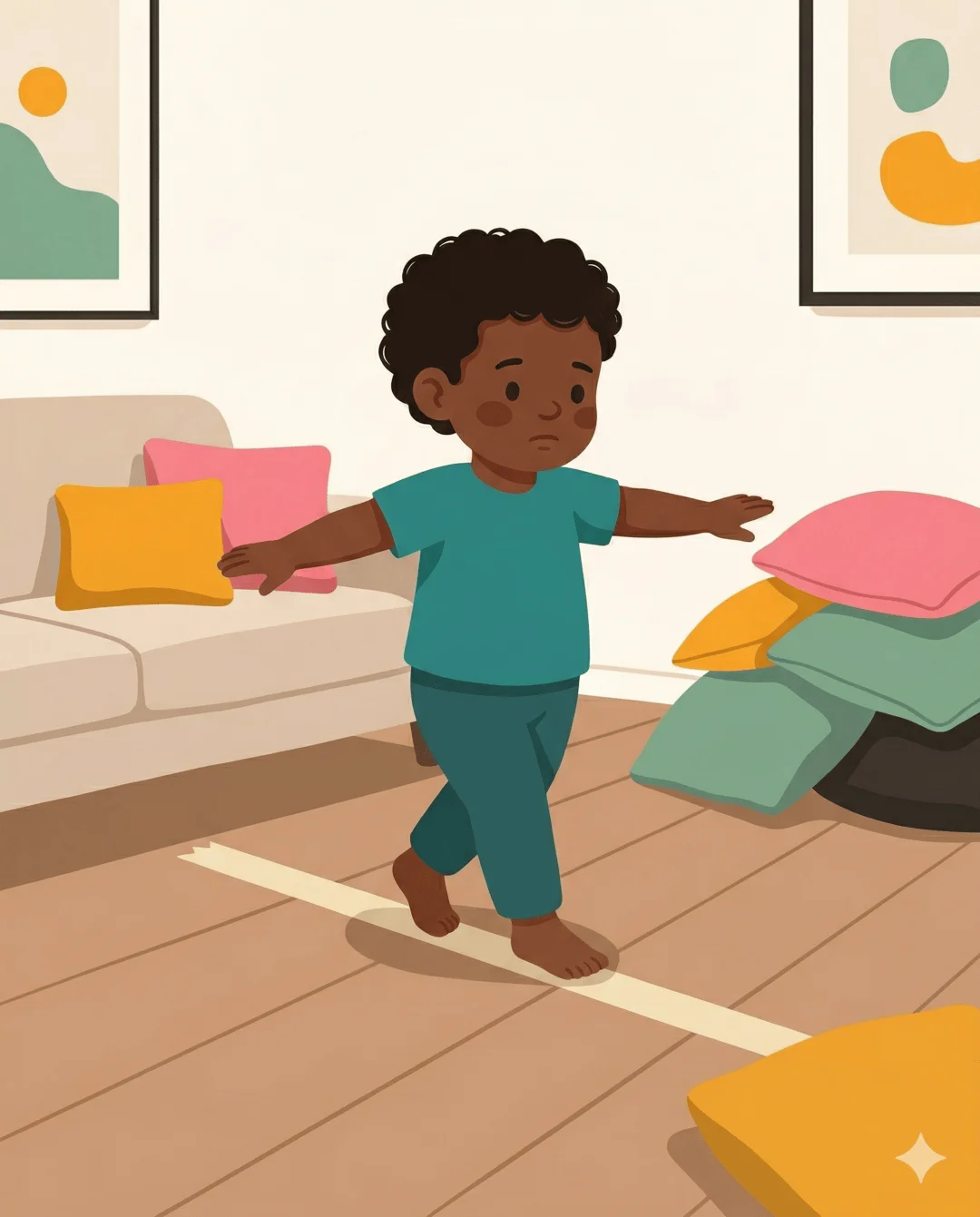
Mark a 'bowling line' with masking tape on the floor — this is where your child stands.
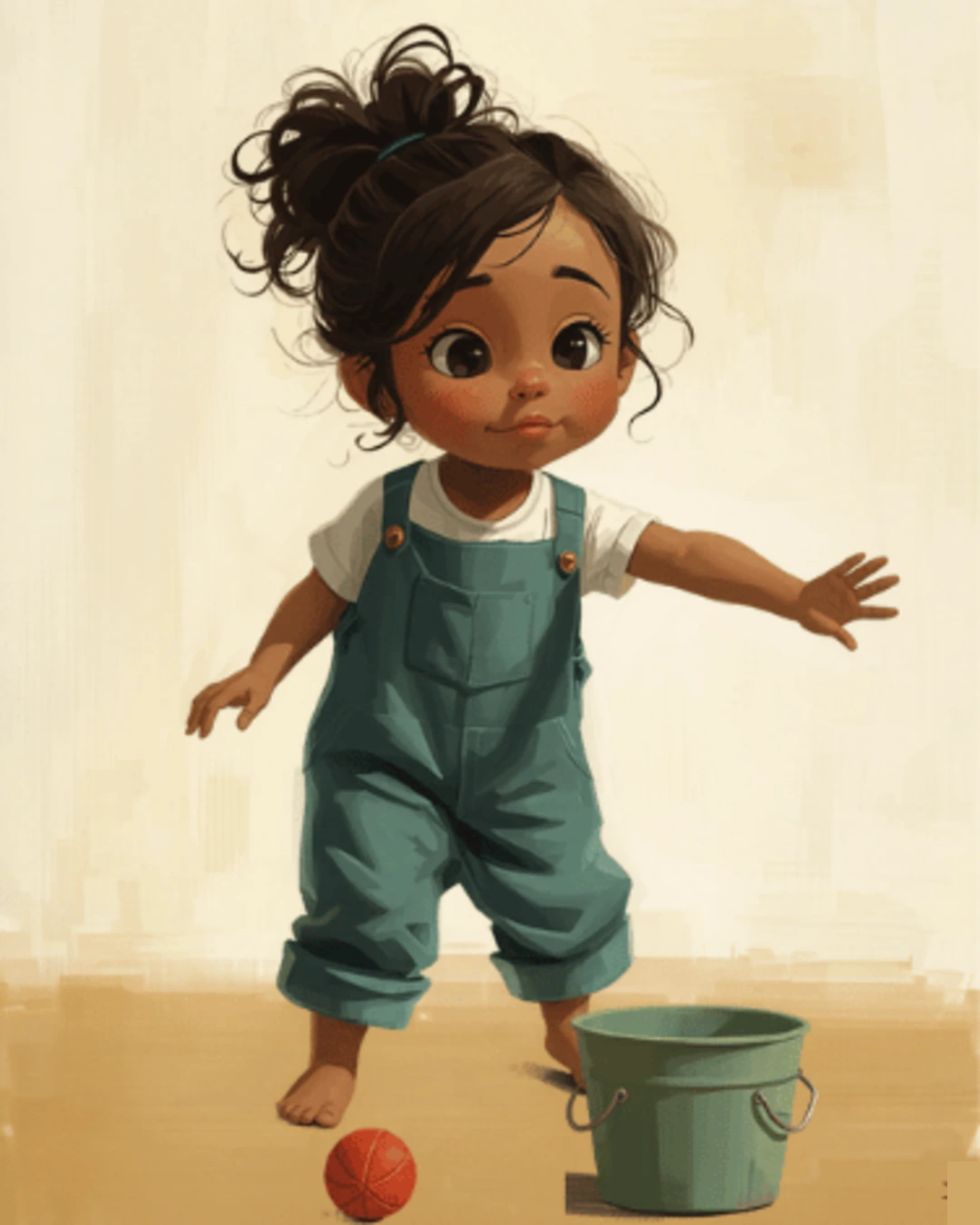
Give your child a medium-sized ball and show them how to roll or throw it toward the pins.
Count the pins that fall together: 'One, two, three — you knocked three down!'
Let your child help set the pins back up — this is the calm-down interval between the high-energy throws.
Introduce variations: can they knock them all down in one throw? What about throwing with the other hand?
End the game after a set number of rounds (three to five works well) and pack up together: 'Great bowling — you really learned to aim today.'
Parent tip
Set out balls and masking tape before inviting your toddler in so the first minute feels smooth.
What success looks like
Flushed cheeks, big smiles, and a calmer child afterwards. If they want to do it again, you’ve found a winner.
This activity harnesses the throwing impulse and shapes it into a structured game with rules, turns, and a target. Bowling gives toddlers everything they love about throwing — the satisfying crash, the cause-and-effect, the physical release — but within a framework that teaches them to aim, wait, and take turns. The hallway naturally channels the throw in one direction, making it safer and more focused than open-room throwing.
Why it helps
NHS physical activity guidelines recommend that toddlers are physically active for at least 180 minutes a day, with active play identified as the best way for under-5s to get moving. Bowling requires the child to plan the trajectory of the ball, aim at a specific target, and regulate the force of their throw — all executive function skills that are underdeveloped in children who throw impulsively. Repeated practice strengthens the neural pathways between the motor cortex (which controls the throw) and the prefrontal cortex (which plans and aims it). The turn-taking structure also builds inhibitory control, as the child must wait while the pins are reset.
Variations
Decorate the bottles with faces or stickers to make them into 'characters' — 'Can you knock over the blue monster?'
For younger toddlers, use a bigger ball and set the pins closer — success matters more than challenge at this age.
Create a scoreboard with tally marks for older toddlers who are learning to count — this adds early numeracy.
Safety tips
Ensure the hallway or room is clear of anything fragile or valuable at the far end, behind the pins.
Use a soft ball rather than a hard one to protect floors and skirting boards.
If playing with siblings, make sure only one child is in the 'bowling lane' at a time to avoid being hit by a thrown ball.
Try one of these next
A few connected ideas chosen by theme, energy, set-up, and age fit.