Stack plastic cups or cardboard boxes into a tower on the floor — make it tall enough to be impressive but easy to knock down.
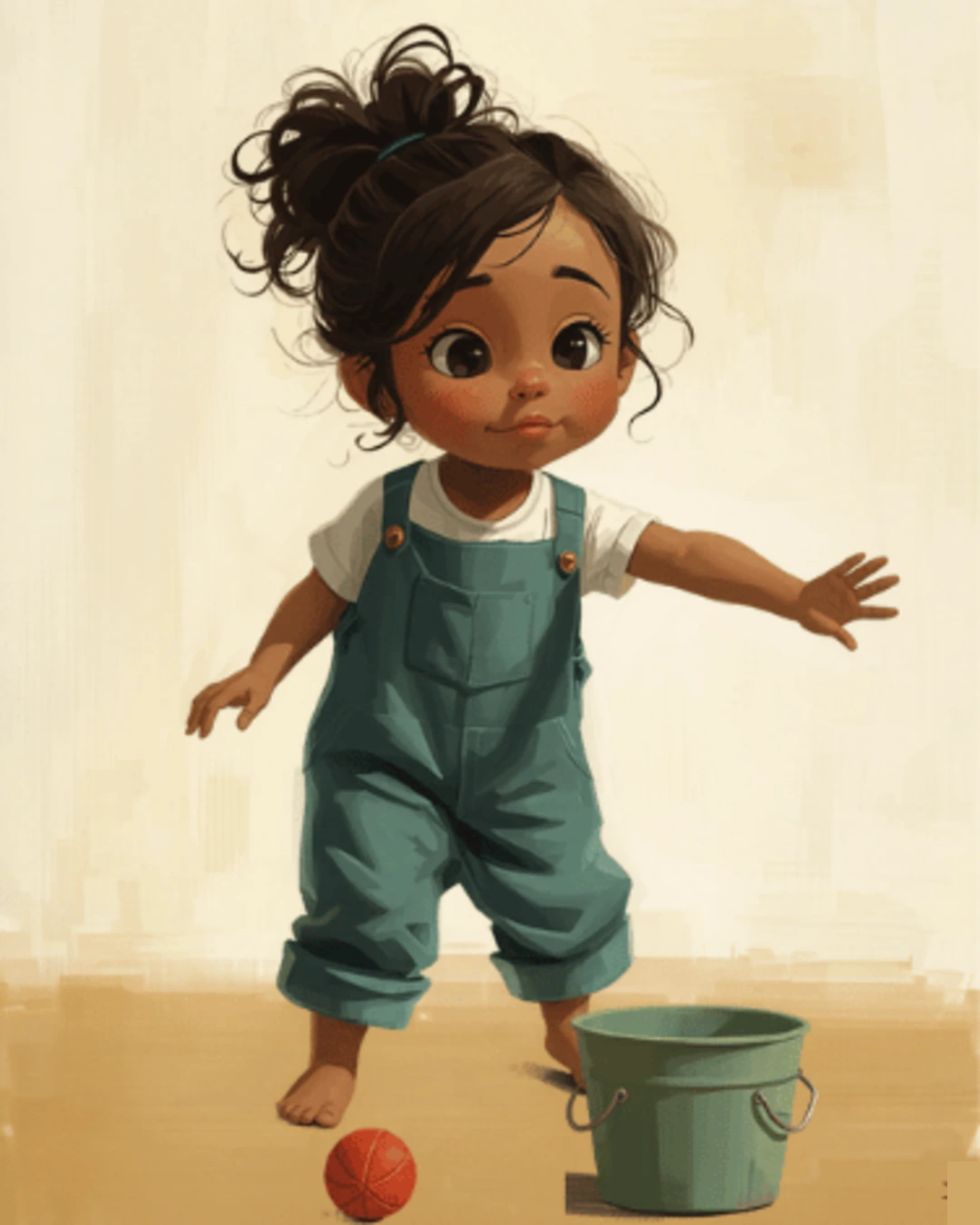
Give your child two or three bean bags or soft balls and stand them a short distance away.
1/4
Stack plastic cups or cardboard boxes into a tower on the floor — make it tall enough to be impressive but easy to knock down.
Give your child two or three bean bags or soft balls and stand them a short distance away.
Say 'Ready, aim... throw!' and let them try to knock the tower down.
Celebrate the crash enthusiastically, whether they hit it or not: 'What a throw! Let's build it again!'
Rebuild the tower together — let your child help stack, which builds fine motor skills between the high-energy throws.
Vary the distance: 'Can you knock it down from waaaay back here?' This introduces challenge progression.
After several rounds, introduce a 'biggest crash' challenge — who can make the tower fall the most dramatically?
Wind down by building one final tower together and choosing not to knock it down: 'This one's our keeper — let's see how long it can stay up.'
Parent tip
Set out bean bags and cardboard boxes before inviting your toddler in so the first minute feels smooth.
What success looks like
Flushed cheeks, big smiles, and a calmer child afterwards. If they want to do it again, you’ve found a winner.
Toddlers who throw things often love the crash and scatter — the cause-and-effect of 'I threw it and everything fell down' is genuinely thrilling for a developing brain. Instead of trying to eliminate this, lean into it. Build towers from plastic cups, cardboard boxes, or building blocks, then let your child throw soft balls or bean bags to demolish them. The throwing is sanctioned, the destruction is planned, and the rebuilding introduces early concepts of resilience and try-again thinking.
Why it helps
NHS Best Start in Life recommends practising throwing, catching and kicking a ball as simple activities that teach coordination, balance and agility. The throw-build-throw cycle exercises working memory (remembering the sequence), hand-eye coordination (aiming at the target), and frustration tolerance (when the throw misses). The rebuilding phase is just as important as the demolition — it teaches persistence and models a growth mindset. Structurally, this activity transforms an unwanted behaviour (throwing at inappropriate targets) into a game with clear rules, which is the foundation of behavioural self-regulation.
Variations
Use toilet roll tubes instead of cups — they make a more satisfying clattering sound when they fall.
Create a scoring system for older toddlers: one point for each cup knocked off, with the number written on a whiteboard.
Build the tower on a table so your child has to throw upward — this changes the muscle groups used and adds challenge.
Safety tips
Use only soft throwing objects — bean bags, rolled socks, or foam balls. Never allow hard items to be thrown indoors.
Ensure the tower is built away from breakable items, lamps, and screens.
For early walkers, keep the throwing distance very short to reduce frustration from missed shots.
Try one of these next
A few connected ideas chosen by theme, energy, set-up, and age fit.