
TinyStepper

Frozen Surprise Dig

At a glance: Freeze small toys inside blocks of coloured ice, then chip, pour, and melt them free with warm water and tools. A 15-minute, low-energy both activity for ages 18m4y.

Built by a parent of toddlersBest for 18m-4y

Field-tested ideas shaped by direct parenting experience and advice from reputable sources, including NHS Best Start in Life and NSPCC child development research.

18m4y15 minslow energybothsome mess

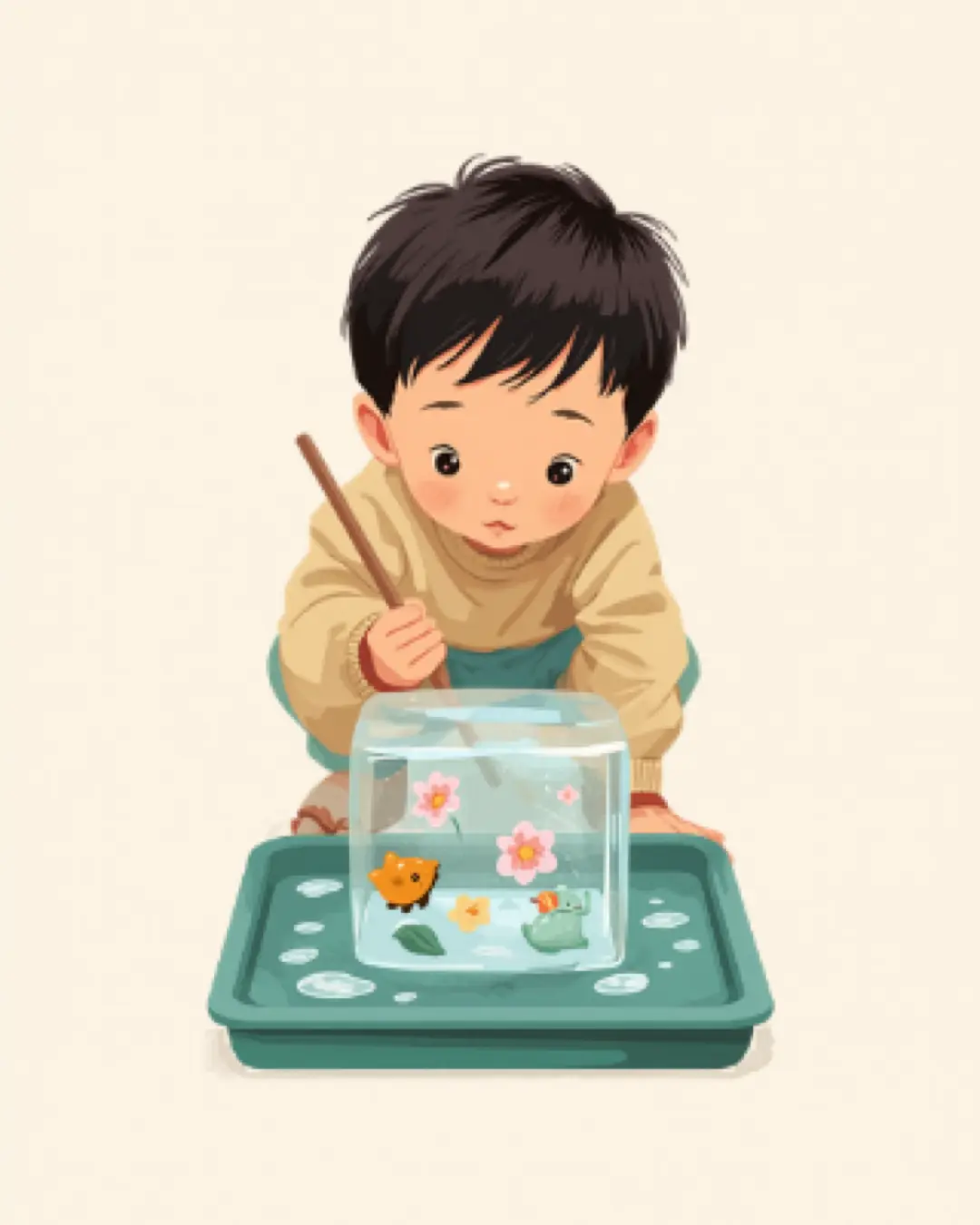
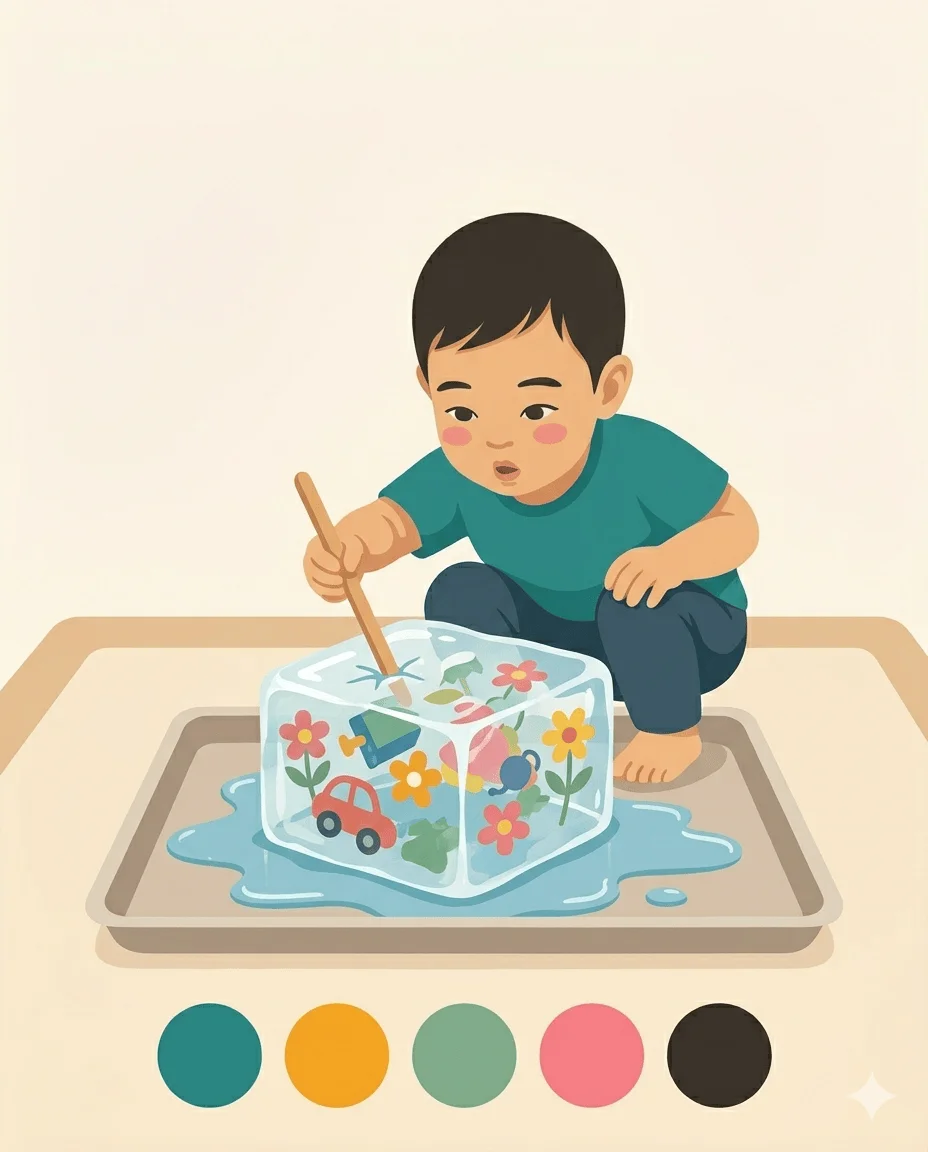
The night before, place small toys inside containers, fill with water, add food colouring, and freeze. Give your toddler the ice blocks, warm water in a jug, and tools: a spoon, a paintbrush, a salt shaker. They chip, pour, paint, and sprinkle to free the trapped toys. The temperature contrast (freezing ice, warm water), the visual drama (colour bleeding out), and the suspense (which toy is inside?) create a multi-layered sensory experience that holds attention for far longer than you would expect.

Best for this moment

for calmer, lower-pressure moments, especially when you need something flexible indoors or outdoors.

Parent tip

Set out food colouring and ice cubes before inviting your toddler in so the first minute feels smooth.
What success looks like

A good outcome is a few minutes of engaged play, some back-and-forth with you, and a small sign of progress in cognitive skills.

More help for this situation

Instructions

Get ready
  • The night before: place small toys in containers, fill with water, add food colouring, freeze
  • Pop the ice blocks out into a large tray or tub
  1. The night before: place small toys in containers, fill with water, add food colouring, freeze
  2. Pop the ice blocks out into a large tray or tub
  3. Provide warm water in a small jug, a spoon, a paintbrush, and some salt
  4. Let your toddler explore: 'There are toys trapped inside! How can we get them out?'
  5. Show techniques: pouring warm water melts the ice, salt makes it crack, spoons chip
  6. Celebrate each freed toy: 'You rescued the dinosaur!'
  7. Talk about what is happening: 'The warm water is melting the cold ice'
  8. When all toys are free, let them play with the coloured meltwater

Why it helps

Temperature is a distinct sensory channel that is often underused in toddler play. The contrast between cold ice and warm water provides cross-modal sensory input that strengthens thermoception (temperature sensing). The problem-solving element — 'how do I free the toy?' — engages executive function and scientific reasoning. The delayed gratification of slowly melting the ice builds patience in a context that is exciting enough to sustain engagement.
Variations

  • Use natural items instead of toys — freeze flowers, leaves, or herbs for a nature ice dig.
  • Layer different colours in the ice for a rainbow effect when melting.
  • Add glitter to the water before freezing for extra sparkle as the ice melts.

Safety tips

  • Ensure frozen toys are too large to be choking hazards once freed.
  • Use lukewarm, not hot water — toddler skin is sensitive to temperature extremes.
  • Supervise closely to prevent toddlers from putting ice directly in their mouths.

When to pause and seek extra support

Stop if your child becomes distressed, unsafe, or consistently frustrated by the activity. If play, behaviour, or development worries keep showing up across settings, check in with a qualified professional.

Get weekly activity ideas for your toddler

One email a week with practical toddler activities, behaviour tips, and developmental insights. No spam, unsubscribe any time.