Parent tip
Set out bucket and plastic cups before inviting your toddler in so the first minute feels smooth.
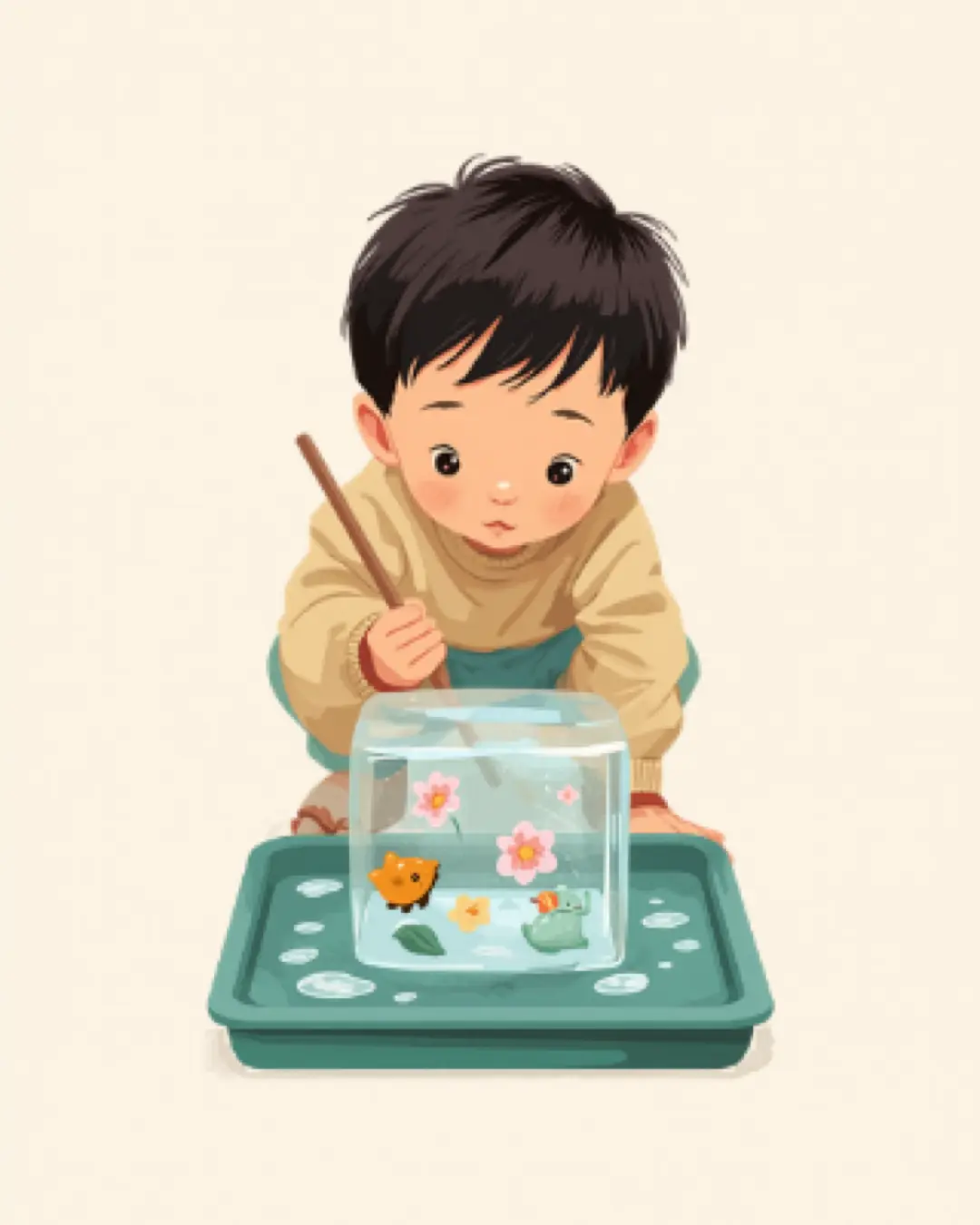
Fill containers with water and carry them across the garden without spilling — a surprisingly absorbing physical challenge.
Tiny Steps
Set out bucket and plastic cups before inviting your toddler in so the first minute feels smooth.

Watch for focused exploration — fingers digging in, pouring back and forth, or sorting by feel. Even a few minutes of this builds concentration.
Set up a filling station (a bucket of water) and a pouring station (an empty bucket) at opposite ends of the garden. Your toddler fills a cup, carries it carefully across the grass, pours it into the second bucket, and runs back for more. The concentration needed to walk steadily with a full cup while resisting the urge to run is a masterclass in impulse control and core stability.
Carrying liquid without spilling requires core stability, bilateral coordination, and sustained attention — three skills that develop together through this Montessori-inspired practical life activity. The NHS identifies coordination as a key benefit of active play, and this activity builds it through purposeful, self-correcting movement rather than instruction. The visible progress of filling the second bucket provides natural motivation without adult-imposed rewards.
One email a week with practical toddler activities, behaviour tips, and developmental insights. No spam, unsubscribe any time.