Give your toddler a watering can and let them water the plants — a real job that builds independence and water-play joy.
Activity details
12m–3y15 minsmediumoutdoorNo prepWatering Can
Instructions
Tiny Steps
Get ready
Fill a small, lightweight watering can about half full — a heavy can is frustrating for little arms.
Walk together to the first plant: 'This flower is thirsty! Can you give it a drink?'
1/4
Fill a small, lightweight watering can about half full — a heavy can is frustrating for little arms.
Walk together to the first plant: 'This flower is thirsty! Can you give it a drink?'
Show your child how to tip the can gently: 'Pour it slowly on the soil, near the roots — that's where the plant drinks from.'
Let them move to the next plant independently, choosing which one to water: 'Which plant shall we help next?'
If water spills on their feet or clothes, treat it as a positive: 'Oops, a splash! The grass got a drink too!'
Name the plants as you go: 'That's lavender — can you smell it? And those tall ones are sunflowers.'
When the can is empty, walk together to the tap or bucket to refill it — the carrying is part of the exercise.
End by reviewing your work: 'Look at all the plants we helped today. They'll grow big and strong because of you!'
Parent tip
Start before you overthink it. No-prep activities work best when you begin while the moment is still recoverable.
What success looks like
Watch for focused exploration — fingers digging in, pouring back and forth, or sorting by feel. Even a few minutes of this builds concentration.
There is nothing a toddler loves more than a genuine task, and watering the garden is one they can do almost entirely independently. Filling, carrying, pouring, and aiming a watering can exercises gross motor strength, bilateral coordination, and spatial awareness all at once. The added bonus of water play makes it irresistibly fun, while the sense of having a real responsibility — 'the plants need YOU' — builds self-esteem and a feeling of being a valued helper in the family.
Why it helps
Carrying and pouring water develops upper body strength, core stability, and hand-eye coordination simultaneously. The 'real job' framing taps into what Montessori educators call 'practical life work' — meaningful tasks that build independence, concentration, and a sense of belonging. Research shows that toddlers who are given genuine household responsibilities develop stronger self-regulation and intrinsic motivation than those who only engage in play-based tasks.
Variations
Add a spray bottle alongside the watering can for misting leaves — this builds different hand strength and grip patterns.
Let your child 'paint' the fence or paving stones with water from the can — the water marks appear and disappear like magic.
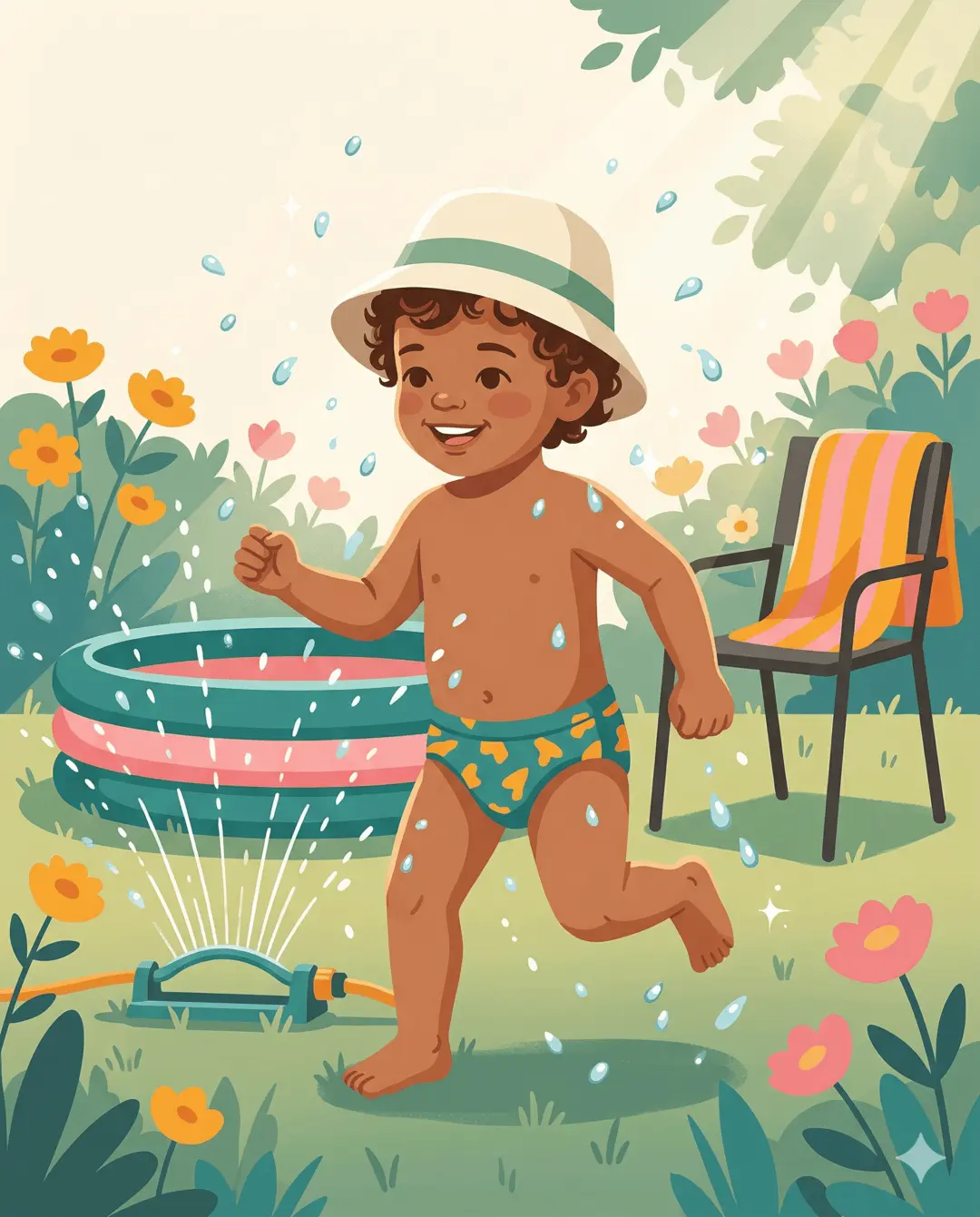
On a hot day, water barefoot and enjoy the splashes on toes — the contrast of warm sun and cool water is a lovely sensory experience.
Safety tips
Use a lightweight plastic watering can that your child can manage when half full — metal cans are too heavy and can pinch fingers.
Supervise around outdoor taps, hose reels, and standing water containers, which pose a drowning risk for young children.
Check the garden for hazards at ground level — slug pellets, garden chemicals, and sharp tools should be out of reach.
Try one of these next
A few connected ideas chosen by theme, energy, set-up, and age fit.