TinyStepper

Water Transfer Play

At a glance: Transfer water between containers using cups, spoons, or sponges. A 15-minute, low-energy both activity for ages 18m3y.

Built by a parent of toddlersBest for 18m-3y

Field-tested ideas shaped by direct parenting experience and advice from reputable sources, including NHS Best Start in Life and NSPCC child development research.

18m3y15 minslow energybothsome mess

A calming sensory activity that builds fine motor skills and focus. Best done outside or in the kitchen. The act of pouring and transferring water strengthens hand muscles, develops coordination, and introduces early concepts of volume and measurement. Many toddlers find water play deeply soothing, making this an excellent choice for winding down after an overstimulating day.

Best for this moment

for calmer, lower-pressure moments, especially when you need something flexible indoors or outdoors.

Parent tip

Set out measuring cups and plastic containers before inviting your toddler in so the first minute feels smooth.
What success looks like

A good outcome is a few minutes of engaged play, some back-and-forth with you, and a small sign of progress in fine motor.

More help for this situation

Instructions

Get ready
  • Set up a large bin or basin with 2 inches of water
  • Provide 3-5 containers of different sizes
  1. Set up a large bin or basin with 2 inches of water
  2. Provide 3-5 containers of different sizes
  3. Add tools: measuring cups, spoons, small pitchers, sponges
  4. Demonstrate pouring from one container to another
  5. Let them explore freely—there's no 'right' way
  6. Add food colouring for extra interest
  7. Lay towels underneath for easy cleanup
  8. Supervise closely around water

Why it helps

Pouring and scooping water strengthens the wrist control and hand muscles needed for writing and self-feeding. The calming sensory quality of water play helps regulate emotions, while experimenting with volume introduces early maths concepts.

Variations

  • Add food colouring to one container and watch colours mix as water transfers.
  • Use turkey basters or pipettes for an extra fine motor challenge.
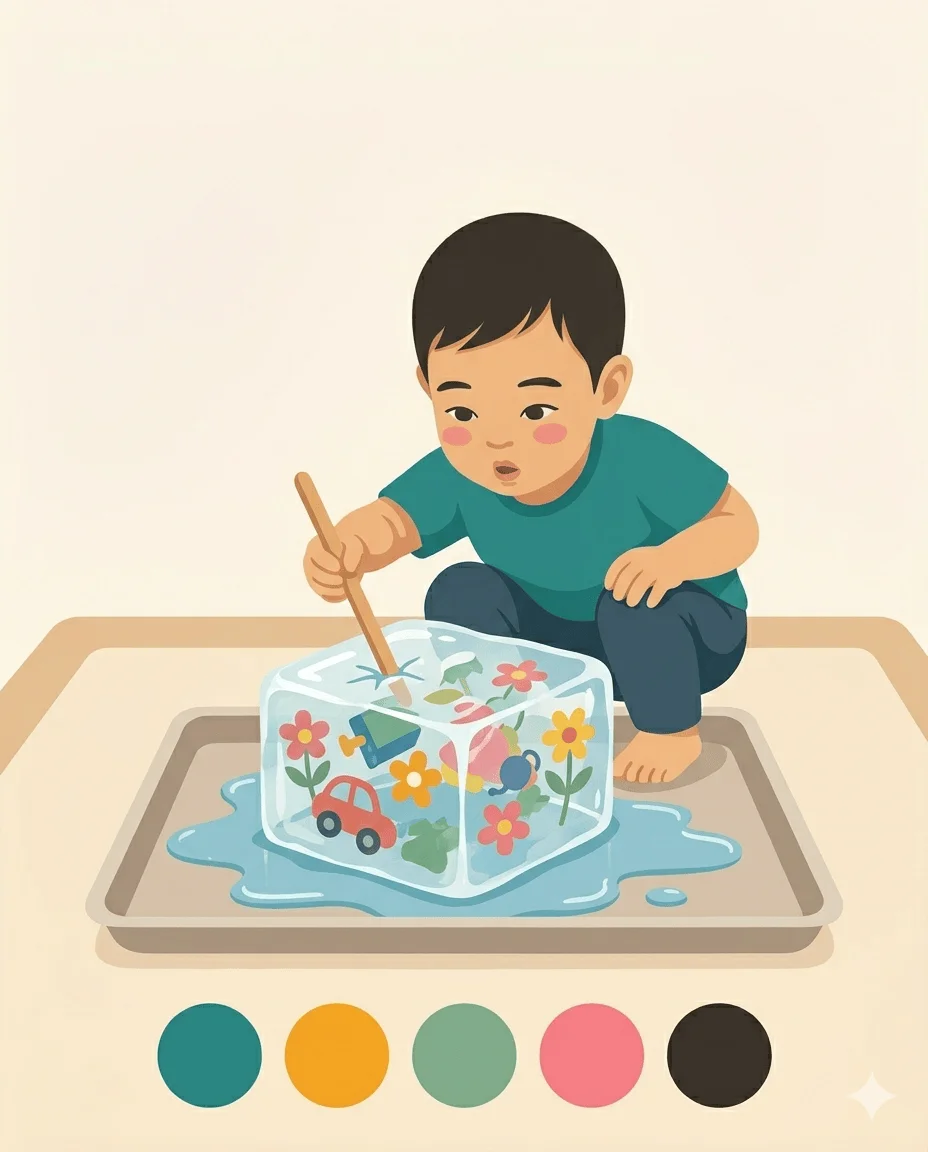
  • Float small toys in the water and scoop them out with a slotted spoon.

Safety tips

  • Never leave a toddler unsupervised near water, even shallow amounts.
  • Lay towels underneath to prevent slipping on wet floors.
  • Use lukewarm water to keep little hands comfortable.

When to pause and seek extra support

Stop if your child becomes distressed, unsafe, or consistently frustrated by the activity. If play, behaviour, or development worries keep showing up across settings, check in with a qualified professional.

Get weekly activity ideas for your toddler

One email a week with practical toddler activities, behaviour tips, and developmental insights. No spam, unsubscribe any time.