Parent tip
Start before you overthink it. No-prep activities work best when you begin while the moment is still recoverable.
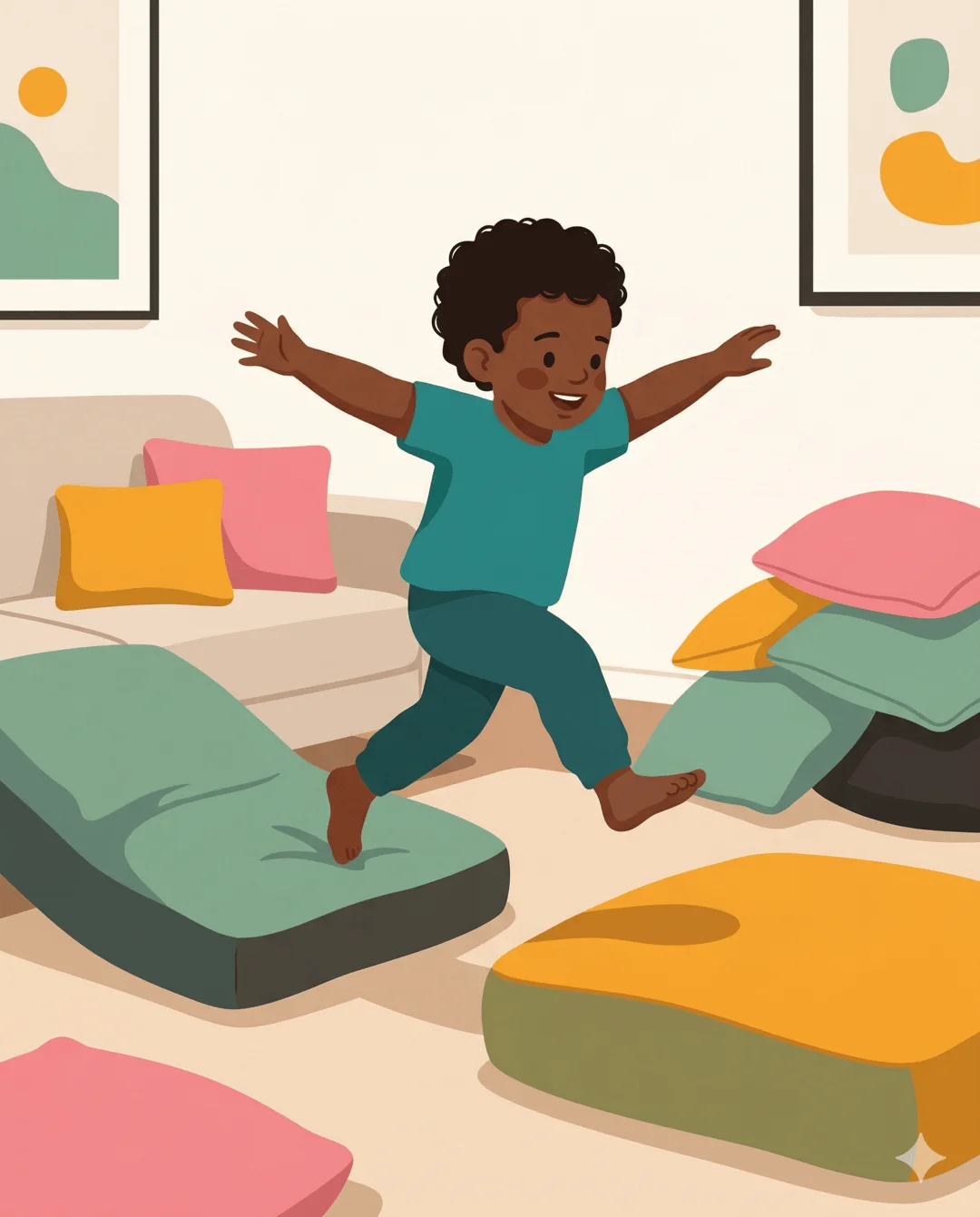
Kick a soft ball back and forth for early coordination and big-body movement.
Tiny Steps
Start before you overthink it. No-prep activities work best when you begin while the moment is still recoverable.

Flushed cheeks, big smiles, and a calmer child afterwards. If they want to do it again, you’ve found a winner.
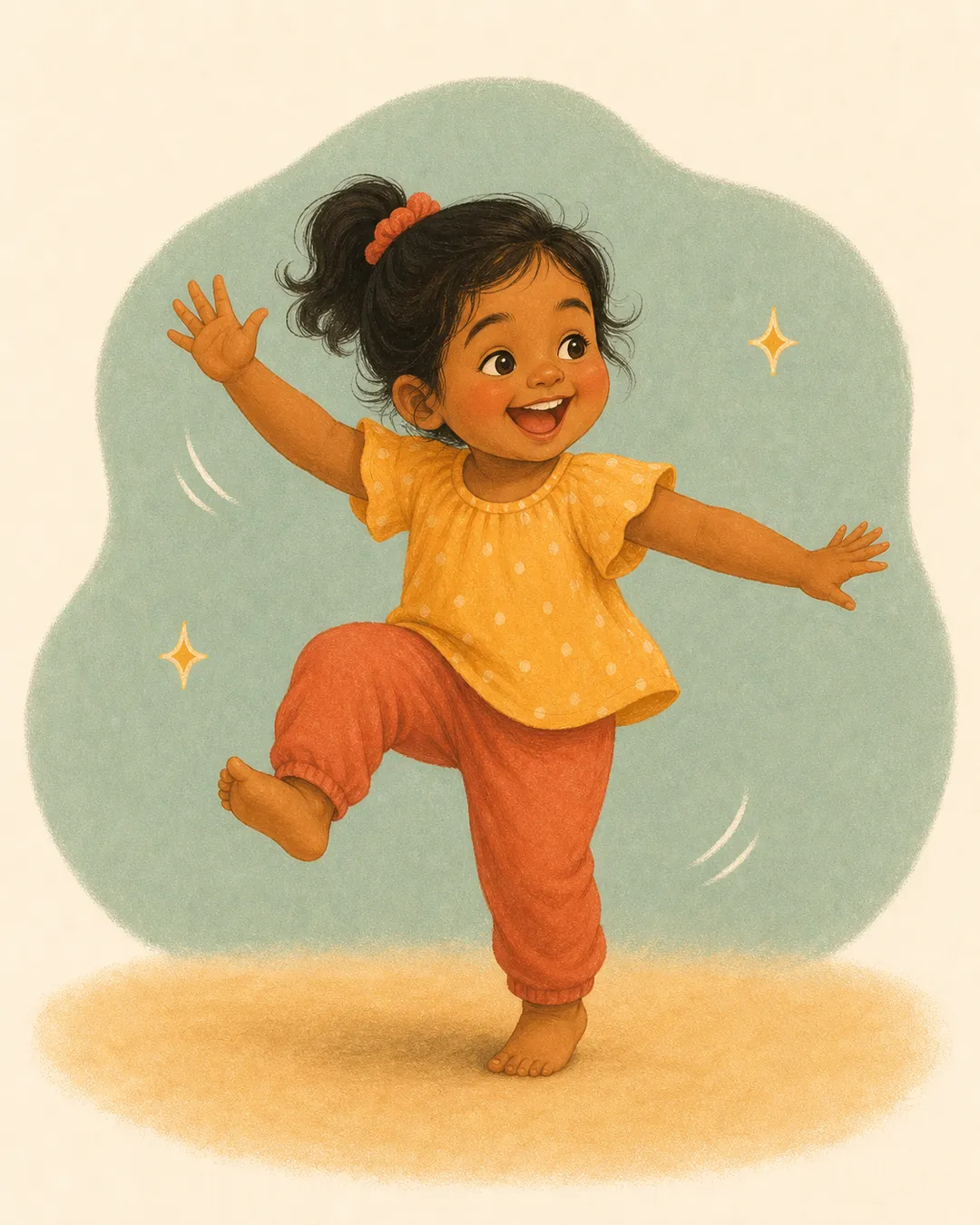
Place a lightweight ball on the ground and show your toddler how to kick it. At 12–24 months, kicking is a brand-new skill that requires standing on one leg momentarily — a significant balance challenge for early walkers. Don’t expect accuracy; the joy is in the attempt, the chase, and the satisfying feeling of their foot connecting with the ball. This works indoors with a soft ball or outside on grass.
NHS Best Start in Life recommends practising throwing, catching and kicking a ball as simple activities that teach coordination, balance and agility. Kicking a ball requires momentary single-leg balance, which challenges and develops the vestibular and proprioceptive systems. It builds leg strength in a different pattern from walking — a swinging motion rather than a stepping one — and the turn-taking involved plants the seeds of early social skills.
One email a week with practical toddler activities, behaviour tips, and developmental insights. No spam, unsubscribe any time.