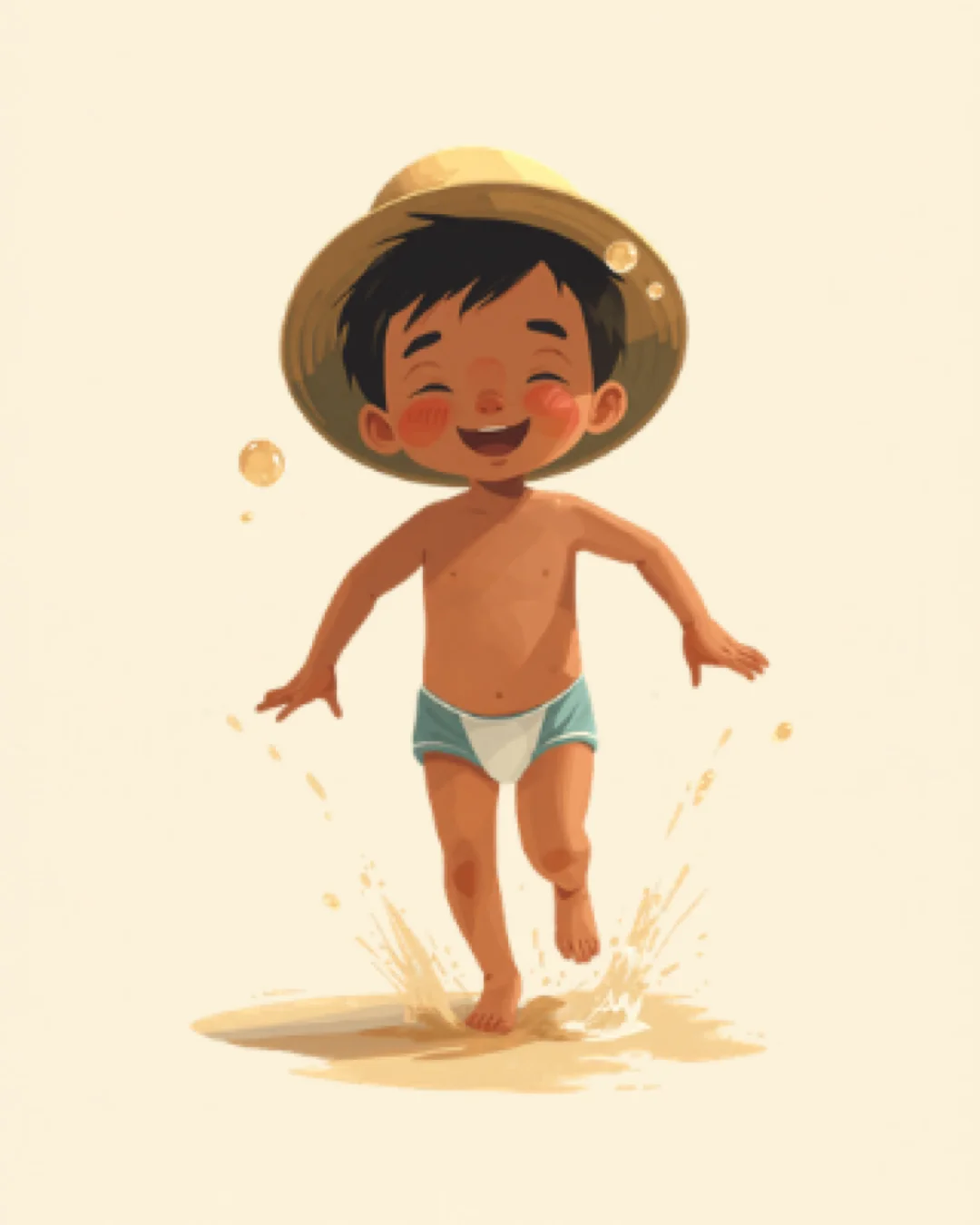
Turn every puddle into a jumping challenge — how far can you splash? A rainy-day energy burner that toddlers adore.
Activity details
19m–4y20 minshighoutdoorNo prepRain BootsTowels
Instructions
Tiny Steps
Get ready
Wait for a rainy day or the morning after rainfall — the more puddles, the better. Pop rain boots and waterproofs on.
Walk together to find a good stretch of puddles on a path, pavement, or grassy area away from roads.
1/4
Wait for a rainy day or the morning after rainfall — the more puddles, the better. Pop rain boots and waterproofs on.
Walk together to find a good stretch of puddles on a path, pavement, or grassy area away from roads.
Start with a warm-up: 'Let's do tiny splashes first — tiptoe into this puddle and make the smallest splash you can.'
Now go big: 'Jump with both feet and make the BIGGEST splash!' Jump alongside your child and cheer the spray.
Try a distance challenge: 'Can you jump all the way across this puddle without stopping in the middle?'
Introduce a stamping round: 'Stomp, stomp, stomp! How muddy can we make the water?'
Count the puddles together as you move along: 'That was puddle number four — let's find number five!'
Wind down by finding a calm, shallow puddle and watching the ripples settle — 'Look how the water goes still again when we stop.'
Parent tip
Start before you overthink it. No-prep activities work best when you begin while the moment is still recoverable.
What success looks like
Curiosity in action — pointing, collecting, asking ‘what’s that?’ A child engaged with nature is learning without knowing it.
After rainfall, puddles become the best free play equipment in the world. This activity turns puddle jumping into a structured game with different challenges — big jumps, tiny tiptoe splashes, two-footed landings — giving your child a reason to keep going while burning off enormous amounts of energy. The unpredictable surfaces and varying depths build balance and proprioceptive awareness, while the sheer joy of splashing provides a powerful emotional release that can reset a tricky mood.
Why it helps
Puddle jumping is one of the most effective gross motor activities for toddlers because it demands bilateral coordination — using both legs to push off simultaneously — and dynamic balance on uneven, slippery surfaces. The proprioceptive input from landing in water also helps regulate the nervous system, which is why children often seem calmer and more focused after vigorous outdoor water play. The NHS Early Years guidance identifies jumping as a key physical milestone between 18 and 36 months.
Variations
Drop leaves or sticks into puddles before jumping and see how far the splash sends them — a mini science experiment.
Bring a small plastic boat and float it in a large puddle, then make waves with your feet to push it across.
On a dry day, create your own puddles with a bucket of water on a paved area for the same jumping fun.
Safety tips
Always check puddle depth with your own foot first — avoid puddles on uneven ground where hidden dips could be deeper than they look.
Ensure your child wears waterproof boots with good grip, as wet surfaces become very slippery.
Stay well away from road puddles and car parks where vehicles may splash through unexpectedly.
Try one of these next
A few connected ideas chosen by theme, energy, set-up, and age fit.