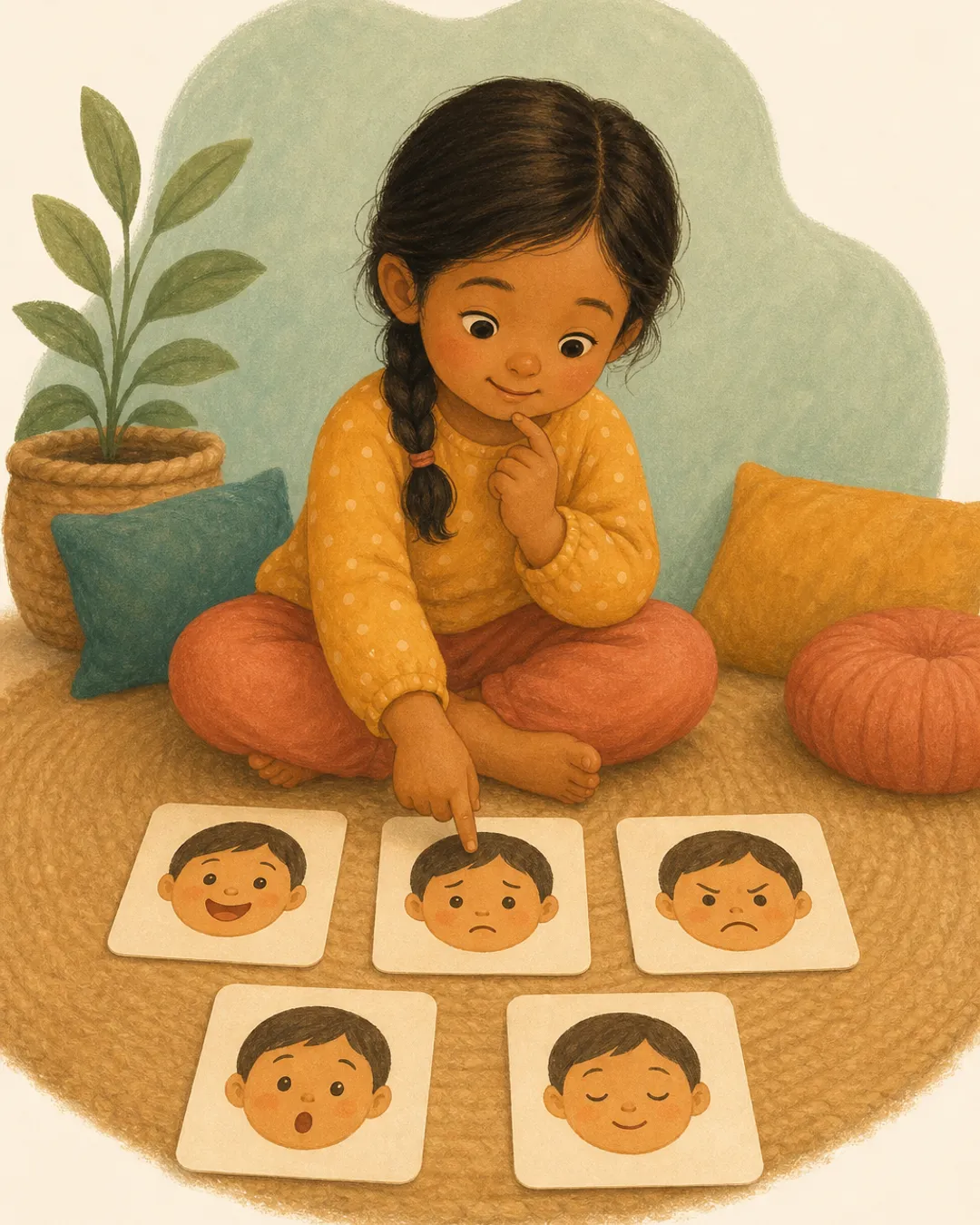
Help your toddler tune into body signals by playing a fun 'where do you feel it?' game that builds potty awareness.
Activity details
2y–4y5 minslowindoorNo prep
Instructions
Tiny Steps
Get ready
At regular intervals during the day (after meals, before going out), say 'Let's play the tummy check game!'
Start by asking your child to put their hands on their tummy: 'What can you feel? Is it grumbly? Quiet? Full?'
1/4
At regular intervals during the day (after meals, before going out), say 'Let's play the tummy check game!'
Start by asking your child to put their hands on their tummy: 'What can you feel? Is it grumbly? Quiet? Full?'
Move to another body part: 'What about your legs — are they wiggly or still?'
Gently include the relevant area: 'What about down here — does your tummy feel like it needs to push something out?'
Accept whatever they say without judgement: 'Thanks for checking! Your body is really clever at telling you things.'
If they say they feel something, casually offer the potty: 'Your tummy might be saying it's potty time — shall we go sit?'
If they say no, respect it: 'That's fine — we'll check again later. Your body will let you know.'
Make it a consistent routine — the repetition builds the habit of noticing body signals automatically.
Parent tip
Start before you overthink it. No-prep activities work best when you begin while the moment is still recoverable.
What success looks like
A few quiet minutes together without pressure. If your child relaxes even slightly, that’s self-regulation building.
Many toddlers resist the potty not because they're being defiant, but because they genuinely struggle to recognise the internal body signals that mean they need to go. This activity builds interoceptive awareness — the ability to notice sensations inside the body — through a playful 'body scan' game. By regularly checking in with different body parts in a lighthearted way, you help your child develop the neural pathways needed to recognise bladder and bowel signals before it's too late.
Why it helps
Interoception — the ability to perceive internal body states — is a foundational skill for successful toileting that develops at different rates in all children. NHS guidance on toilet training emphasises readiness signals that rely on this internal awareness. By turning body checking into a regular, pressure-free game, you strengthen the interoceptive pathways in the insular cortex without creating the anxiety that comes from repeatedly asking 'do you need a wee?'
Variations
Use a stuffed animal to demonstrate first: 'Teddy's tummy feels full — let's help teddy sit on the potty,' then ask your child about their own body.
Add a visual chart with a simple body outline where your child can point to where they feel something — this supports children who struggle with verbal expression.
For older toddlers, introduce a 'body traffic light' — green means 'I feel fine,' amber means 'something's happening,' red means 'I need to go now.'
Safety tips
Keep the tone playful and light — never show disappointment if your child doesn't recognise a signal or has an accident.
Avoid asking the body scan question immediately after an accident, as the child may already feel embarrassed.
If your child consistently shows no awareness of body signals by age three, discuss with your health visitor or GP as this can occasionally indicate a developmental difference.
Try one of these next
A few connected ideas chosen by theme, energy, set-up, and age fit.