TinyStepper

Obstacle Course Relay

At a glance: Siblings take turns navigating an obstacle course while cheering each other on. A 15-minute, high-energy both activity for ages 2y4y.

Built by a parent of toddlersBest for 2y-4y

Field-tested ideas shaped by direct parenting experience and advice from reputable sources, including NHS Best Start in Life and NSPCC child development research.

2y4y15 minshigh energybothnone mess

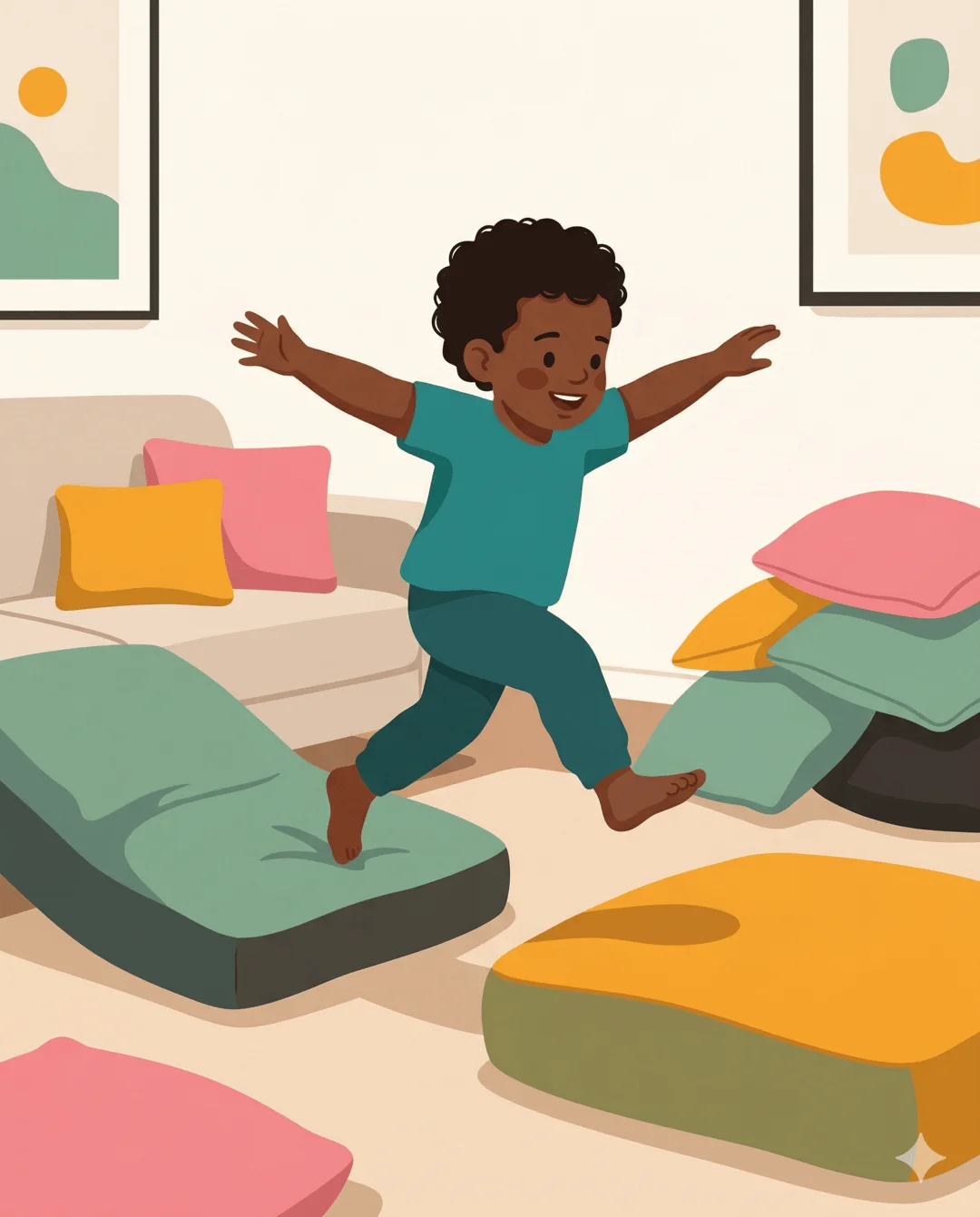
Set up a simple course — crawl under a table, hop over cushions, weave around chairs — and have siblings take turns completing it. The relay format means they are on the same team, not competing against each other. One runs while the other cheers, then they swap. The shared excitement and encouragement builds bonds rather than rivalry.

Best for this moment

when your toddler needs to move and burn energy, especially when you need something flexible indoors or outdoors.

Parent tip

Set out cushions and hula hoop before inviting your toddler in so the first minute feels smooth.
What success looks like

A good outcome is a few minutes of engaged play, some back-and-forth with you, and a small sign of progress in body awareness.

More help for this situation

Instructions

Get ready
  • Set up 4-5 stations: crawl under a table, jump over cushions, spin around a chair
  • Walk through the course together first so everyone knows the route
  1. Set up 4-5 stations: crawl under a table, jump over cushions, spin around a chair
  2. Walk through the course together first so everyone knows the route
  3. One child goes while others cheer: 'Go, go, go!'
  4. When they finish, the next child starts
  5. After everyone has had a turn, rearrange the course together
  6. Let each child add one obstacle they choose
  7. Try it again with the new course — celebrate everyone's effort

Why it helps

Relay-style play puts siblings on the same team by design, replacing competition with mutual encouragement. The physical challenge burns excess energy that often fuels conflict. Navigating obstacles builds motor planning, spatial awareness, and body coordination, while cheering for each other practises positive social interaction.

Variations

  • Add silly movements: hop like a frog through one section, walk backwards through another.
  • Time the whole team (not individuals) — 'Can we all finish faster together this time?'
  • Take it outdoors and use garden furniture, trees, and the climbing frame.

Safety tips

  • Check all obstacles are stable and won't topple when bumped.
  • Ensure adequate space between stations to avoid collisions.
  • Adjust difficulty for age — younger toddlers need simpler, shorter courses.

When to pause and seek extra support

Stop if your child becomes distressed, unsafe, or consistently frustrated by the activity. If play, behaviour, or development worries keep showing up across settings, check in with a qualified professional.

Get weekly activity ideas for your toddler

One email a week with practical toddler activities, behaviour tips, and developmental insights. No spam, unsubscribe any time.