Lay hula hoops on the ground in a line and jump from one to the next, then sprint back and do it again.
Activity details
19m–4y15 minshighbothHula Hoop
Instructions
Tiny Steps
Get ready
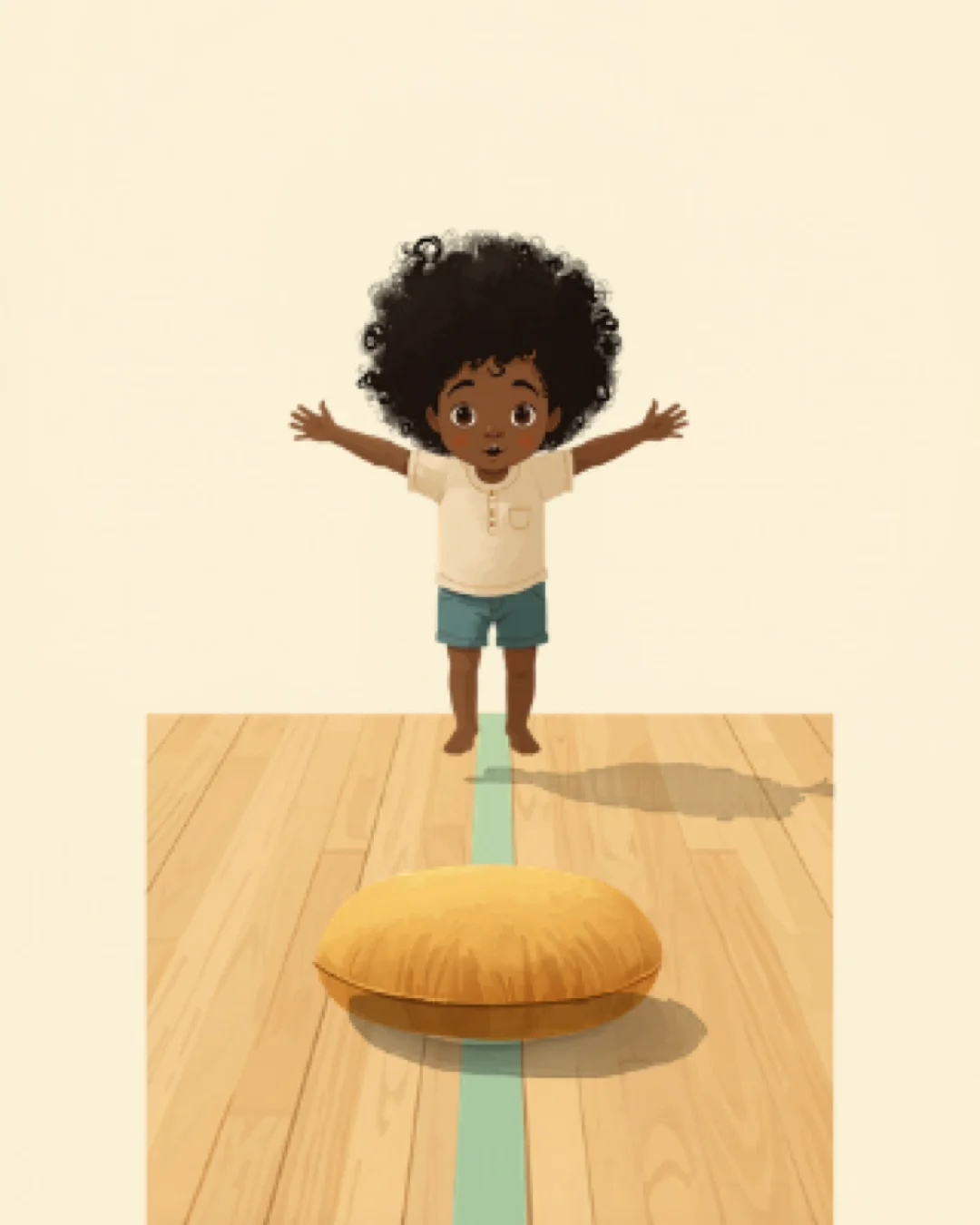
Lay three to five hula hoops flat on the ground in a line, spaced about half a metre apart for younger toddlers or one metre for older ones.
Stand at the first hoop: 'Can you jump into each hoop without stepping on the edges? Let's try!'
1/4
Lay three to five hula hoops flat on the ground in a line, spaced about half a metre apart for younger toddlers or one metre for older ones.
Stand at the first hoop: 'Can you jump into each hoop without stepping on the edges? Let's try!'
Demonstrate a two-footed jump into the first hoop, then the next, and so on. Land with bent knees each time.
Hold your child's hands for the first attempt if they need support. Let go as their confidence builds.
After the last hoop, call: 'Now sprint back to the start!' and run together back to the beginning.
On the second round, change the jump style: 'This time, hop on one foot!' or 'Jump and turn in each hoop!'
Rearrange the hoops into a zigzag pattern so your child must jump diagonally — a lateral challenge.
Finish by sitting inside a hoop together and doing gentle seated stretches: 'Our legs worked so hard!'
Parent tip
Set out hula hoop before inviting your toddler in so the first minute feels smooth.
What success looks like
Flushed cheeks, big smiles, and a calmer child afterwards. If they want to do it again, you’ve found a winner.
Jumping into targets combines two key physical skills: the explosive leg power needed to leave the ground and the spatial accuracy needed to land in the right spot. Laying hula hoops on the ground creates visually clear landing zones that motivate toddlers to aim their jumps, building precision alongside power. The varied spacing between hoops — close together for small hops, further apart for big leaps — naturally differentiates the challenge, and the sprint back between rounds keeps the cardiovascular intensity high.
Why it helps
Two-footed jumping is a key gross motor milestone identified by the NHS between 24 and 36 months, requiring bilateral coordination, explosive leg strength, and dynamic balance on landing. Adding targets develops spatial awareness and motor planning — the child must visually assess the distance and adjust their effort accordingly. This type of accuracy-plus-power combination builds the movement competence and confidence that physical literacy research identifies as the foundation for lifelong active participation.
Variations
Place a small toy in each hoop and your child must pick it up before jumping to the next — adding a squat and grip challenge.
Assign colours to the hoops and call out which one to jump to next — building listening and colour recognition skills.
On grass, spray a line of water with a spray bottle for a 'river' between two hoops that must be leaped over.
Safety tips
Ensure hoops are flat and stable on the ground — on smooth surfaces they can slide when landed on, so use grass or place them on a non-slip mat.
Check that there is nothing sharp or hard inside or around the hoops that a child could land on.
For early jumpers, keep hoops close together so every attempt is successful — frustration leads to disengagement.
Try one of these next
A few connected ideas chosen by theme, energy, set-up, and age fit.