Parent tip
Set out construction paper and leaves before inviting your toddler in so the first minute feels smooth.
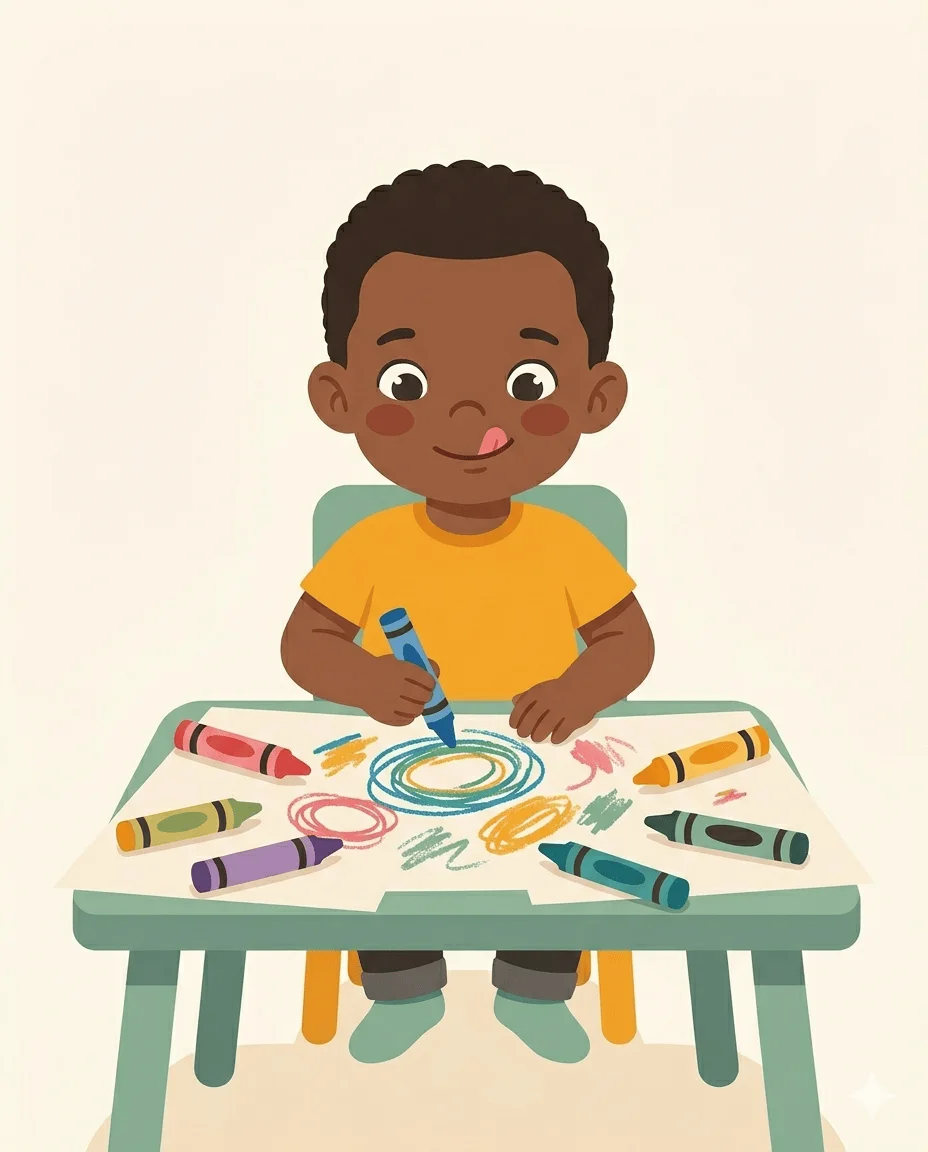
A nature craft — dip leaves, flowers, and pinecones in paint to stamp patterns on paper.
Tiny Steps
Set out construction paper and leaves before inviting your toddler in so the first minute feels smooth.

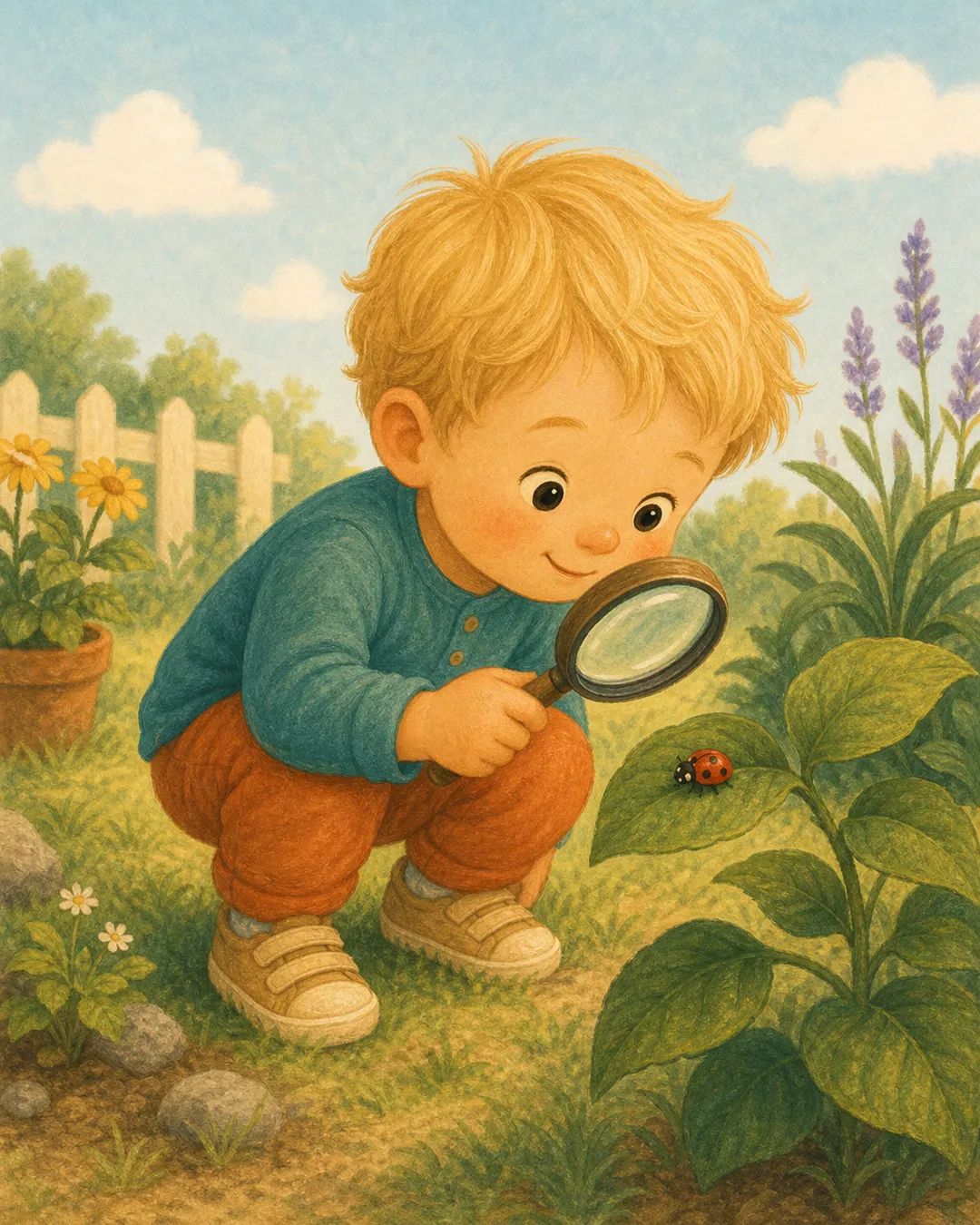
Curiosity in action — pointing, collecting, asking ‘what’s that?’ A child engaged with nature is learning without knowing it.
Collect natural objects from the garden — leaves, flower heads, twigs, pinecones — and use them as stamps with washable paint on large sheets of paper. Each object leaves a unique print, sparking curiosity about shapes and textures found in nature. This messy, open-ended art activity works beautifully outdoors where cleanup is a hose away.
The EYFS framework identifies art and design activities as developing fine motor skills while encouraging children to explore materials and express their ideas creatively. Pressing natural objects into paint and onto paper strengthens the pincer grip and bilateral coordination needed for later writing. Observing and comparing prints builds early scientific thinking — children notice that each leaf has a different vein pattern, connecting art to the natural world in a meaningful way.
One email a week with practical toddler activities, behaviour tips, and developmental insights. No spam, unsubscribe any time.