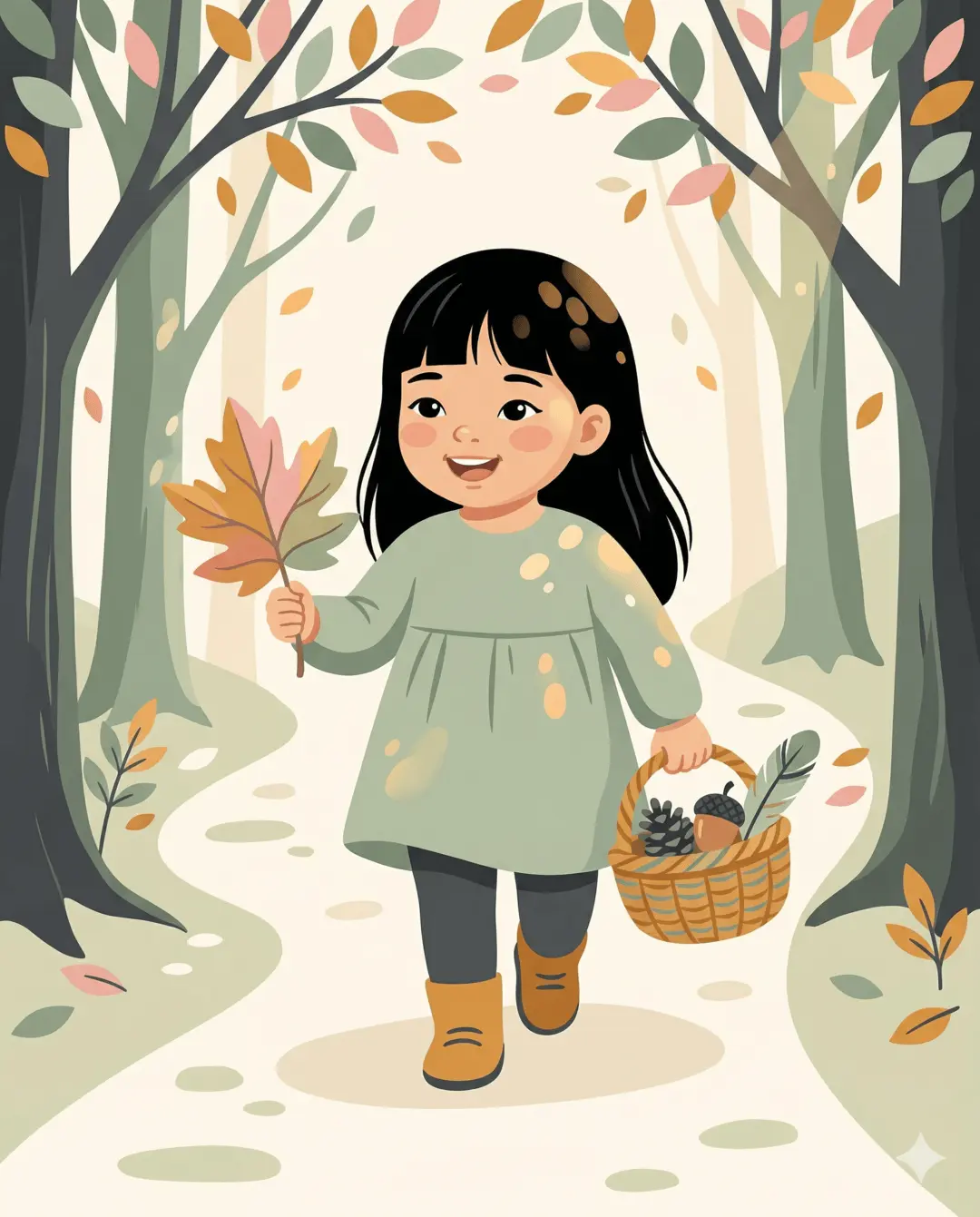
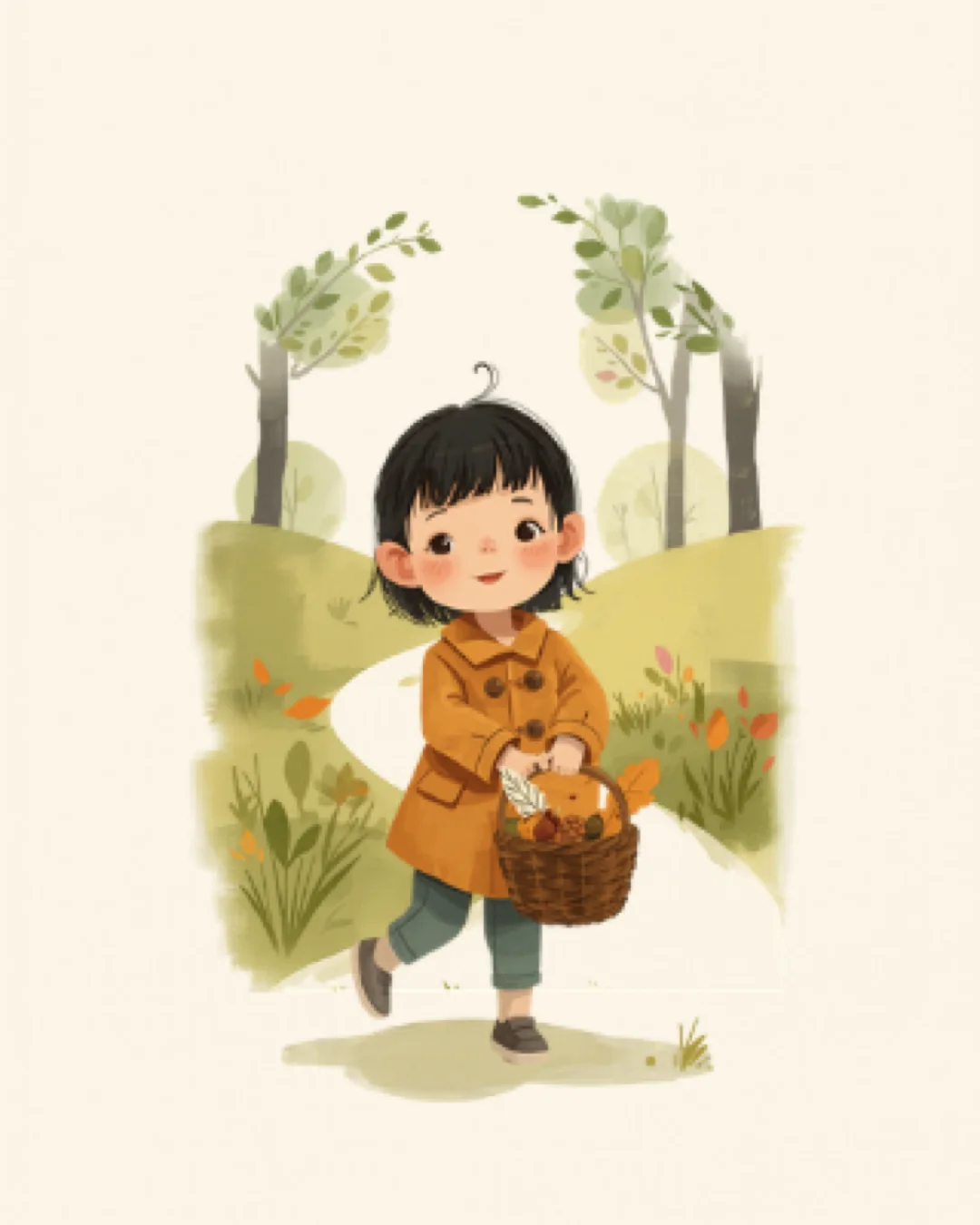
Collect leaves, stones, and flowers on a walk while narrating each find in rich, descriptive language — building vocabulary through wonder.
Activity details
12m–3y30 minslowoutdoorBasket or Bin
Instructions
Tiny Steps
Get ready
Grab a small bag or basket and head outside — a garden, park, or quiet street all work.
Walk slowly and follow your child's interest. When they pick something up, narrate it: 'You found a leaf! It is big and green with pointy edges.'
1/4
Grab a small bag or basket and head outside — a garden, park, or quiet street all work.
Walk slowly and follow your child's interest. When they pick something up, narrate it: 'You found a leaf! It is big and green with pointy edges.'
Engage their senses: 'Feel this bark — it is rough and bumpy, like a crocodile's skin!'
Compare objects: 'This stone is heavy. This feather is so light! Which is heavier?'
Build a running description: 'Our bag is getting full of treasures. We have a smooth stone, a crunchy leaf, and a soft dandelion.'
Pause to listen: 'Shh — what can you hear? A bird! It is singing up in that tree.'
At the end of the walk, sit down together and lay out the collection. Retell the walk: 'Remember the bumpy bark? And the tiny snail we saw?'
Let your child arrange their treasures however they choose — the ownership builds pride in the collection.
Parent tip
Set out basket or bin before inviting your toddler in so the first minute feels smooth.
What success looks like
Back-and-forth between you — words, gestures, shared pretend. Connection is the real outcome here.
Take a slow walk with a small bag and pick up natural items together — but the key difference from a simple collection walk is the narration. As your child picks up a stone, you describe it in detail: 'That stone is smooth and cool. It is grey with a tiny white line running through it — like a little road!' Every object becomes a mini vocabulary lesson wrapped in genuine curiosity. The multi-sensory engagement — touching rough bark, smelling a flower, listening to a crunchy leaf — paired with rich descriptive language creates the strongest conditions for vocabulary acquisition in toddlers.
Why it helps
The Speech and Language UK charity identifies 'descriptive commenting' — narrating what a child sees and touches in rich language — as one of the most effective vocabulary-building strategies for under-threes. Pairing words with multi-sensory experiences (touching the rough stone while hearing 'rough') creates stronger neural associations than either alone. The 30-minute outdoor format provides sustained, low-intensity language exposure in a context that is naturally engaging.
Variations
Give a narration prompt to older toddlers: 'Tell me about your stone' — this shifts them from listener to narrator.
Bring a magnifying glass and narrate the tiny details you both discover: 'Look — this leaf has little hairs on it!'
For early walkers, keep the walk very short (garden only) and focus on just 3-4 items with rich description.
Safety tips
Check all collected items for thorns, sharp edges, or toxic plant material before your child handles them.
Wash hands after handling soil, bark, and natural items — especially before eating.
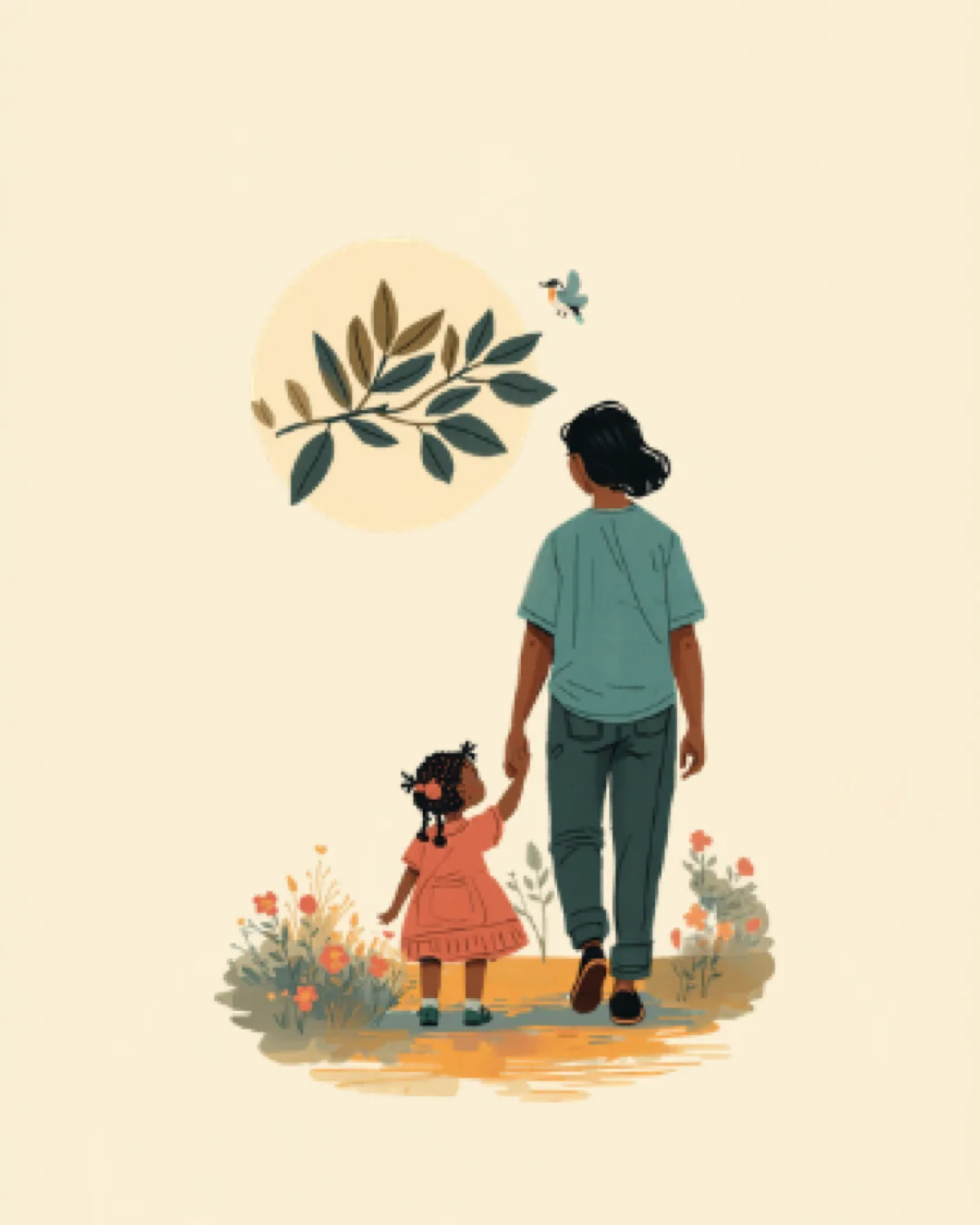
Stay within arm's reach near roads, water, or uneven terrain, and hold hands on paths shared with cyclists.
Try one of these next
A few connected ideas chosen by theme, energy, set-up, and age fit.