Parent tip
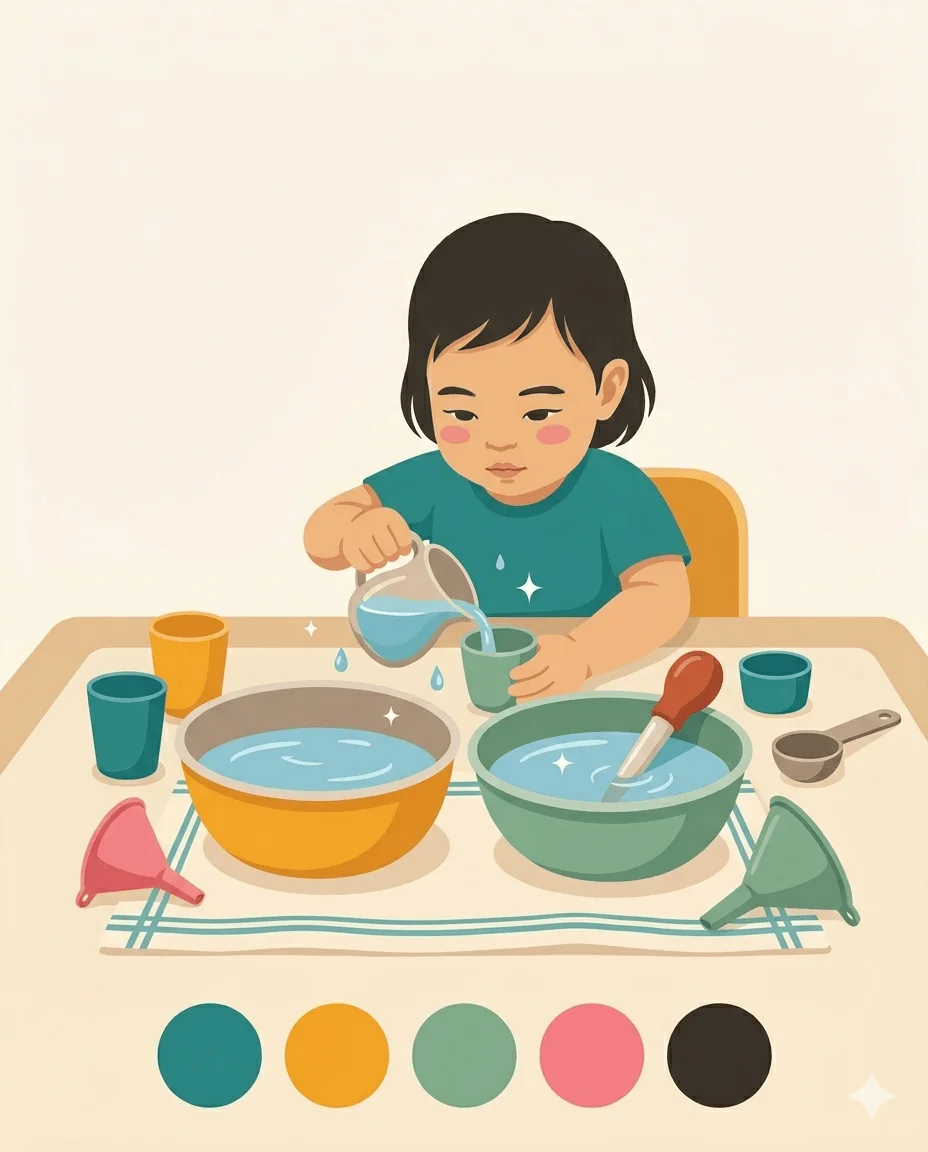
Set out plastic cups and water before inviting your toddler in so the first minute feels smooth.

Throughout the day, offer your toddler tiny sips of cool things from a real open cup — water, diluted juice, milk, smoothie. Builds cup confidence with low-stakes practice.
Tiny Steps
Set out plastic cups and water before inviting your toddler in so the first minute feels smooth.

Intense focus, even briefly. Watch for the small ‘aha’ moment when they figure out how something works.
Spread small open-cup practice across the day instead of asking your toddler to drink whole cupfuls. Offer a tiny sip — barely a teaspoon — of water at one moment, a small sip of milk at another, a sip of diluted juice mid-afternoon. Each sip is a low-stakes win. By bedtime they've had ten cup interactions instead of one stressful one. Cup-drinking is a motor skill, and motor skills are built through frequent low-pressure practice, not occasional high-pressure sessions.
AAP HealthyChildren guidance is explicit that the transition from bottle to cup should begin gradually, ideally between 6 and 18 months, with cups offered at mealtimes alongside continued bottles before the bottles drop entirely. Spreading practice across the day reduces the cognitive load of any single sip and lets the toddler build the lip-and-tongue motor pattern without the pressure of finishing a whole cup. Many bottle-weaning struggles are actually open-cup motor failures rather than emotional resistance.
One email a week with practical toddler activities, behaviour tips, and developmental insights. No spam, unsubscribe any time.