Set up three simple stations — run, jump, throw — and let your toddler sprint between them for a structured energy burn.
Activity details
19m–4y20 minshighoutdoorBasket or BinBean BagsCones or MarkersTimer
Instructions
Tiny Steps
Get ready
Set up three stations in the garden or park: place cones or markers at each station about five metres apart in a rough triangle.
Station one is 'Sprint' — your child runs from the start line to the first cone and touches it. Station two is 'Jump' — three big two-footed jumps over a line of cushions or a rope on the ground.
1/4
Set up three stations in the garden or park: place cones or markers at each station about five metres apart in a rough triangle.
Station one is 'Sprint' — your child runs from the start line to the first cone and touches it. Station two is 'Jump' — three big two-footed jumps over a line of cushions or a rope on the ground.
Station three is 'Throw' — toss a beanbag into a basket or bin from a short distance.
Walk the circuit together first, demonstrating each station: 'Run to here, jump over these, throw into there!'
Say 'Ready, steady, go!' and let your child complete the circuit. Cheer at every station.
After two rounds, change the movements: station one becomes bear crawls, station two becomes star jumps, station three becomes kicking a ball between the cones.
Time your child with a timer and try to beat the previous time — but always celebrate effort, not just speed.
Cool down with a slow victory lap around the circuit, high-fiving each cone as you pass it.
Parent tip
Set out basket or bin and bean bags before inviting your toddler in so the first minute feels smooth.
What success looks like
Flushed cheeks, big smiles, and a calmer child afterwards. If they want to do it again, you’ve found a winner.
Relay circuits break physical activity into manageable chunks, which is perfect for toddlers who need variety to stay engaged. By setting up three to four stations with different movement challenges — a sprint to the cones, a jumping zone, a beanbag toss — you create a structured workout that develops multiple physical skills in a single session. The circuit format also teaches sequencing and memory as your child remembers what to do at each stop. This activity is inspired by NHS-recommended relay games that build endurance, coordination, and confidence in young children.
Why it helps
NHS physical activity guidelines recommend that toddlers are physically active for at least 180 minutes a day, with active play identified as the best way for under-5s to get moving. Circuit-based activities develop both cardiovascular endurance and motor planning — the ability to sequence and execute different movements in order. The transition between stations exercises working memory, as children must remember what each station requires. Research in early childhood physical literacy shows that varied movement experiences in the first four years build the motor confidence and competence that predict lifelong physical activity levels.
Variations
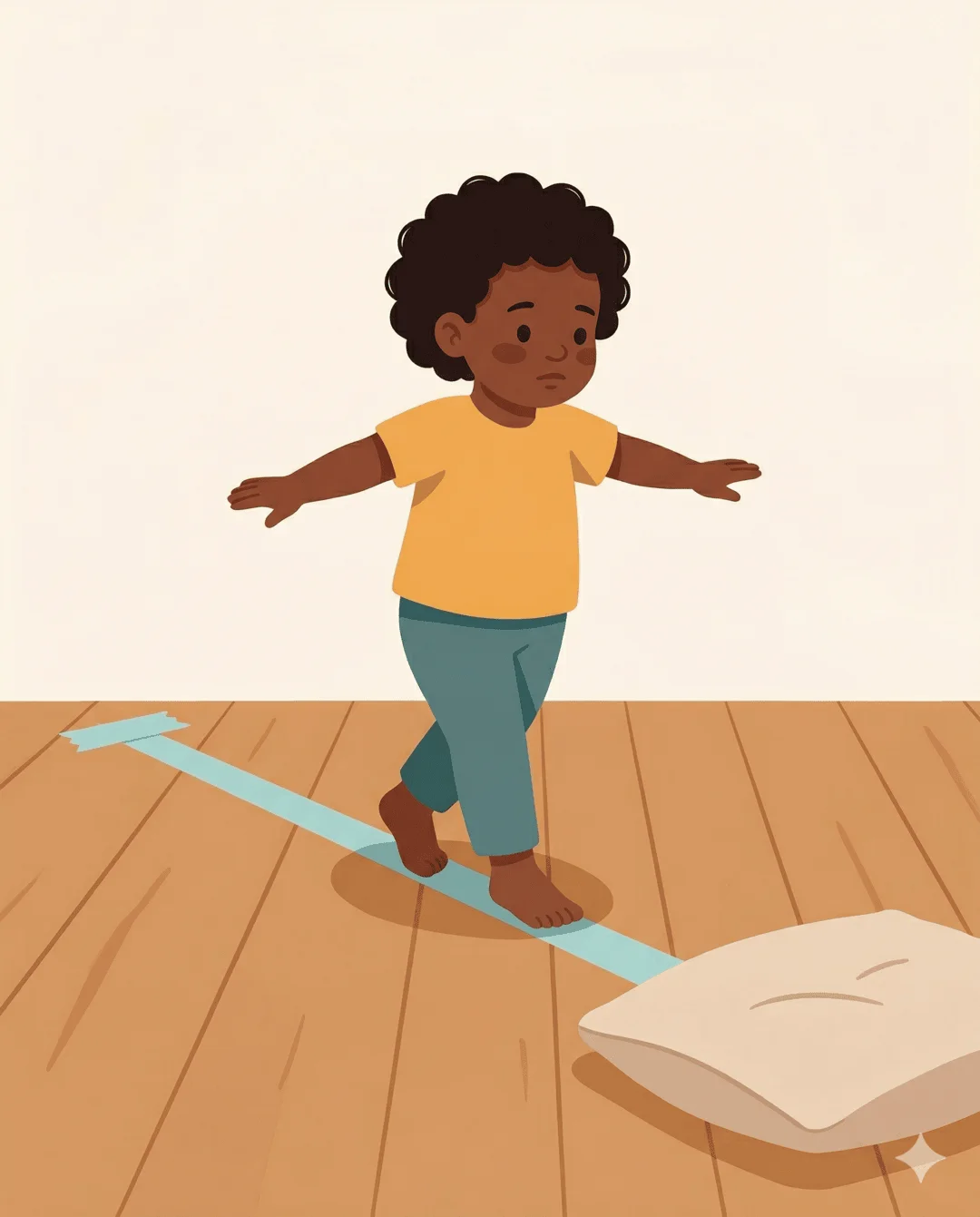
Add a fourth station with a balance challenge — walking along a line of tape or stepping stones made from flat rocks.
Turn it into a sibling relay where one child starts when the other finishes, passing a beanbag as a 'baton.'
For rainy days, set up a smaller version indoors using cushions, masking tape lines, and soft balls.
Safety tips
Check the ground at each station for holes, sharp objects, or slippery patches before your child runs the circuit.
Space stations far enough apart that there's no risk of tripping over equipment from a previous station.
Keep the session to three or four rounds — overexertion in hot weather can cause overheating quickly in small children.
Try one of these next
A few connected ideas chosen by theme, energy, set-up, and age fit.