TinyStepper

Puzzle Play

At a glance: Complete age-appropriate puzzles together — a tried-and-tested early learning favourite. A 10-minute, low-energy indoor activity for ages 18m4y.

Built by a parent of toddlersBest for 18m-4y

Field-tested ideas shaped by direct parenting experience and advice from reputable sources, including NHS Best Start in Life and NSPCC child development research.

18m4y10 minslow energyindoornone mess

Focused cognitive activity that builds problem-solving and spatial reasoning. Working through a puzzle teaches toddlers to analyse shapes, rotate pieces mentally, and use trial-and-error strategically. The brief moments of productive struggle, when a piece does not fit right away, build frustration tolerance and persistence, both essential life skills that carry far beyond puzzle time.

Best for this moment

for calmer, lower-pressure moments, especially when you need an indoor option.

Parent tip

Set out the materials before inviting your toddler in so the first minute feels smooth.
What success looks like

A good outcome is a few minutes of engaged play, some back-and-forth with you, and a small sign of progress in cognitive skills.

More help for this situation

Instructions

Get ready
  • Choose appropriate puzzle: 3-6 pieces for young toddlers, up to 24 for older
  • Dump pieces out
  1. Choose appropriate puzzle: 3-6 pieces for young toddlers, up to 24 for older
  2. Dump pieces out
  3. Start together: 'Let's find the corners first'
  4. Offer hints: 'Where does the blue piece go?' or point to the spot
  5. Let them struggle briefly before helping—building frustration tolerance
  6. Celebrate victories: 'You did it!' with high-five
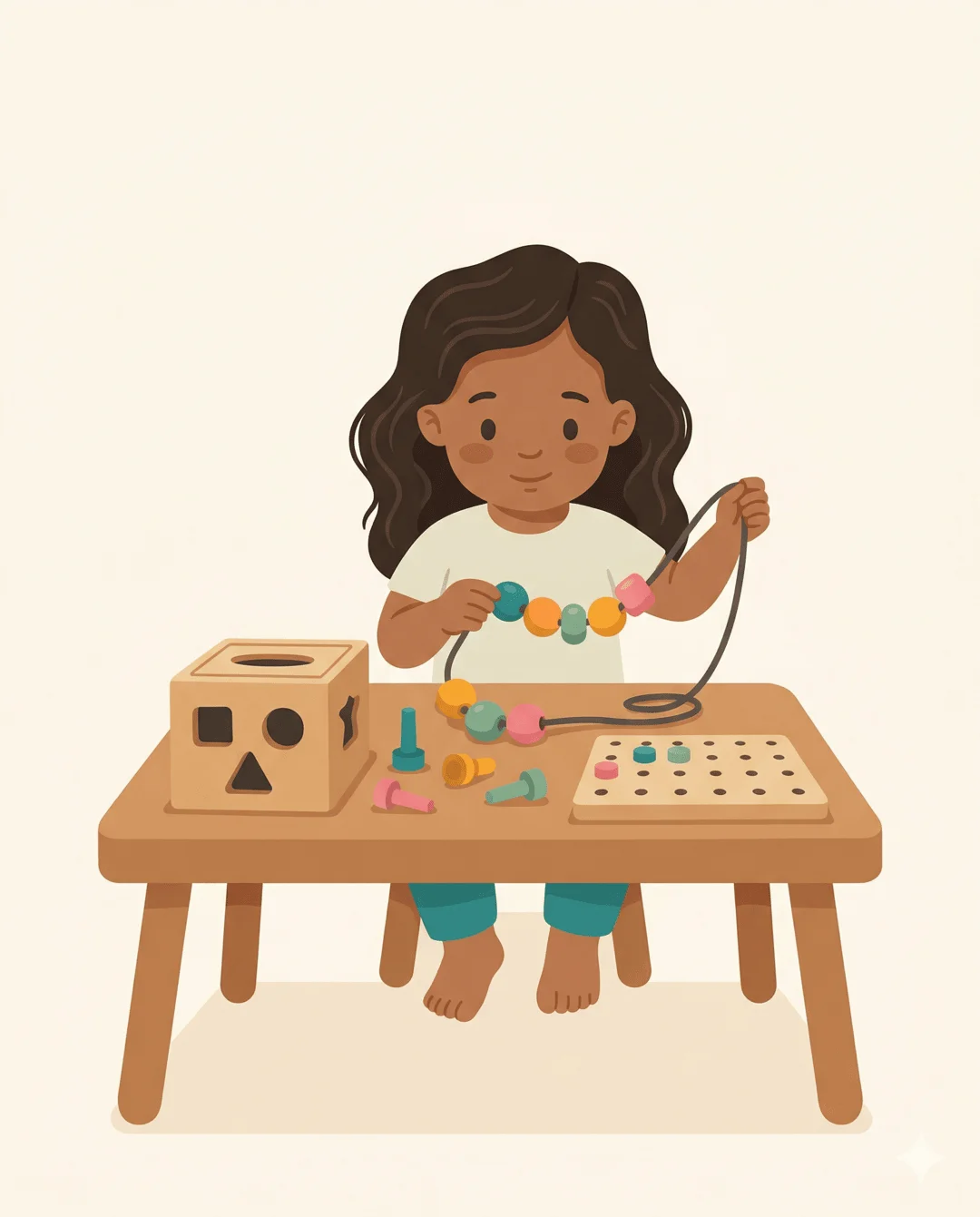
  7. For younger toddlers: shape sorters or peg puzzles are good starts
  8. Rotate puzzles weekly so they stay interesting

Why it helps

Working through a puzzle teaches toddlers to analyse shapes, rotate pieces mentally, and use trial-and-error strategically. Brief moments of productive struggle build frustration tolerance and persistence, both essential skills that extend far beyond puzzle time.

Variations

  • Turn a favourite picture into a DIY puzzle by gluing it to cardboard and cutting into pieces.
  • Time how fast they complete a familiar puzzle and try to beat the record.
  • Work on a floor puzzle together for a cooperative, larger-scale challenge.

Safety tips

  • Ensure puzzle pieces are age-appropriate — large wooden pieces for younger toddlers.
  • Check that pieces are too big to be a choking hazard.
  • Avoid leaving small puzzle pieces on the floor where they could be stepped on.

When to pause and seek extra support

Stop if your child becomes distressed, unsafe, or consistently frustrated by the activity. If play, behaviour, or development worries keep showing up across settings, check in with a qualified professional.

Get weekly activity ideas for your toddler

One email a week with practical toddler activities, behaviour tips, and developmental insights. No spam, unsubscribe any time.