TinyStepper

Precision Threading

At a glance: Thread beads, pasta shapes, or cut straws onto lace to build fine motor control and concentration. A 20-minute, low-energy indoor activity for ages 2y4y.

Built by a parent of toddlersBest for 2y-4y

Field-tested ideas shaped by direct parenting experience and advice from reputable sources, including NHS Best Start in Life and NSPCC child development research.

2y4y20 minslow energyindoornone mess

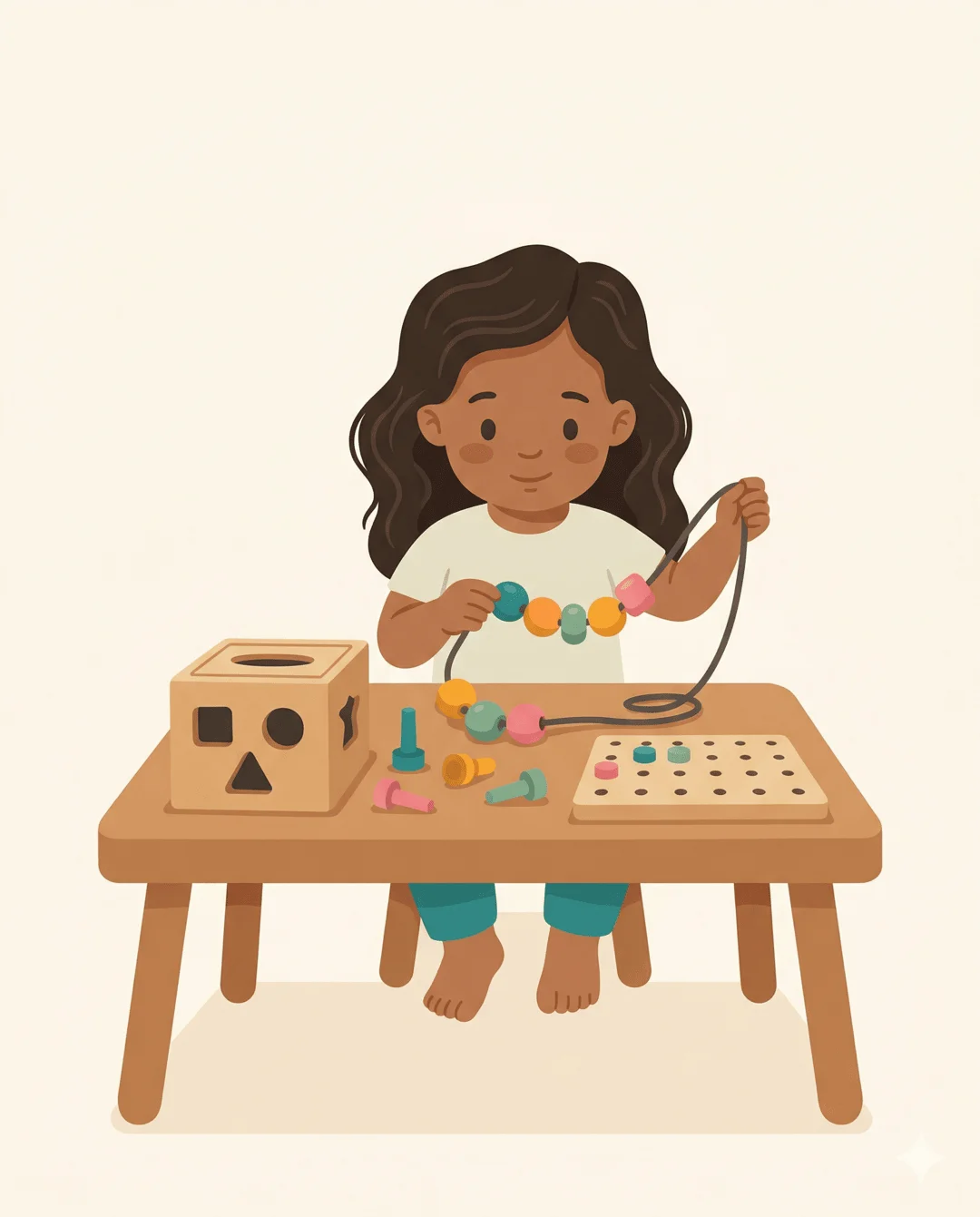
Set out a collection of items to thread — large wooden beads, dried penne pasta, chunky buttons with wide holes, or cut sections of a drinking straw — alongside a shoelace with a stiffened tip or a pipe cleaner as a needle. Offer a pattern challenge (thread three red, then two yellow) or simply let your child create their own design. The slow, deliberate movements required for threading are a highly effective exercise for the small muscles of the hand that will later hold a pencil.

Best for this moment

for calmer, lower-pressure moments, especially when you need an indoor option.

Parent tip

Set out pipe cleaners and rice or pasta before inviting your toddler in so the first minute feels smooth.

What success looks like

A good outcome is a few minutes of engaged play, some back-and-forth with you, and a small sign of progress in cognitive skills.

More help for this situation

Instructions

Get ready
  • Prepare materials: lay out beads or pasta shapes in small bowls sorted by colour or type.
  • Cut a shoelace to about 40cm and wrap a small piece of tape around one end to stiffen it.
  1. Prepare materials: lay out beads or pasta shapes in small bowls sorted by colour or type.
  2. Cut a shoelace to about 40cm and wrap a small piece of tape around one end to stiffen it.
  3. Tie a large knot or loop at the other end.
  4. Demonstrate: pick up a bead, hold the lace steady, and thread slowly.
  5. Invite your child to continue, encouraging them to pick each bead up with their fingertips.
  6. If adding a pattern, show the pattern card and name the sequence together.
  7. Pause and notice: "How many have you threaded? Shall we count?"
  8. When complete, tie the ends together to make a wearable creation.

Why it helps

Threading requires the precise coordination of both hands working together (bilateral coordination) alongside the refined pincer grip that forms the foundation for pencil control (Pehoski, 2006). The slow pace and immediate visual feedback of each bead added makes it one of the most effective fine motor activities for pre-writing readiness. Introducing a pattern element simultaneously engages working memory and early mathematical thinking.

Variations

  • Thread to match a colour pattern card you draw first.
  • Make a necklace for a doll or soft toy.
  • Use natural materials: thread dried apple rings or large leaves with a blunt needle.

Safety tips

  • Supervise closely — beads can be a choking hazard for this age group; choose beads at least 3cm in diameter.
  • Tie a knot at the end of the lace before threading to prevent items falling off.
  • Do not leave threading materials unattended.

When to pause and seek extra support

Stop if your child becomes distressed, unsafe, or consistently frustrated by the activity. If play, behaviour, or development worries keep showing up across settings, check in with a qualified professional.

Get weekly activity ideas for your toddler

One email a week with practical toddler activities, behaviour tips, and developmental insights. No spam, unsubscribe any time.