Set up five or six stations around the living room using household items — a blanket draped over chairs (tunnel/cave), a line of pillows (river to jump), cushions in a row (stepping stones), a bed sheet on the floor (magic carpet).
Sit your child at the start and begin the story: 'We're going on an adventure! First, we have to crawl through the dark bear cave...'
1/4
Set up five or six stations around the living room using household items — a blanket draped over chairs (tunnel/cave), a line of pillows (river to jump), cushions in a row (stepping stones), a bed sheet on the floor (magic carpet).
Sit your child at the start and begin the story: 'We're going on an adventure! First, we have to crawl through the dark bear cave...'
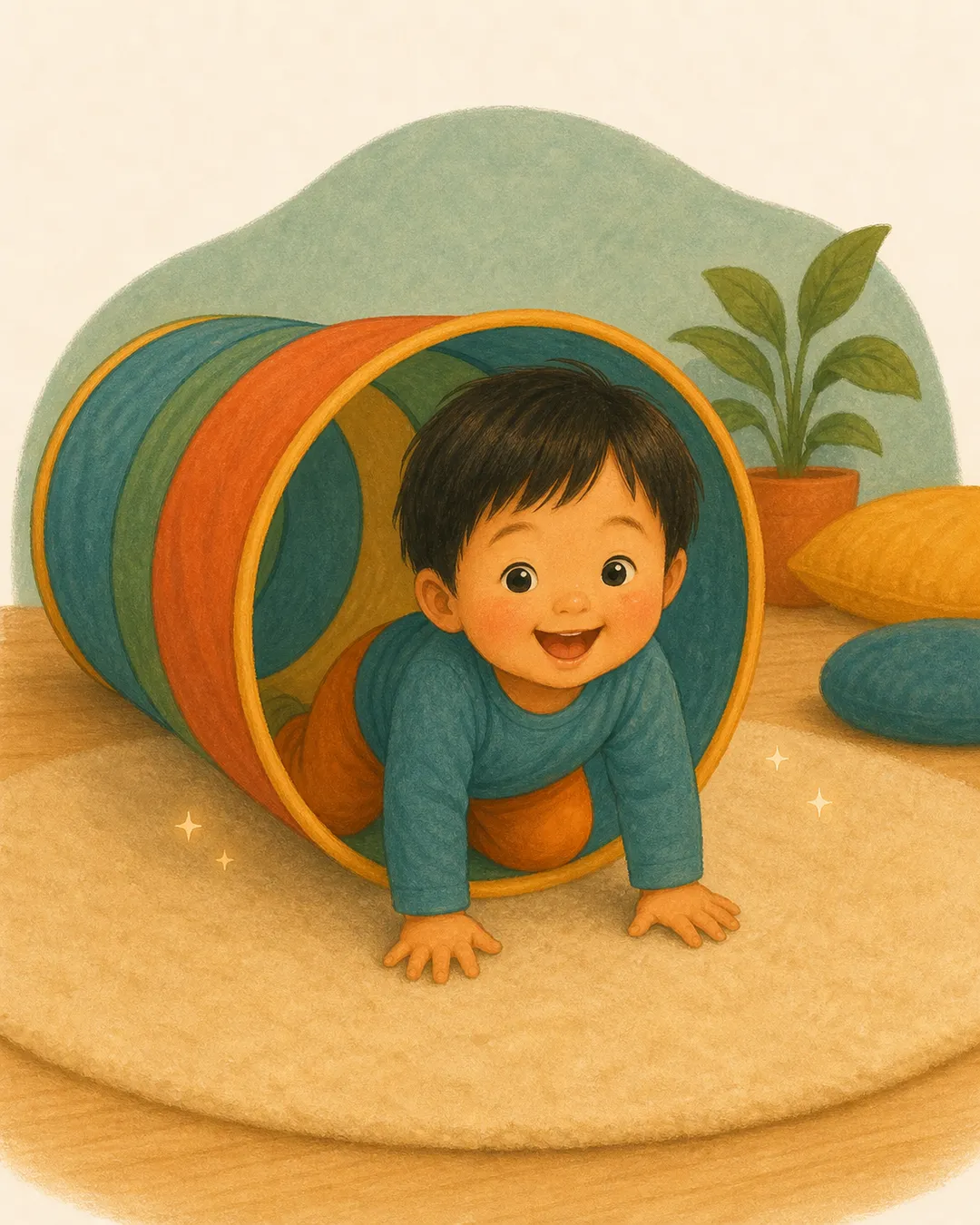
Crawl through the blanket tunnel together, whispering: 'Shh — don't wake the bear!'
At the pillow river, demonstrate jumping over: 'Jump! Don't fall in the water!'
Tiptoe across the cushion stepping stones: 'Careful — if you fall off, the crocodiles will get your toes!'
At each station, add a new story element and let your child suggest what happens next: 'What do you think is behind the magic carpet?'
Complete the course together, then swap roles — your child leads and tells you the story.
Rearrange the stations and create a completely new adventure: 'This time we're in space — that tunnel is a rocket!'
Parent tip
Set out bed sheet and blankets before inviting your toddler in so the first minute feels smooth.
What success looks like
Flushed cheeks, big smiles, and a calmer child afterwards. If they want to do it again, you’ve found a winner.
Ordinary obstacle courses become extraordinary when you add a narrative. Each station is a chapter in a story your child moves through physically: crawling under a blanket is entering a bear cave, stepping over a pillow line is crossing a river, tiptoeing between cushions is sneaking past a sleeping dragon. The story element transforms gross motor exercise into imaginative adventure, and the combined cognitive and physical demands can hold a toddler's focus for a full thirty minutes.
Why it helps
Combining narrative with physical movement engages multiple brain systems simultaneously — the motor cortex for movement planning, the prefrontal cortex for story comprehension and sequencing, and the limbic system for emotional engagement. Research by Diamond (2000) demonstrated that activities requiring simultaneous cognitive and physical effort are particularly effective at developing executive function in young children. The imaginative element also builds symbolic thinking, which is a key predictor of later literacy. The EYFS Physical Development goals identify active play as fundamental — children who move confidently are better prepared for all types of learning.
Variations
Add sound effects at each station — growl at the bear cave, splash sounds at the river, roar at the dragon cushions.
Include a 'treasure' at the final station — a favourite toy or snack hidden under a blanket as the reward.
Take the story course outdoors using garden furniture, trees, and natural features for a bigger-scale adventure.
Safety tips
Ensure all furniture used for tunnels and bridges is stable and cannot collapse onto your child.
Remove any hard objects or sharp furniture edges from the obstacle path and surrounding area.
Stay close enough to catch your child during jumping sections, as excitement can lead to overbalancing.
Try one of these next
A few connected ideas chosen by theme, energy, set-up, and age fit.