Race across the room balancing a ball on a spoon without dropping it.
Activity details
2y–4y10 minshighbothBallsSpoons (Metal)
Instructions
Tiny Steps
Get ready
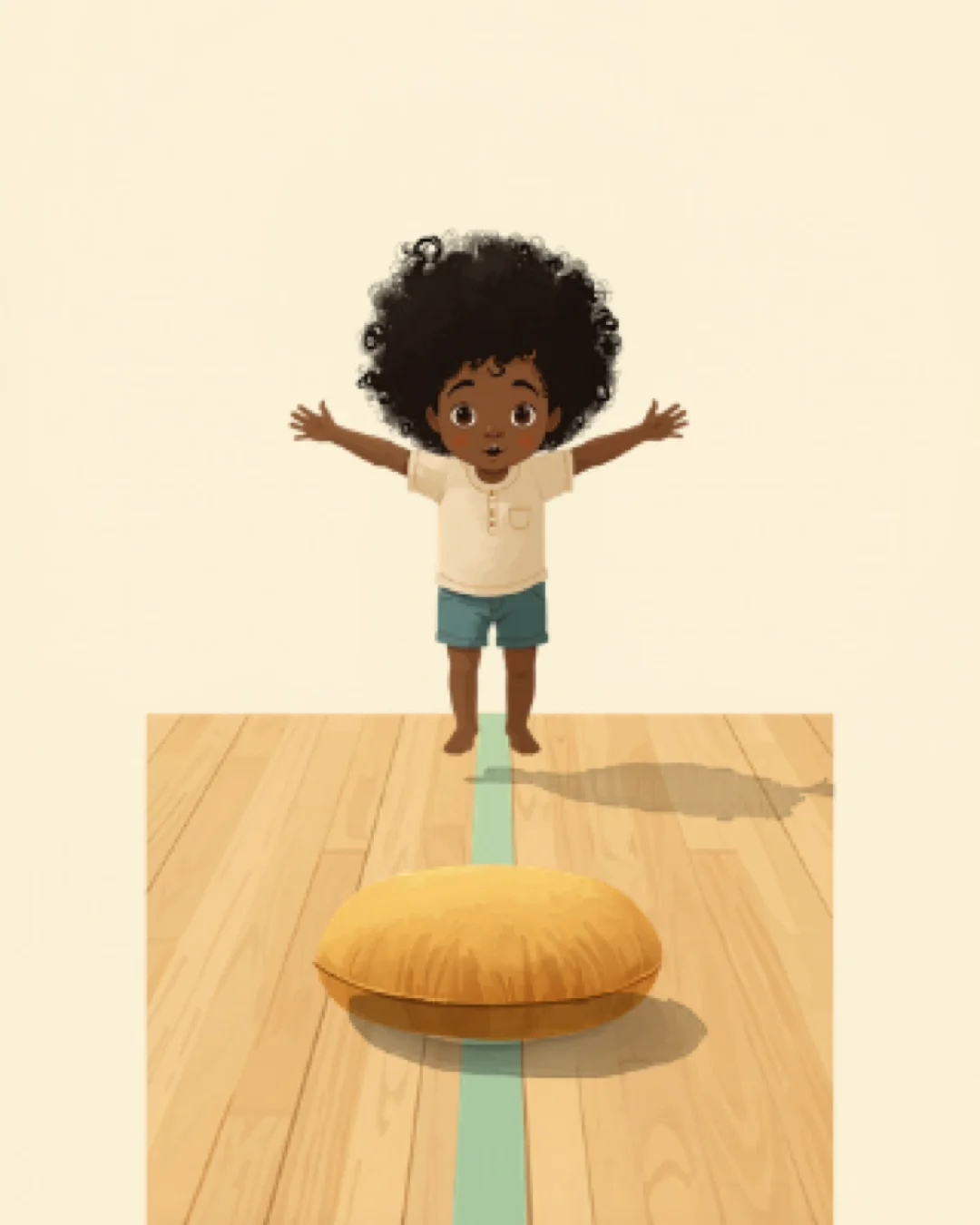
Set up a course with a clear start and finish line — a hallway or around a table
Give your toddler a large metal or wooden spoon and a small ball
1/4
Set up a course with a clear start and finish line — a hallway or around a table
Give your toddler a large metal or wooden spoon and a small ball
Place the ball on the spoon and demonstrate walking slowly without dropping it
Once they can walk the course, try a faster walk or gentle jog
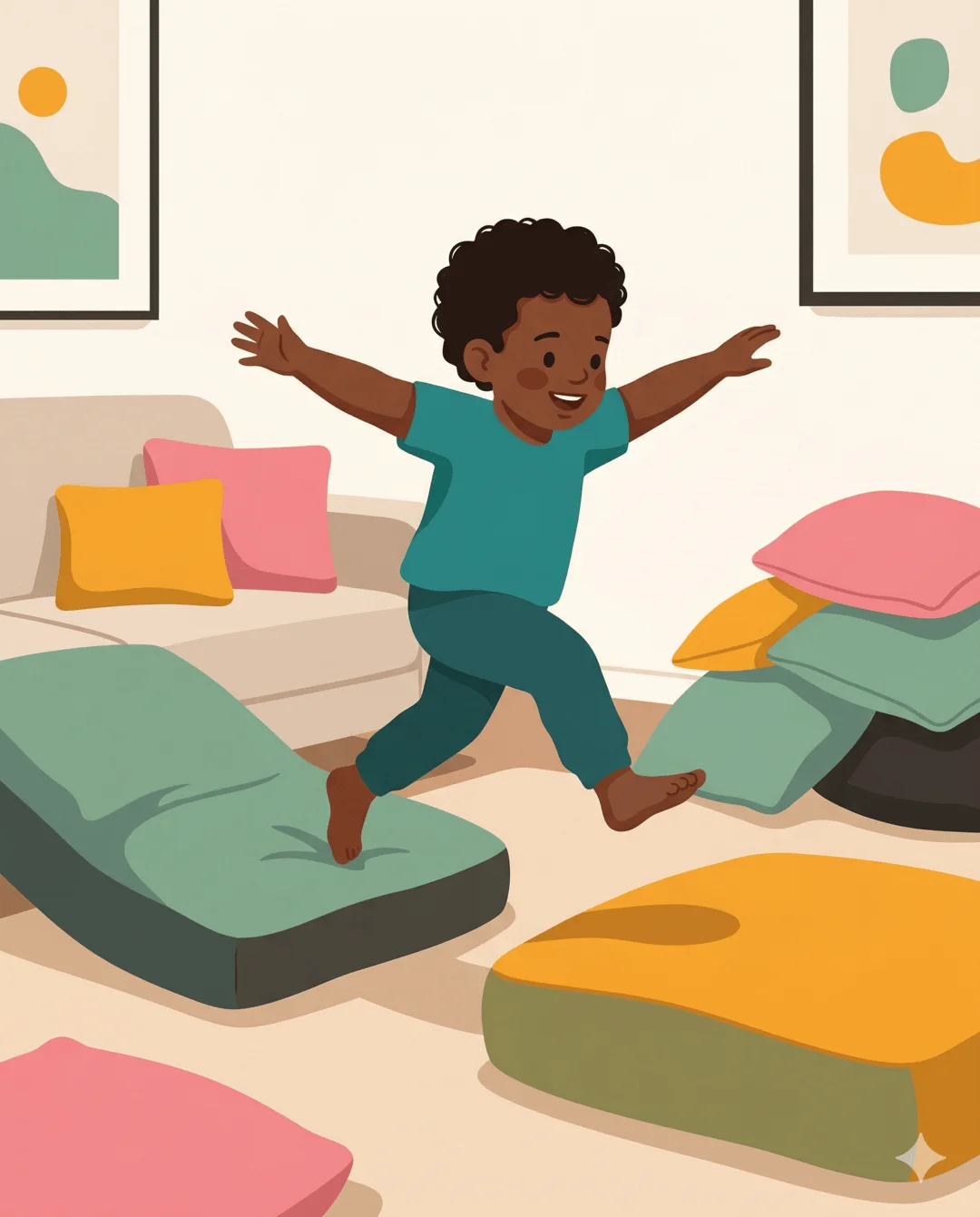
Add obstacles to walk around — chairs, cushions, shoes placed in the path
Race side by side or take turns timing each other
Celebrate drops as much as finishes — 'So close! Let us try again!'
Parent tip
Set out balls and spoons (metal) before inviting your toddler in so the first minute feels smooth.
What success looks like
Flushed cheeks, big smiles, and a calmer child afterwards. If they want to do it again, you’ve found a winner.
Hand your toddler a large spoon with a small ball balanced on it and set up a course to walk, then run, from one end to the other. The concentration required to balance and move simultaneously is intense — you can see their brain working in real time. As confidence grows, speed picks up and the laughs multiply.
Why it helps
NHS physical activity guidelines recommend that toddlers are physically active for at least 180 minutes a day, with active play identified as the best way for under-5s to get moving. Balancing an object while moving requires the brain to coordinate visual focus, fine motor grip, and gross motor locomotion simultaneously — a demanding executive function task that practises divided attention. The repeated dropping and restarting also builds frustration tolerance and resilience in a playful, low-stakes context.
Variations
Use a wet sponge instead of a ball for an outdoor version with splashy drops.
Balance two objects — one on each spoon, one in each hand — for an advanced challenge.
Set up a relay with multiple family members, passing the spoon at a changeover point.
Safety tips
Use a plastic or wooden spoon for younger toddlers to avoid heavy metal spoons being dropped on toes.
Ensure the course is free of tripping hazards, especially when children start running.
Choose a ball too large to be a choking hazard — a tennis ball or play dough ball works well.
Try one of these next
A few connected ideas chosen by theme, energy, set-up, and age fit.