TinyStepper

Cracker Letter Spread

At a glance: Spread soft cheese on crackers and arrange toppings into letter shapes for an edible literacy snack. A 15-minute, medium-energy indoor activity for ages 2y4y.

Built by a parent of toddlersBest for 2y-4y

Field-tested ideas shaped by direct parenting experience and advice from reputable sources, including NHS Best Start in Life and NSPCC child development research.

2y4y15 minsmedium energyindoorsome mess

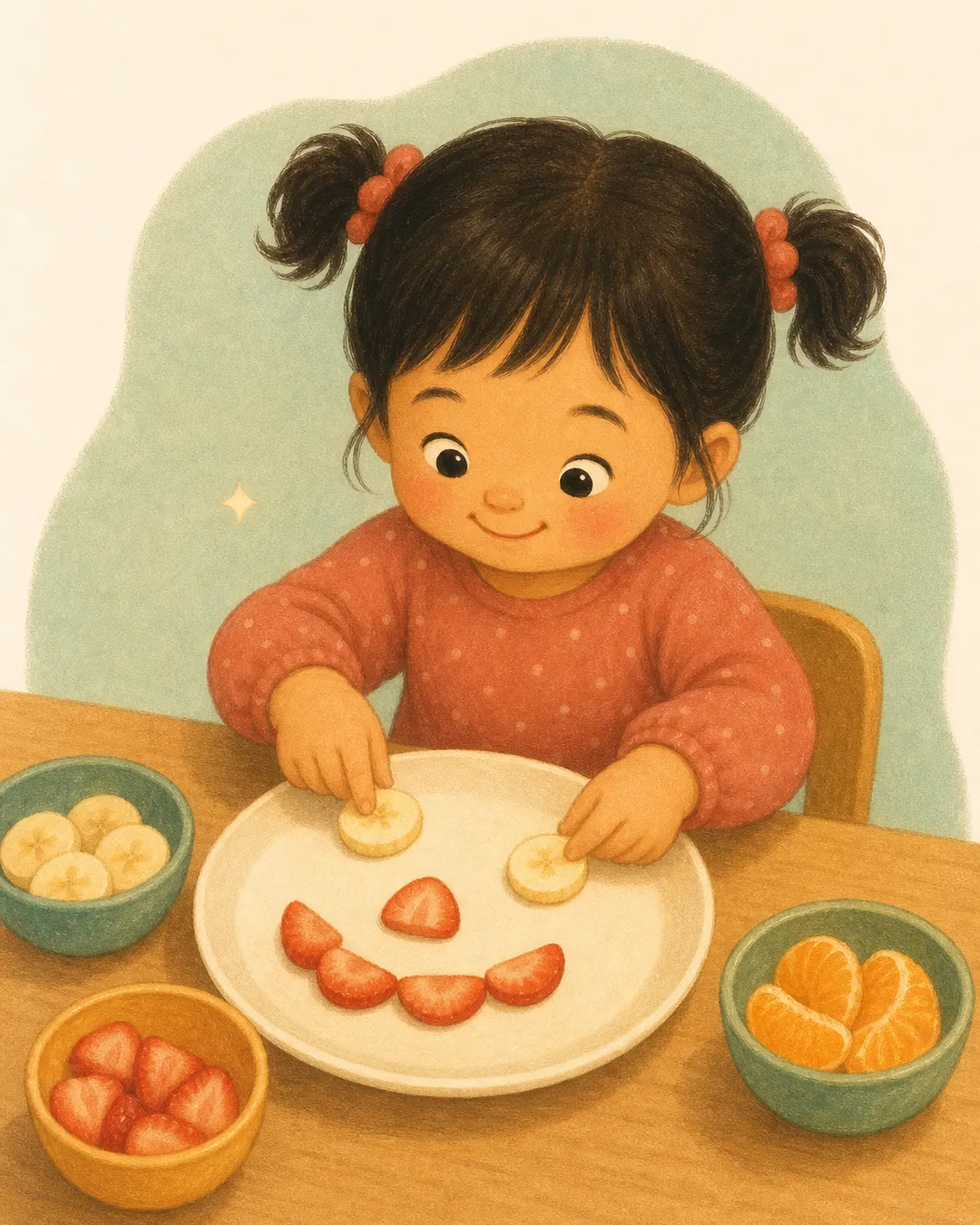
Give your toddler a cracker spread with soft cheese or hummus, then provide small toppings — raisins, cucumber slices, sweetcorn — to arrange into letter shapes on top. Start with the first letter of their name and work through simple shapes. This activity combines food preparation independence with early letter formation in a multi-sensory format. The fine motor precision required to place small toppings accurately is directly transferable to later pencil control.

Best for this moment

when your toddler needs focused engagement, especially when you need an indoor option.

Parent tip

Set out the materials before inviting your toddler in so the first minute feels smooth.
What success looks like

A good outcome is a few minutes of engaged play, some back-and-forth with you, and a small sign of progress in early literacy.

More help for this situation

Instructions

Get ready
  • Lay out crackers, a child-friendly spreading knife, and soft cheese or hummus
  • Show your toddler how to spread the topping — let them practise on 2-3 crackers
  1. Lay out crackers, a child-friendly spreading knife, and soft cheese or hummus
  2. Show your toddler how to spread the topping — let them practise on 2-3 crackers
  3. Offer small topping options: raisins, sweetcorn, cucumber pieces, or halved grapes
  4. Demonstrate making a letter on your cracker: 'I’m making an S with raisins — look!'
  5. Ask: 'What letter shall we make on yours? How about the first letter of your name?'
  6. Help them place toppings to form the letter — celebrate the result
  7. Make 3-4 letter crackers, saying each letter sound as you build it
  8. Eat the crackers together, naming the letters as they disappear: 'Crunch goes the M!'

Why it helps

Forming letters from small food items exercises the pincer grip and hand-eye coordination that underpin later handwriting. The multi-sensory nature of the task — seeing, touching, smelling, and tasting the letters — creates robust memory traces through multiple neural pathways simultaneously. Research on embodied cognition shows that physically constructing letters leads to better recognition than passively viewing them, making this hands-on approach particularly effective for early literacy development.

Variations

  • Use different coloured toppings for each letter — 'R is red (tomato), G is green (cucumber).'
  • For younger toddlers, start with simple shapes (circle, line) rather than letters.
  • Challenge older toddlers to spell a short word across multiple crackers — their name or 'cat' or 'mum.'

Safety tips

  • Cut grapes and other round foods lengthways to prevent choking — never serve whole grapes to under-fives.
  • Check for allergies to nuts, dairy, or any topping ingredients before starting.
  • Supervise closely to ensure toppings go on the cracker, not up the nose — toddlers are creative.

When to pause and seek extra support

Stop if your child becomes distressed, unsafe, or consistently frustrated by the activity. If play, behaviour, or development worries keep showing up across settings, check in with a qualified professional.

Get weekly activity ideas for your toddler

One email a week with practical toddler activities, behaviour tips, and developmental insights. No spam, unsubscribe any time.