TinyStepper

Call and Response Drum

At a glance: Bang a drum twice — wait — see if your toddler bangs back. Turn-taking through rhythm. A 8-minute, medium-energy indoor activity for ages 18m3y.

Built by a parent of toddlersBest for 18m-3y

Field-tested ideas shaped by direct parenting experience and advice from reputable sources, including NHS Best Start in Life and NSPCC child development research.

18m3y8 minsmedium energyindoornone mess

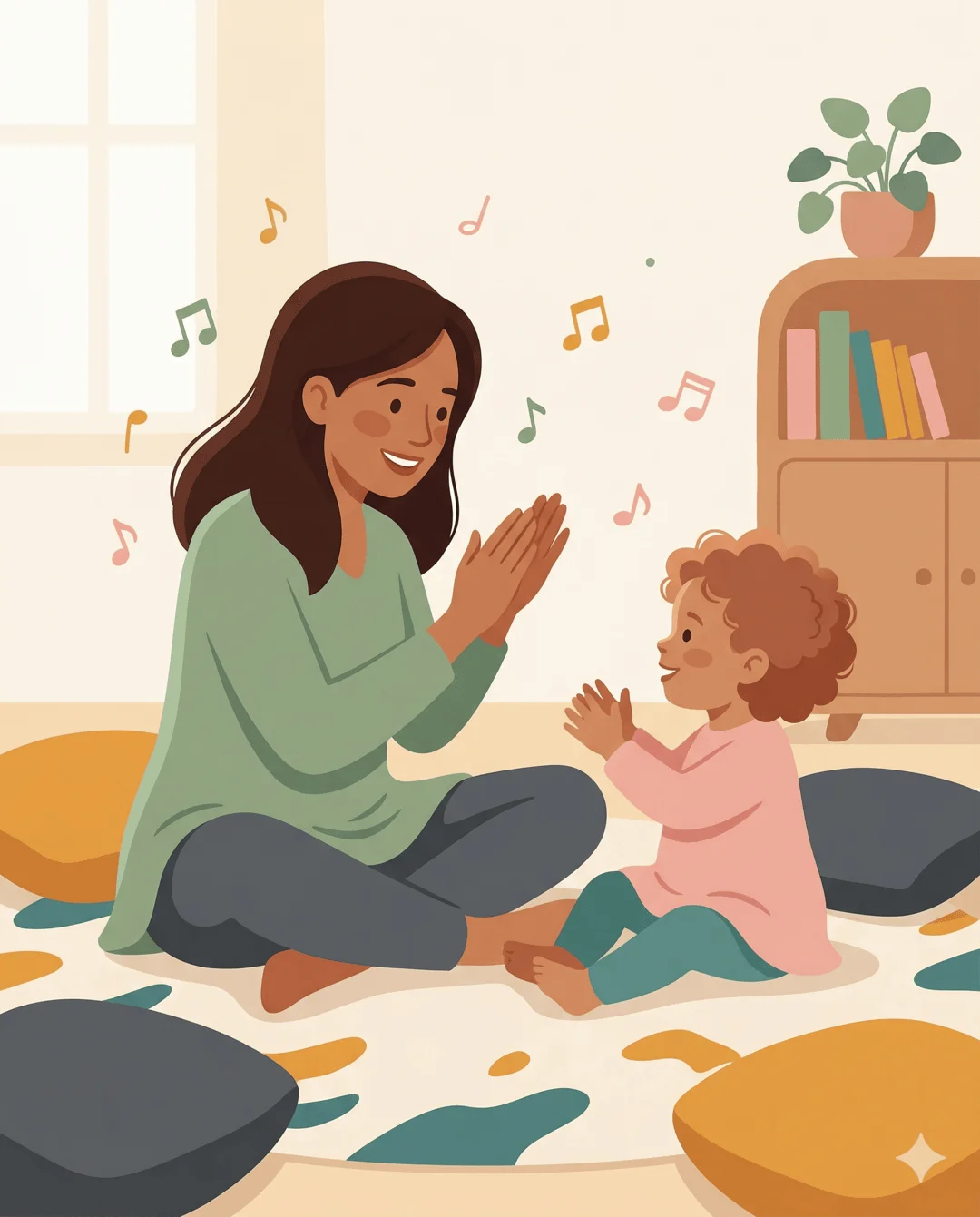
Sit facing your toddler with a drum (or upturned pot) each. Bang yours twice: BAM BAM. Then stop and look at them expectantly. When they bang — any number of times, any rhythm — celebrate and do yours again. This is musical turn-taking: the same back-and-forth structure that conversation uses, but without the pressure of words. Over time, toddlers start copying the number of beats and the rhythm.

Best for this moment

when your toddler needs focused engagement, especially when you need an indoor option.

Parent tip

Set out pots and pans before inviting your toddler in so the first minute feels smooth.
What success looks like

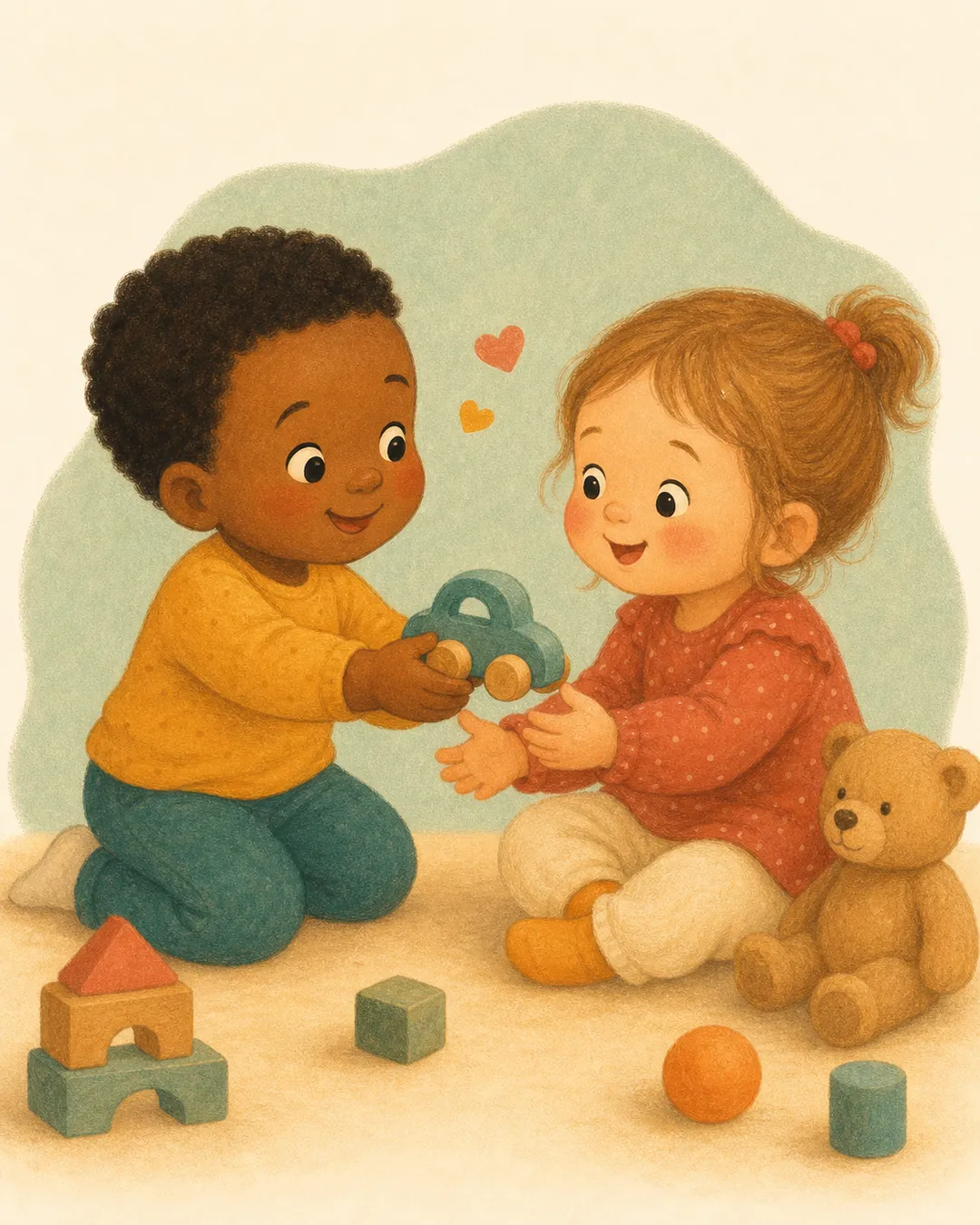
A good outcome is a few minutes of engaged play, some back-and-forth with you, and a small sign of progress in focus and attention.

More help for this situation

Instructions

Get ready
  • Sit facing each other with a drum or pot each
  • Bang yours twice: BAM BAM
  1. Sit facing each other with a drum or pot each
  2. Bang yours twice: BAM BAM
  3. Stop. Look at toddler expectantly. Wait.
  4. When they bang (any number) — smile! 'Your turn!'
  5. Do your pattern again: BAM BAM
  6. Wait again — see if they copy two beats
  7. Try three beats: BAM BAM BAM. Does the pattern change?

Why it helps

Turn-taking is the foundation of conversation. Drum games teach turn-taking through rhythm rather than language, which removes the pressure of needing words. The anticipation between turns mirrors the pauses in conversation. Speech and Language UK recommend copying actions as a way to build early communication — drum call-and-response is this principle in musical form.

Variations

  • Try different patterns: bang-bang-bang (three beats), then bang... pause... bang.
  • Add a singing element: bang-bang-CLAP!
  • Let toddler lead the pattern — you copy THEM.

Safety tips

  • Use soft mallets or hands — hard sticks can hurt fingers.
  • Keep volume manageable — protect sensitive ears.
  • If using pots, ensure they won't tip or slide.

When to pause and seek extra support

Stop if your child becomes distressed, unsafe, or consistently frustrated by the activity. If play, behaviour, or development worries keep showing up across settings, check in with a qualified professional.

Get weekly activity ideas for your toddler

One email a week with practical toddler activities, behaviour tips, and developmental insights. No spam, unsubscribe any time.