Parent tip
Start before you overthink it. No-prep activities work best when you begin while the moment is still recoverable.
With two grown-ups holding the corners, gently swing your toddler in a sturdy blanket hammock — thrilling, organising vestibular movement that can wind them up or wind them down.
Tiny Steps
Start before you overthink it. No-prep activities work best when you begin while the moment is still recoverable.

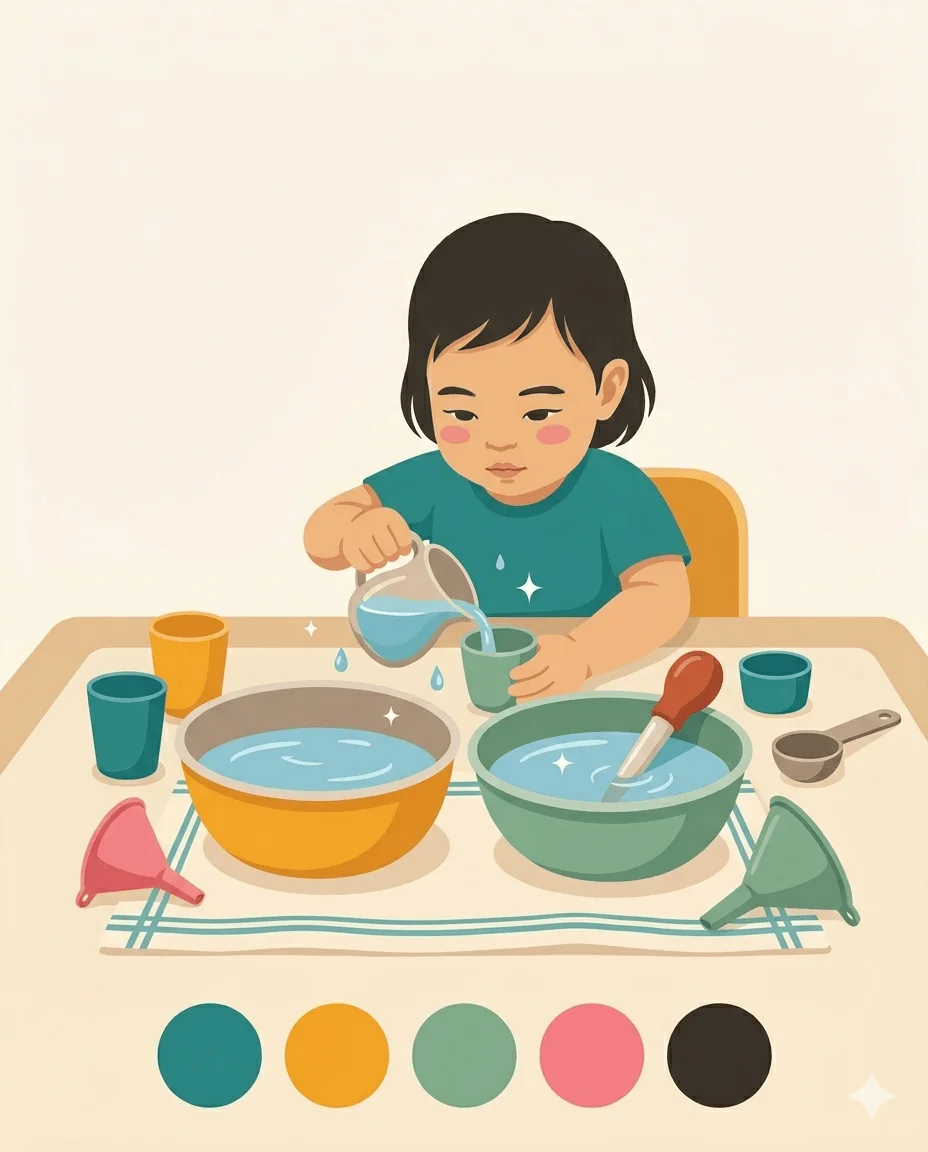
Watch for focused exploration — fingers digging in, pouring back and forth, or sorting by feel. Even a few minutes of this builds concentration.
With another adult, turn a strong blanket into a low hammock and gently swing your toddler inside. Lay them in the middle, gather the corners, lift just off the floor, and sway slowly. The movement delivers vestibular input — the balance sense — which young children crave and which helps organise a busy nervous system. A slow sway can soothe an overtired toddler, while a slightly livelier swing wakes up a sluggish one, and the giggly closeness makes it a connection moment too.
The NHS includes 'rolling and playing' among the everyday movement that counts toward a toddler's 180 active minutes a day, and reminds parents that 'all movement counts, and the more, the better'. A blanket swing delivers movement of a particular kind — vestibular input, the balance sense — which young children crave and which helps organise a busy nervous system. The gentle sway can wind an overtired toddler down or wake up a sluggish one, and the shared, giggly closeness makes it a connection activity as much as a movement one.
One email a week with practical toddler activities, behaviour tips, and developmental insights. No spam, unsubscribe any time.